Consumers may get up to Rs8 per unit power tariff relief in two months
Govt aims to cut electricity bill taxes but requires IMF consent, say Power Division officials
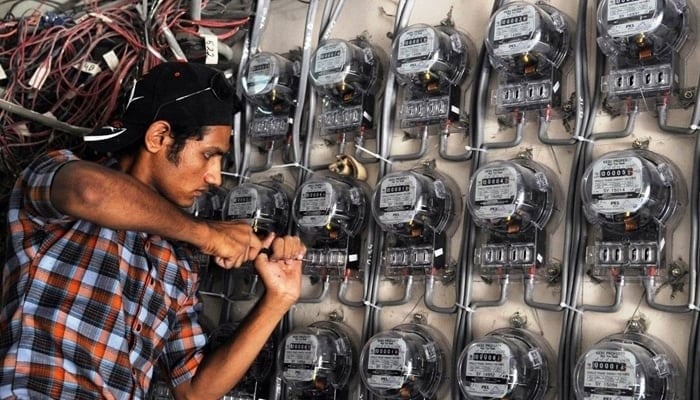
Power Division officials said on Monday that the federal government was doubling down on efforts to reduce skyrocketing power tariffs by Rs6-8 per unit, to ease ever-mounting burden on inflation-hit as well as cash-strapped consumers across Pakistan.
The high cost of electricity has become a contentious political issue, with opposition parties leveraging public dissatisfaction to criticise the incumbent government’s handling of the energy sector and agreements with independent power producers (IPPs).
The burden of high electricity tariffs falls disproportionately on the middle and lower-income segments of society, fueling public outrage and eroding trust in the government’s ability to manage the economy.
Federal Secretary Energy (Power Division) Dr Muhammad Fakhr-e-Alam Irfan on Monday told the Senate Standing Committee on Power that the government was working on reducing taxes on electricity bills but noted that any such move would require approval from the International Monetary Fund (IMF).
"Talks with the IMF on this matter are expected to take place in the first or second week of March," he added.
The Power Division officials further said that as part of cost-cutting measures, negotiations with IPPs saved the government Rs700 billion, including removing Rs300 billion in interest payments.
"So far, agreements with six IPPs have been terminated, while discussions with 25 others on a "take-and-pay" model have been completed," they added.
Stressing that the government's ultimate goal was to bring the circular debt to zero as soon as possible, the officials said that authorities were also in talks with a task force overseeing state-owned power plants to streamline operations and further reduce costs.
They also revealed that to tackle the growing circular debt in the power sector — currently estimated at around Rs2.3 trillion — the government was in talks with commercial banks to secure a Rs1.24 trillion loan at a fixed rate for a specific period.
The central bank's policy rate has retreated to 12% from a whopping 22 % in line with expectations, as inflation eased and growth is set to pick up after 1,000 basis points (bps) of rate cuts over the last six months.
State Bank of Pakistan (SBP) has slashed rates from an all-time high of 22% last June, one of the most aggressive moves among central banks in emerging markets and exceeding its 625bps of rate cuts in 2020 during the COVID-19 pandemic.
"The discount rate may drop further, and authorities aim to capitalise by borrowing Rs1.242 trillion," an official said, adding that talks with banks were ongoing to finalise the term sheet before the IMF mission's arrival.
The development comes as one of the two IMF missions has arrived in Pakistan for climate finance talks, while the second will visit next month for the first review of the country's progress under the $7 billion Extended Fund Facility (EFF).
Earlier, Finance Minister Muhammad Aurangzeb also confirmed that an IMF delegation would visit next month to discuss key matters related to the EFF.
Analysts noted that a successful renegotiation with both local and international IPPs would drastically reduce tariffs, boost industrial competitiveness, and increase public trust in the government's ability to effectively manage the economy.


-
 China orders development of national blockchain network in economic blueprint: Here’s why
 -
 Tesla renames 'full self-driving' to 'assisted driving' in Europe: What to know
 -
 US sanctions ICC hours after former judge wins Nobel Prize: What to know
 -
 Trump holds millions in Meta stock: What to know
 -
 Amazon announces 1,000 corporate job cuts, primarily targeting retail division
 -
 Coupang files lawsuits to contest record $462 million South Korean data breach penalties
 -
 Google and Unity partner on new AI game creation platform
 -
 Sources reveal truth behind French brand Lacoste CEO getting fired ahead of Paris runway show