China to offer 'tariff-free trade to Afghanistan'
Several Chinese companies operate in Afghanistan, including Metallurgical Corp, which plans for copper mining
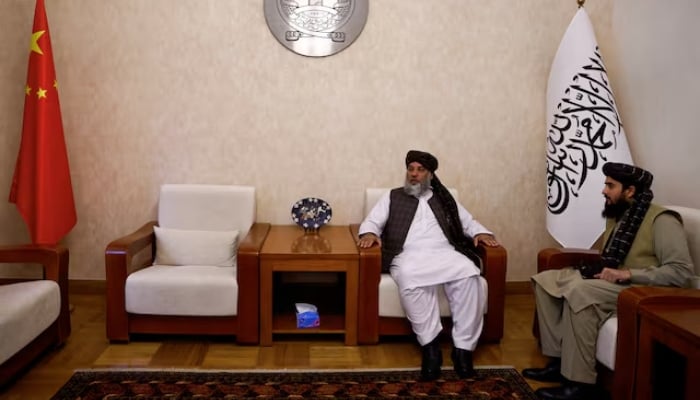
Beijing's envoy to Kabul announced on Thursday that China would grant the Afghan Taliban tariff-free access to its extensive consumer, energy, and construction sectors as the resource-rich but diplomatically isolated regime seeks to expand its market share.
Since the Taliban seized power in Afghanistan in 2021, Beijing has sought to strengthen its relations with them. However, like all nations, it has chosen not to formally recognise the group's government because of international concerns about its record on women and girls' rights and human rights.
However, the impoverished nation could provide Beijing with a plethora of sought-after mineral resources to strengthen the security of its supply chain.
And selling Afghanistan’s lithium, copper and iron deposits to the world’s biggest commodities buyer would help the Taliban prop up their ailing economy, which the United Nations says has “basically collapsed”, and provide a much-needed revenue stream as the country’s overseas central bank reserves remain frozen.
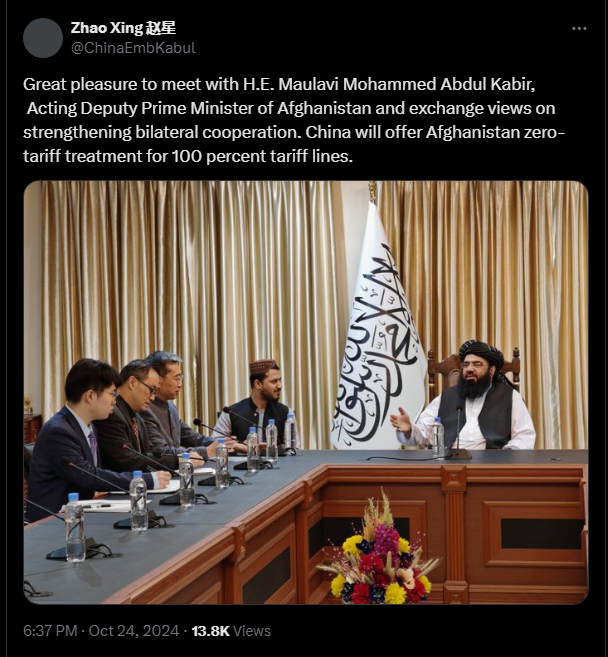
“China will offer Afghanistan zero-tariff treatment for 100% tariff lines,” Zhao Xing, Chinese ambassador to Afghanistan, wrote on his official X account late on Thursday, above a photo of him meeting acting deputy prime minister Abdul Kabir.
Afghanistan exported $64 million worth of goods to China last year, according to Chinese customs data, close to 90% of which was shelled pine nuts, but the Taliban government has said it is determined to find foreign investors willing to help it diversify its economy and profit from its minerals wealth.
The country exported no commodities to China last year, the data shows, but Zhao has regularly posted photos of him meeting Taliban officials responsible for mining, petroleum, trade and regional connectivity since his appointment last September.
Several Chinese companies operate in Afghanistan, including the Metallurgical Corp of China Ltd, which has held talks with the Taliban administration over plans for a potentially huge copper mine, and was highlighted in an August feature in Chinese state media on Chinese companies rebuilding Afghanistan.
Chinese President Xi Jinping at a Beijing summit for more than 50 African leaders in September announced that from December 1 goods entering his country’s $19 trillion economy from “the least developed countries that have diplomatic relations with China” would not be subject to import duties, without giving details.
The policy was then repeated on Wednesday by vice commerce minister Tang Wenhong at a press conference in Beijing on the preparations for upcoming China’s annual flagship import expo.
The Afghanistan embassy in Beijing did not respond to a request for comment.
Last October, Afghanistan’s acting commerce minister told Reuters that the Taliban wanted to formally join Xi’s flagship “Belt and Road” infrastructure initiative.
Kabul has also asked China to allow it to be a part of the China-Pakistan Economic Corridor, a $62 billion connectivity project connecting China’s resource-rich Xinjiang region to Gwadar port.


-
 OPEC+ agrees to keep November oil targets steady amid market uncertainty
 -
 Meta’s AI data centers: What to know about its major tax strategy
 -
 Tesla’s Cybercab faces a tough test after rocky Austin debut: Here's why
 -
 Trump pushes South Korea on Alaska LNG deal: Why Seoul is hesitant
 -
 AI boom could trigger severe market shocks, Bank of England warns
 -
 US inflation rises less than expected: What to know
 -
 OpenAI’s revenue run rate nears $70 billion: What to know
 -
 Canada’s economy records zero growth in July as key sectors decline
-
 UK diesel price hits all-time high amid Middle East supply crunch, RAC warns
 -
Meta’s Muse AI agent gets new tools for small businesses: What to know
-
China weighs allowing ByteDance, Alibaba to purchase new Nvidia RTX Pro 5500 chips
-
Why Bill Gates is calling for stronger AI rules amid growing safety concerns