Officials including judges, bureaucrats, lawmakers 'may lose' free electricity facility
Facing intense public and political pressure, federal govt decides, in principle, to develop emergency plan
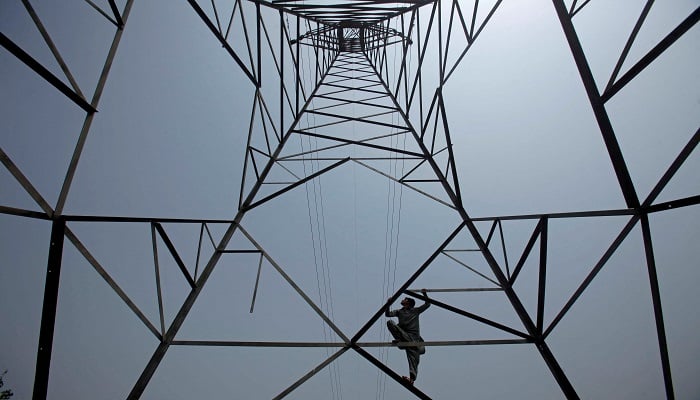
ISLAMABAD: The government is weighing the decision to terminate free electricity for government officials, including judges, bureaucrats, and lawmakers, as part of its efforts to ease the power sector's staggering financial burden, sources from the Ministry of Energy said on Saturday.
Facing intense public and political pressure, the federal government has decided, in principle, to develop an emergency plan within the Ministry of Energy.
According to sources privy to matters, the proposed plan also suggests that in a later phase, free petrol benefits might be withdrawn as well.
The country was currently under severe financial strain and burdened with external debts, the sources said adding that revolutionary steps were now critical to avoid a permanent default.
They further stated that, given the severity of the country’s financial crisis, it has become indispensable to raise the export target to at least $60 billion.
Only essential facilities for industry and business will be provided, and a reduction in Maximum Demand Indicator (MDI) charges for factories is also under consideration, as per the proposal.
Additionally, a review of the performance of the National Electric Power Regulatory Authority (Nepra) and the Oil and Gas Regulatory Authority (Ogra) has been proposed.
The International Monetary Fund (IMF) this month agreed on a $7 billion bailout for the heavily indebted South Asian economy while raising concerns over high rates of power theft and distribution losses that result in debt accumulating across the production chain.
Power Minister Awaiz Leghari has said that the government is implementing structural reforms to reduce "circular debt" — public liabilities that build up in the power sector due to subsidies and unpaid bills — by Rs100 billion a year.
The country's power sector has been plagued by high rates of power theft and distribution losses, resulting in accumulating debt across the production chain.
Poor and middle-class households have been affected by the tough measures taken by the government to fulfill the demands of the International Monetary Fund (IMF), which included raising power tariffs.
Annual power use in Pakistan is expected to fall consecutively for the first time in 16 years as higher tariffs curb household consumption, despite summer temperatures surging to near records, which typically boosts air conditioning and fan use.
In December last year, the federal government stopped providing free electricity units to officers in Grade 17 and above within power generation, distribution, and management companies. However, as compensation for this benefit withdrawal, these officers were given a pay raise.
The decision that went into effect on December 1, 2023, was taken by the Cabinet Committee on Energy (CCoE) on October 26, 2023, and it was later approved by the federal cabinet.


-
 Hyundai to recall nearly 100,000 US vehicles over fire risk from overheating
-
 Will Tesla and SpaceX merge? Barclays expects announcement ahead of December meeting
-
 GSK eyes over 1,200 Belgian job cuts in cost-saving drive
-
 Netflix slashes 1,000 jobs: What’s behind the cuts?
-
 Anthropic to reveal new revenue figures as AI financial race heats up
-
 HSBC to phase out fixed-pay allowances by 2028 in major compensation overhaul
-
 TotalEnergies expands US renewable venture with KKR in $1.2B solar portfolio deal
-
 Australian telecom shares tumble as SpaceX moves closer to direct-to-cell market
-
 World Bank in crisis aid talks with dozens of nations amid global shocks
-
Deutsche Bank chief explains why German election results alarm foreign investors
-
China orders development of national blockchain network in economic blueprint: Here’s why
-
Tesla renames 'full self-driving' to 'assisted driving' in Europe: What to know