Woman left with lifelong injuries after chidbirth
Gill Castle's story is just one among many as birth trauma affects around 30,000 women in the UK each year
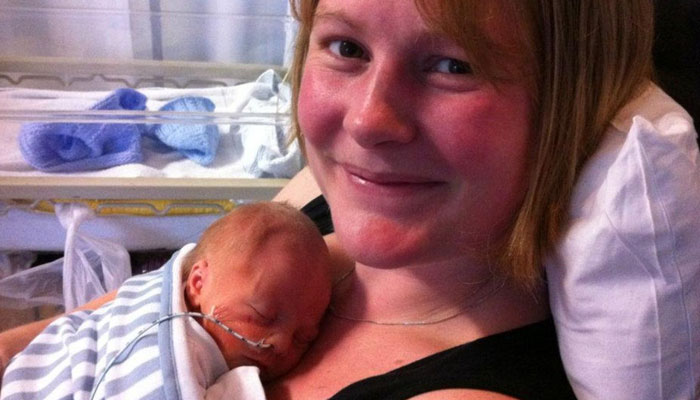
Gill Castle, a former police officer, had a healthy pregnancy but suffered a traumatic childbirth during the delivery of her first son, reports Sky News.
Castle's story is just one among many as birth trauma affects around 30,000 women in the UK each year. The trauma can be physical, like Gill's, or emotional, and can lead to PTSD in some cases.
"I remember saying to my mum, I have gone into hospital perfectly healthy, a working police officer, and I have come out disabled, without my job," Gill said.
"All I wanted was a baby."
Complications arose when her son got stuck in the birthing canal, and forceps used to deliver him resulted in severe tearing and permanent colostomy surgery.
She could not return to her job due to her injuries that also caused her significant mental health issues.
"Ultimately seven days after the birth, I was fitted with an emergency colostomy, which is a stoma, which I still have. Subsequently, I lost my job as a police officer due to my really severe mental health problems," she said.
Speaking up for women's health issues, Gill is part of a special investigation led by Theo Clarke, a Member of Parliament from Stafford. Clarke launched the UK's first ever parliamentary inquiry into birth trauma after she experienced hemorrhaging that required her to have a surgery after childbirth.
For some women, the child birth experience is so bad that about one out of every 20 women even develop PTSD, a condition like extreme anxiety after a scary event. Gill became a part of this inquiry as she wants that women's experiences are heard and understood better.
The inquiry seeks to address the lack of support services to mothers suffering from physical or emotional birth trauma.
MASIC, a charity supporting women with birthing injuries, points out the inconsistency of care women receive, with long wait times for specialists despite the urgency of the situation for new mothers.
"There is a real postcode lottery of care," says Chloe Oliver, chief executive of MASIC.
"The waiting list might be quite long to see pelvic health and physio specialists, and all the time you are trying to look after a baby whilst having really upsetting symptoms."
"It impacts on your family relationships, your work life, you may not be able to go back to the job you had before you were pregnant. You know, your life completely changes and you have to live with that," says Ms Oliver.


-
 Everything to know about US FDA’s new guidance on apps used with prescription drugs
 -
 ‘Immortal’ jellyfish could hold clues to slowing human ageing
 -
 Ebola crisis worsens in DR Congo as virus reaches eighth province with over 4,500 dead
 -
 Study finds eating blueberries every day can surprisingly boost your mood
 -
 Eli Lilly’s Foundayo weight-loss pill gets European approval recommendation
 -
 What is BPC-157? Trump administration considers easing rules on popular peptide injections
 -
 West Nile virus: Europe reports 141 deaths as human cases rise in 2026
 -
 Health Canada reviewing new mRNA flu vaccine that could prevent more hospitalisations