Alabama clinics pause IVF services after court rules 'embryos are children'
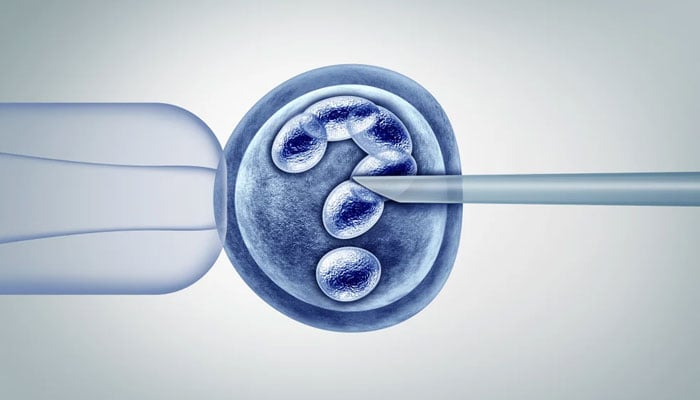
In-vitro fertilisation (IVF) is the process of creating embryos by mixing sperm and eggs
Less than a week after the Alabama Supreme Court ruled that embryos generated by in-vitro fertilisation (IVF) are children, three IVF clinics in the state have halted their operations while assessing the ruling's potential legal implications, NBC reported.
The University of Alabama at Birmingham (UAB) was the first to announce the change on Wednesday followed by Alabama Fertility, who posted a statement announcing to pause their IVF treatments.
The Centre for Reproductive Medicine at Mobile Infirmary — the clinic sued in the court case, has also put a hold on its IVF procedures.
Mark Nix, CEO of Infirmary Health said: "We understand the burden this places on deserving families who want to bring babies into this world."
Hannah Echols, a spokesperson for UAB, said the health system will continue to offer egg retrieval but will no longer fertilise eggs or develop embryos.
IVF is the process of creating embryos in a lab by mixing sperm and eggs, and then implanting one or more of those embryos into a person's uterus. While extra embryos are commonly frozen and kept for later use, if an embryo has a genetic defect or is not needed by a patient, it is also often destroyed.
The court's decision has attracted a lot of criticism and questions. It came in response to a unique case in which an individual dropped many frozen embryos while walking into the unlocked storage area at Mobile Infirmary in Mobile, Alabama.
The court decided on February 16 that the clinic's failure to safeguard that storage space violated the state's Wrongful Death Conduct, which states that unjustifiable or negligent conduct that results in someone's death is a civil offence as the frozen embryos were considered human beings.


-
 Everything to know about US FDA’s new guidance on apps used with prescription drugs
 -
 ‘Immortal’ jellyfish could hold clues to slowing human ageing
 -
 Ebola crisis worsens in DR Congo as virus reaches eighth province with over 4,500 dead
 -
 Study finds eating blueberries every day can surprisingly boost your mood
 -
 Eli Lilly’s Foundayo weight-loss pill gets European approval recommendation
 -
 What is BPC-157? Trump administration considers easing rules on popular peptide injections
 -
 West Nile virus: Europe reports 141 deaths as human cases rise in 2026
 -
 Health Canada reviewing new mRNA flu vaccine that could prevent more hospitalisations