Scientists reveal how weight loss drug can help treating diabetes
"I was shocked that we could get rid of fast-acting insulin in 3 months, then basal insulin in 7 out of 10 patients," author says
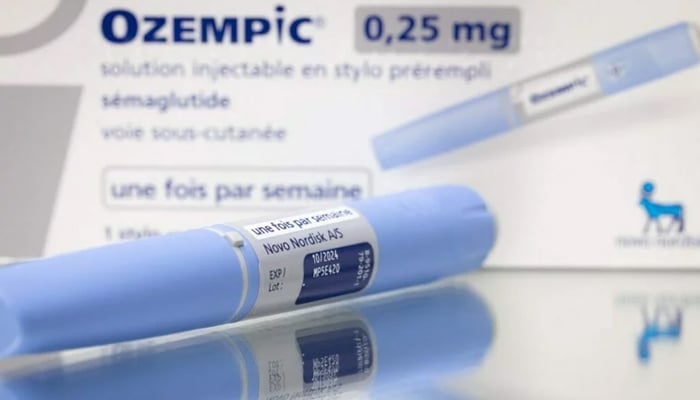
Researchers found in their new study that a drug used for weight loss — semaglutide — might contribute to reducing or completely cutting the insulin shots in those people diagnosed with Type 1 diabetes, leaving authors stunned about the miracles of this medicine.
Known as Ozempic or Wegovy, the drug became popular last year due to its effects on weight loss. According to reports, the former is used to treat Type 2 diabetes, whereas Wegovy is for weight loss.
In the study published in the New England Journal of Medicine, experts analysed information from 10 people with Type 1 diabetes who took the drug. Everyone ceased to have insulin shots with meals and in six months, 7 out of 10 completely stopped using insulin.
While referring to two types of insulin — one fast-acting and the other more long-acting — the lead author Dr Paresh Dandona said: "I was absolutely shocked that we could get rid of fast-acting insulin in three months and then basal insulin in seven out of 10 patients."
"It was almost like science fiction," said Dandona.
People face difficulty in controlling their sugar levels but treatment and causes of the diseases are not the same.
In Type 1 diabetes, the body starts killing beta cells that produce insulin — used to take sugar from blood to cells for energy. Therefore, insulin is required because the system ceases to make it.
Whereas in Type 2 diabetes, beta cells in the pancreas do not produce enough insulin and the body also does not respond to the insulin creating a condition called insulin resistance. Therefore, drugs are used accordingly.
Limits of semaglutide
Dr Dandona showed his commitment to transform the treatment of Type 1 diabetes saying: "I’m very excited about this. I believe it’s going to change the shape of treatment of Type 1 diabetes."
He also said that there needs to be a larger study adding that he’s already rounded up a group of diabetes investigators from various centers around the country. Once funding has been secured, the study can start.
Experts lauded the new results and urged for further studies before suggesting to people.
Dr Michael Natter, an endocrinologist at NYU Langone Health said: “You can’t make too much of a claim based on a small, non-controlled study. We need to see more and larger studies."
He added that he’s "extremely excited and cautiously optimistic and that as a person with Type 1 diabetes, he has skin in the game."
"Choosing to focus on newly diagnosed patients was brilliant," stated Dr Vanita Aroda, director of diabetes clinical research at Brigham and Women’s Hospital in Boston.
She said the findings are very striking. Large studies need to be done and this is a call to action. We should be taking a look at the patient population with Type 1 diabetes and see if they can benefit from such therapies.”


-
 Health Canada reviewing new mRNA flu vaccine that could prevent more hospitalisations
 -
 Scientists discover hidden drainage route at the back of the eye
 -
 WHO confirms death at Russian research lab, says no plague case registered
 -
 Getting a $90 check from Social Security? Here’s why
 -
 Measles cases in US top 4,000 nationwide, CDC reports
 -
 Sexually transmitted diarrhea spread in US, UK: Why antibiotics are failing against Shigella
 -
 Who is Song Li? China puts her forward for WHO leadership role
 -
 CDC monitors travelers from Siberia after plague worker’s death, director says