Dementia therapy: A silent disco in Singapore is making noise worldwide
Senior Singaporeans with dementia danced to nostalgic oldies in a silent disco setting as part of a strategy to improve their condition
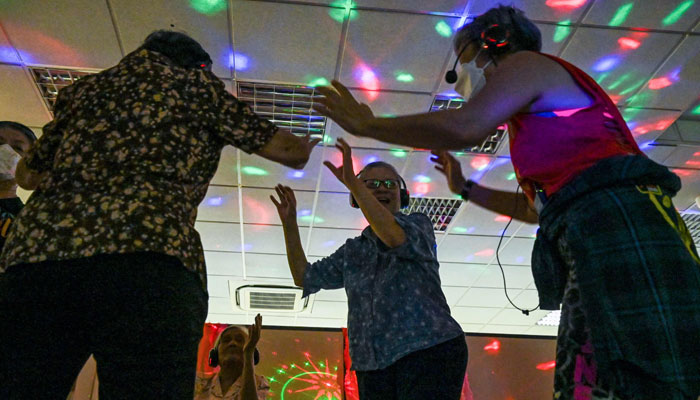
Residents of a Singapore nursing home are gleefully dancing to the melodic nostalgic oldies sung by iconic crooning legends, but in a silent disco setting, which is part of a strategy that has been found to have successfully helped improve the condition of seniors battling dementia.
The residents listened to tunes through headphones from the 1940s to the 1980s in an hour-long silent disco session, AFP reported.
The Apex Harmony Lodge, which specialises in caring for dementia patients, played music in English, Malay, and Chinese to get the residents moving.
"I don't really know how to dance; I just mess around. I have thick skin," 54-year-old Christine Chong, who has early-onset dementia, said cheekily.
Another resident, Goh Kian Ho, 63, sang enthusiastically while tapping his foot and clapping his hands to a Hokkien number. "It's very good that we can play and sing," he said.
Singapore, like many Asian countries, has been grappling with an ageing population and rising dementia rates, the report said.
Singapore's Ministry of Health estimates that 86,000 people — one in 10 aged 60 and above — have dementia, with the number expected to grow to 152,000 by 2030.
Research suggests that music therapy can be beneficial for people with certain conditions, such as Alzheimer's disease, which can lead to difficulty with conversation and cognition.
"We play old songs, and then they help to trigger the emotions of our residents that are often associated with certain memories from their past, so this helps to provide a sense of familiarity and comfort for our residents," said Grace Wong, an associate psychologist at Apex Harmony Lodge.
The concept of weekly silent disco sessions in nursing and care homes originated in nursing homes in the UK and Australia.
Initially, Johnson Soh, a former music executive, started a music programme for seniors after his father was diagnosed with dementia, and music from his generation helped his father's condition.
"He was my first guinea pig, actually. His awareness was heightened," said Soh.
More than 10 establishments in Singapore have adopted the programme since it began in 2019, according to Soh.
Dubbed "Return to the Tea Dance", the initiative aims to evoke happy memories of Sunday afternoon dances that were popular with young people in 1960s Singapore, the report explained.
"Everybody has a soundtrack to their lives, so there's always some music that would have impacted you sometime during your life," Soh said.
"It is inexplicable; I think music is something that really moves people," he added.


-
 West Nile virus: Europe reports 141 deaths as human cases rise in 2026
 -
 Health Canada reviewing new mRNA flu vaccine that could prevent more hospitalisations
 -
 Scientists discover hidden drainage route at the back of the eye
 -
 WHO confirms death at Russian research lab, says no plague case registered
 -
 Getting a $90 check from Social Security? Here’s why
 -
 Measles cases in US top 4,000 nationwide, CDC reports
 -
 Sexually transmitted diarrhea spread in US, UK: Why antibiotics are failing against Shigella
 -
 Who is Song Li? China puts her forward for WHO leadership role
-
 CDC monitors travelers from Siberia after plague worker’s death, director says
 -
Russia pushes back on plague death reports, defends WHO notification
-
WHO deems Russia plague risk 'low' following lab technician’s fatal illness
-
New York declares Measles state of emergency amid nationwide disease resurgence