After week's respite, foreign exchange reserves decline once again
With the current foreign exchange reserves position, Pakistan has an import cover of 1.6 months
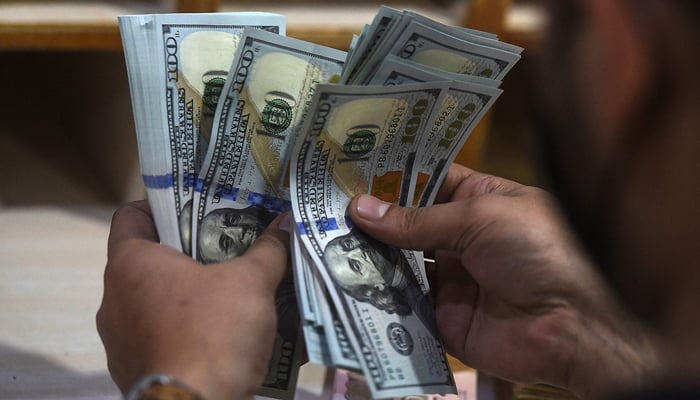
KARACHI: After a week’s respite, the country’s foreign exchange reserves held by the State Bank of Pakistan (SBP) once again declined by 1.7%.
On November 18, the foreign currency reserves held by the SBP were recorded at $7,825.7 million, down $134 million compared with $7,959.5 on November 11, data released by SBP showed on Thursday.
Overall liquid foreign currency reserves held by the country, including net reserves held by banks other than the SBP, stood at $13,645 million.
Net reserves held by banks amounted to $5,819.3 million. The central bank attributed the decline to external debt repayment.
With the current foreign exchange reserves position, Pakistan has an import cover of 1.6 months.
The reserve position is expected to strengthen after Pakistan receives funds from friendly countries.
Earlier in the month, Finance Minister Ishaq Dar announced that the SBP will receive $500 million from the Asian Infrastructure Investment Bank (AIIB) in the ongoing month.
In a tweet, the finance minister shared that the AIIB board approved the funding as “co-financing of the Asian Development Bank (ADB) funded BRACE program for Pakistan.”
“These Funds will be received by SBP within November 2022,” he said.
Analysts believe a rather thin forex exchange reserves are not a good omen for the local currency which is currently not on firm footing against the US dollar.


-
 OPEC+ agrees to keep November oil targets steady amid market uncertainty
 -
 Meta’s AI data centers: What to know about its major tax strategy
 -
 Tesla’s Cybercab faces a tough test after rocky Austin debut: Here's why
 -
 Trump pushes South Korea on Alaska LNG deal: Why Seoul is hesitant
 -
 AI boom could trigger severe market shocks, Bank of England warns
 -
 US inflation rises less than expected: What to know
 -
 OpenAI’s revenue run rate nears $70 billion: What to know
 -
 Canada’s economy records zero growth in July as key sectors decline
-
 UK diesel price hits all-time high amid Middle East supply crunch, RAC warns
 -
Meta’s Muse AI agent gets new tools for small businesses: What to know
-
China weighs allowing ByteDance, Alibaba to purchase new Nvidia RTX Pro 5500 chips
-
Why Bill Gates is calling for stronger AI rules amid growing safety concerns