
Our peri-urban crisis
In theory, peri-urban areas should offer metropolitan opportunities and rural stability
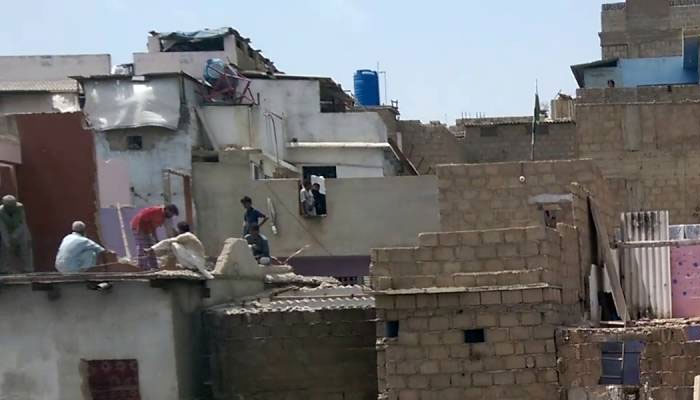
While Pakistan's metropolitan hubs are expanding rapidly and rural areas still get targeted development support, peri-urban areas – those transitional zones between city and countryside – are becoming increasingly vital but gruesomely underappreciated.
Often referred to as the ‘in-between’, these areas today house millions of Pakistanis who live with the consequences of poor planning, disorganised growth and absent governance.
In theory, peri-urban areas should offer metropolitan opportunities and rural stability. However, they are locations of unchecked real-estate growth, poor infrastructure, dispersed administrative power and increasing environmental degradation. They lie outside the scope of most rural development projects and are not included in official urban planning, therefore creating a vacuum where mismanagement finds expression.
Prime examples are peri-urban areas around major cities such as Lahore, Karachi, Islamabad, Peshawar and Faisalabad. Initially, a quiet rural neighbourhood near Islamabad, Bara Kahu, today suffers from traffic congestion, untreated trash, unlawful construction and unsafe drinking water. However, no apparent authority takes control. Islamabad's Capital Development Authority (CDA) does not entirely cover it, and local government agencies lack money and autonomy.
Along Ferozepur Road, Shahdara and the suburbs of Lahore also experience unfettered industrial growth, with informal housing communities not sufficiently supported by municipal amenities.
All this highlights the fundamental issue: the governance vacuum over peri-urban areas. In most of Pakistan, urban or rural administrative categories are still binary. This simple categorisation ignores the dynamic reality of the urban fringe, in which land use is changing rapidly, population is increasing, and needs are manifold. Between rural and urban policy, peri-urban areas slip under neither an appropriate legal position.
The consequences are severe. Land in peri-urban areas is sometimes purchased and sold informally without transparent governance, with little regard for zoning regulations or environmental standards. Unregulated construction strains the infrastructure and public services that are now in use. At the same time, the lack of supervision lets ecological degradation, including small-scale industry pollution, illegal groundwater extraction, and deforestation, go unchecked.
Local administrations, when they exist, nevertheless lack the ability to react. Union councils or tehsil administrations often lack the power to levy taxes, restrict construction, or provide required services. Poor cooperation with urban authorities also produces unequal planning and chaotic service delivery. Due to this governance collapse, peri-urban residents are second-class citizens robbed of the rights and benefits received by persons in either urban or rural areas.
Policy-wise, continuous neglect of peri-urban areas is foolish and unsustainable. Pakistan is fast becoming more urbanised. According to the Pakistan Bureau of Statistics, urban areas grow about three per cent annually; most growth occurs outside city centres rather than within them. If peri-urban areas keep growing without direction, they will soon turn into centres of unmanageable slums, environmental damage, and social unrest.
Dealing with the peri-urban problem requires a pragmatic and diversified strategy.
First, peri-urban areas have to be recognised legally as another administrative class. Based on well-defined criteria such as land use patterns, population density, and closeness to the urban core, provinces should build a legal framework establishing these zones. Starting with awareness, customised policies and resource allocation would follow.
Second, integrated planning methods are really needed. Big city master plans have to incorporate peri-urban belts inside their intended region. These designs must include physical infrastructure, environmental concerns, public transportation accessibility, fairly priced houses, and public services. Setting planning guidelines and ensuring that district-level authorities apply them will greatly aid provincial governments.
Third, systems of local governance have to be enabled and reinforced. Union councils and tehsil administrations should have financial and administrative autonomy as well as technological capacity to monitor land usage, compile income, and provide required services, including waste management, clean water, and drainage in peri-urban areas. Integrated planning boards or joint development committees will assist in formally coordinating urban and rural entities.
Fourth, a change of land management is vital. Sometimes, land in peri-urban zones is sold without formal ownership or supervision. From this follow legal disputes, displacements, and illegal intrusions. Governments should digitise land records, supervise open property transactions, and manage real-estate development by closely obeying zoning and environmental laws. The function of development authorities should evolve from passive regulators to active planners, including communities at the centre.
Fifth, a concentrated peri-urban development project should be started, like the rural support programmes dispersed around Pakistan. This scheme could raise target funds for peri-urban areas' schools, healthcare facilities, roads and water infrastructure. Programmes aiming at building resilience against the socioeconomic risks of peri-urban residents should involve development partners and donors.
Sixth, all activities have to be guided by data-driven decisions. Few accurate, distinct statistics exist on infrastructural needs, peri-urban demography and migratory trends. The government should pay for regular polls, GIS mapping, and impact assessments alongside urban planning think tanks and academic institutions to guide development and monitor changes.
Finally, public participation and responsibility should be deeply embedded in every level of governance and planning. Grassroots organisations and civil society can greatly help create this civic infrastructure by providing important platforms for peri-urban people to voice concerns, engage in development decisions and hold local authorities accountable.
Not the misty boundaries of cities, Pakistan's peri-urban areas today represent the front line of the country's urban future. Their neglect contradicts millions of people's poor living conditions and more general sustainable development and fair growth goals. Federal, provincial and municipal governments have the time to address the contradictions of urban and rural areas with the seriousness, organisation, and strategy they deserve.
The writer is a researcher at the Sustainable Development Policy Institute (SDPI), Islamabad. He tweets/posts @junaideconomist


