
‘Media plays key role in shaping societies’
LAHORE : Punjab Governor Muhammad Balighur Rehman has said that in the realm of media, communication plays a pivotal role in shaping societies and fostering global understanding.
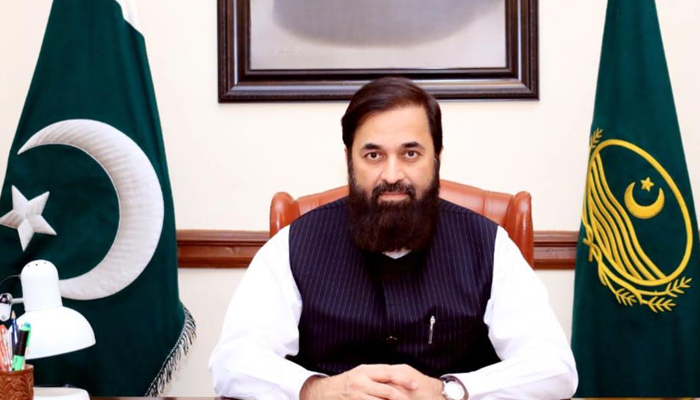
He gave this message at the concluding ceremony of 2nd International Media and Communication Conference organised by Punjab University Department of Communication and Media Research and University of Management and Technology.
On this occasion, PHEC Chairman Prof Dr Shahid Munir, PU VC Prof Dr Khalid Mahmood, UMT Rector Dr Asif Raza, PEMRA DG Ikram Barkat, Director School of Communication Studies Prof Dr Nosheena Saleem, Dean School of Media and Communication Studies, UMT Dr Anjum Zia, researchers, eminent journalists, alumnus, faculty members and students were present.
Balighur Rehman said that intersection of academia and media was crucial for nurturing critical thinking and fostering innovation and added that he believed the insights gained here would pave the way for more informed and interconnected world. He stated that the conference had been a testament to our commitment to exploring the dynamic landscape of media in the 21st century. He said the recommendations and discussions from this conference would serve as a roadmap for enhancing media communication practices, promoting ethical journalism, and addressing the challenges in this digital age.
Dr Shahid Munir said that the transformative power of technology had given rise to an era where information knew no boundaries. He said that social media empowered individuals to become active contributors to the vast tapestry of information. He said that in the midst of these transformations, the importance of responsible journalism and media literacy could not be overstated, as the gatekeepers of information journalists play a pivotal role in shaping public opinion.
Dr Khalid Mahmood said that the use of digital technology was increasing rapidly due to which censorship in the field of journalism was being eliminated and citizen journalism had been promoted. He said that artificial intelligence had made it difficult to differentiate between real and fake. He said that media literacy and research should be promoted to deal with these challenges in which private and public institutions should play a role together.
Dr Asif Raza said the participation of seven national and one international organisation in the conference was welcome not only for educational institutions but also for the media industry.
Ikram Barkat said that it was everyone's responsibility to take care of the country's dignity and security. Dr Waqar Chaudhry said that freedom of expression was everyone's right, but it should also have a limit.
Prof Dr Anjum Zia said that 190 research papers were received for the conference, out of which 76 papers were selected and presented in 22 sessions. She added that five international and 45 national experts expressed their views in the conference.


