
Accountability bill sails through Senate amid jeers, catcalls
Opposition alleges that the amendments were person-specific and would render the anti-graft body toothless
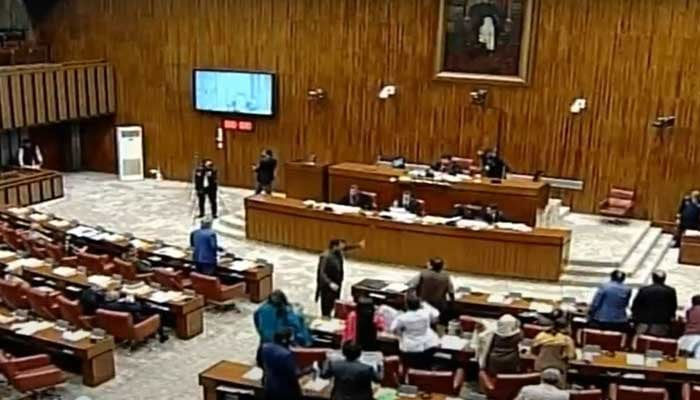
ISLAMABAD: Amid sloganeering, jeers and catcalls by the opposition, the Senate Wednesday passed the National Accountability (Amendment) Bill, 2023 to amend the National Accountability Ordinance, 1999, already passed by the National Assembly.
The opposition senators alleged that the amendments were person-specific and would render the anti-graft body toothless. The House proceedings were marred by sloganeering, and tearing up of the copies of the order of the day as well as the three bills which were, however, passed.
Lasting an hour, the House also adopted the house standing committee report on the Charged Sums for General Election (Provincial Assemblies of Punjab and Khyber Pakhtunkhwa Bill, 2023, after the headcount, as 26 lawmakers backed it, while 19 opposition members stood up against the report.
Moments after Law Minister Senator Azam Nazir Tarar moved the NAB law amendment bill into the House, Opposition Leader Dr Shahzad Waseem rose to allege that previously, the government had got the NAB amendment law passed in a hurry, bulldozing legislation to get their cases pardoned.
“This is a person-specific legislation to curtail the judiciary’s jurisdiction and its powers as the rulers only want to further their political interests,” he claimed. He wanted the bill to be referred to the House standing committee.Dr Shahzad Waseem also pointed out that the standing committee’s report on the provincial assemblies elections charged expenditure did not incorporate the viewpoint of his party’s two senators, who were members of the committee concerned.
Taking exception to his remarks and those of JI Senator Mushtaq Ahmad, who alleged the NAB law amendment bill was aimed at bringing the big thief to parliament and putting behind bars the small one, the law minister said the proposed legislation would strengthen the courts’ provisions and empower them to refer cases to other forums, instead of this being done by the NAB chairman or the executive board.
The minister explained that the right to close inquiry would remain with the NAB but it would have to approach the court before closing the inquiry. Likewise, he said, when a trial was to be transferred, the NAB would first ask the court. Later, the bill was passed by a voice vote. Earlier, Senator Mushtaq said they should be given the opportunity to present their viewpoint on matters and alleged the NAB law amendment bill was person-specific and that NAB was being made toothless.
The House also passed a bill to amend the Code of Civil Procedure, 1908, the Code of Civil Procedure Bill, 2023, which aims at providing relief to the litigants and removing the excessive burden from courts. The third bill, adopted by the House is the Pakistan Maritime Zones Bill, 2023, which seeks to consolidate and amend the law relating to the territorial sea and maritime zones of Pakistan. It will enable Pakistan to deal with related matters in accordance with national and international laws, and assert its rights, jurisdiction, and sovereignty in sync with internationally accepted provisions.
Later, briefly speaking on a motion, the law minister blamed the recent wave of terrorism on what he called the ‘wrong policy’ of the PTI government to engage militants and allow them to resettle in the tribal areas, following the withdrawal of Nato from Afghanistan. He added that Pakistan was going through a critical juncture and the country’s armed forces and police were being targeted by terrorists.


