
Inquiry report on power breakdown: Shift operator’s action to reduce Ghazi Barotha input caused blackout
Mistake was made at the system operator’s end and could have been avoided through pre-event planning
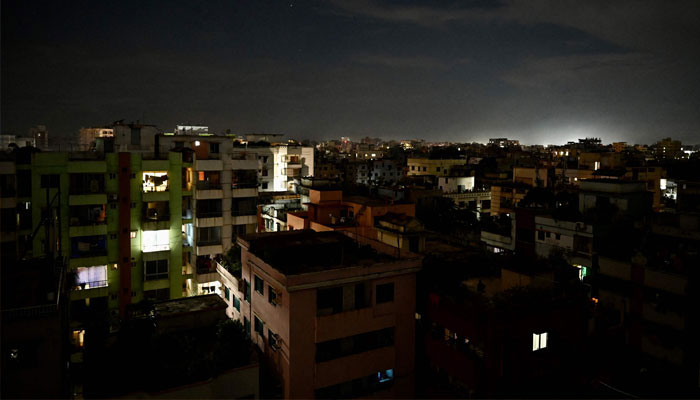
ISLAMABAD: The power blackout that occurred on January 23, 2023, was due to the system operation, including additional power from the south in the wake of the addition of wind generation at 7:30 am without considering the constrained transmission pathway and without switching on the powered-off 500 kV lines.
The shift operator aggravated the situation by reducing power generation at Ghazi Barotha to create a balance, but that worked the other way and resulted in the loss of balance. This was a mistake that was made at the system operator’s end and could have been avoided through pre-event planning.
The reduction of power from the Ghazi Barotha generation initiated power system oscillations, which grew in amplitude with time. This caused a commutation failure at the HDVC’s Lahore Converter Center, tripping all power plants across the country one by one in just four minutes.
More importantly, the black start capability at Tarbela, Mangla, and Warsak Power Plants is highly questionable, as these plants repeatedly failed to operate in island modes and caused significant restoration delays.
This is the gist of the 18-page inquiry report of the four-member committee headed by Minister of State Musadik Masood Malik. The investigation committee also asked for a departmental inquiry into the power control management team, the shift in charge, and his team. The committee also mentioned in the report about 25 sequences of events that led to the blackout.
The committee also came up with 13 recommendations for implementation to avert such incidents in the future.
However, as per the report, the committee members suggest saying, “If we look at all the factors leading to the incident, we need to consider delays in strengthening the AC system, which is a requirement for the HVDC system to operate stably.”Furthermore, the report suggests that the regulator, NEPRA, and the system operator need to work together to create protocols to handle situations like these when power generators not falling within the economic merit order need to be used for system security.
The report also mentions that coordination is lacking, for which the government needs to issue policy instructions to NEPRA. “As far as restoration is concerned, WAPDA needs to immediately improve the speed-governing mechanism at Tarbela.”


