
Flood recovery pledges to materialise in 3 phases
Donors’ pledges of over $10.5 billion for reconstruction in flood-affected areas of Pakistan would be materialised in three phases
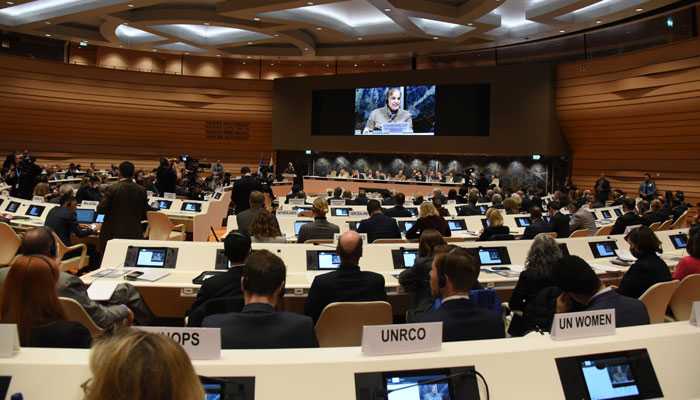
ISLAMABAD: Pakistan’s Resilient Recovery, Rehabilitation, and Reconstruction Framework (4RF) envisages that the donors’ pledges of over $10.5 billion for reconstruction in flood-affected areas of Pakistan would be materialised in three phases including short term up to one- year, medium-term up to three years and long term up to five to seven years period.
According to 4RF shared with the donors during an international conference in Geneva on Monday stated that there were four Strategic Recovery Objectives (SRO). Under Strategic Recovery Objective 1: Enhance governance and the capacities of the state institutions to restore the lives and livelihoods of the affected people, especially the most vulnerable SRO1 seeks to rebuild governance-related physical infrastructure that has been destroyed and damaged by the floods, as well as restore and enable a governance structure and system that fosters efficiency, effectiveness, transparency and inclusiveness.
The key will be to enable all tiers of the government to prepare and respond to natural hazards and climate change through gender-informed and community-led, structural and non-structural risk reduction measures, including through ecosystem adaptation and landscape restoration.
Strategic priorities include short-term objectives, such as improving public financial management, public procurement, audit, and anti-corruption measures; medium-term objectives, such as undertaking detailed and localised multi-hazard risk assessments and integrating data into local level decision support systems; and long-term objectives, such as strengthening meteorological monitoring and early warning systems and increasing technical capacities of climate change and environmental management agencies at federal and provincial levels. Strategic Recovery Objective 2: Restore livelihoods and economic opportunities, SRO2 seeks to restore livelihoods and economic opportunities through a multi-sectoral approach. It has two key pillars: the first promotes livelihoods recovery through agriculture and employment restoration, while the second focuses on boosting economic opportunities through commerce, industry, tourism, markets and financial interventions.
Strategic priorities include short -term objectives, such as direct cash contributions, in-kind inputs, and cash-for-work interventions as well as restoration of jobs through e-commerce and job guarantee programmes; medium-term objectives, such as rehabilitation of damaged public and private infrastructure by using employment intensive approaches and implementing business regulatory reforms; and long-term objectives, such as legal, policy, and institutional reforms for the development of the credit market and provision of interest free loans or community investment funds through local Non-Governmental Organisations (NGO) without micro-finance institutions.
Strategic Recovery Objective 3: Ensure social inclusion and participation SRO3 seeks to ensure that no one is left behind and that mainstreaming approaches are taken so that social inclusion leads to social sustainability. Strategic priorities include short -term objectives, such as the provision of protection services, psychosocial support, adoption of community-driven development approaches; medium-term objectives, such as establishing missing facilities and more robust protection for those more vulnerable to violence, tracking and exploitation; and long-term objectives, such as the acceleration of community-level disaster preparedness activities with social inclusion and gender equality sensitivity, school meals programmes targeting for the most vulnerable, multi-purpose cash grants for the most vulnerable (women and children) and rehabilitation of flood-affected heritage sites.
Strategic Recovery Objective 4: Restore and improve basic services and physical infrastructure in a resilient and sustainable manner SRO4 seeks to restore basic social services for the affected communities and carry out resilient infrastructure rehabilitation and reconstruction, support led by strengthening human capital, institutions, and policies to respond to future disasters.
Strategic priorities include immediate and short-term objectives, such as supporting reconstruction and rehabilitation of housing, prioritising the most vulnerable, repairing and improving existing physical infrastructure, repairing water infrastructure and strengthening weak sections before the next monsoon; medium-term objectives, such as a detailed technical evaluation of damaged transport and communication infrastructure, improvement of contingency plans and their performance in the health sector; and long-term objectives, such as the establishment of a regulatory framework and tariff structure for Water, Sanitation and Hygiene (WASH) and municipal services, enhancing the disaster resilience of the energy distribution network, a flood susceptibility analysis of the entire infrastructure network, and climate and disaster-resilient rehabilitation of irrigation, drainage, dams, and dikes.


