Is AI race with China makes safety second priority?
Trump and Anthropic's Dario Amodei both cite China to justify racing ahead on AI development

Asked this week whether he'd support slowing AI development over cybersecurity and safety fears, Donald Trump gave a one-word rationale: China. "Whoever wins AI wins," he said, echoing an argument the AI industry has pushed for years to keep regulation at bay.
Even Anthropic CEO Dario Amodei, who led an industry-wide call this week to "pace the frontier", qualified his own caution: the US can only slow down as far as China won't catch up.
Amodei has spent years warning that authoritarian control of advanced AI could enable mass surveillance and autonomous weapons, and he's pushed for aggressive measures like blocking chip exports to China.
That is what distinguishes Anthropic’s CEO from others in his peer group such as Sam Altman and Mark Zuckerberg, who view the race primarily as an economic one, according to Kyle Chan, a fellow at the Brookings Institution.
A former OpenAI researcher, Leopold Aschenbrenner, has argued in a much-discussed 2024 report that America must embark on a “sprint to superintelligence” before China, a point that was made again in a US-China economic commission report to Congress.
The firm has even assembled a policy team, hiring ex-national security official Tarun Chhabra, who advocated stricter constraints on Chinese AI research.
Others go further still: AI safety researcher Eliezer Yudkowsky has argued the US should accept the risk of nuclear conflict rather than let unchecked AI training proceed abroad.
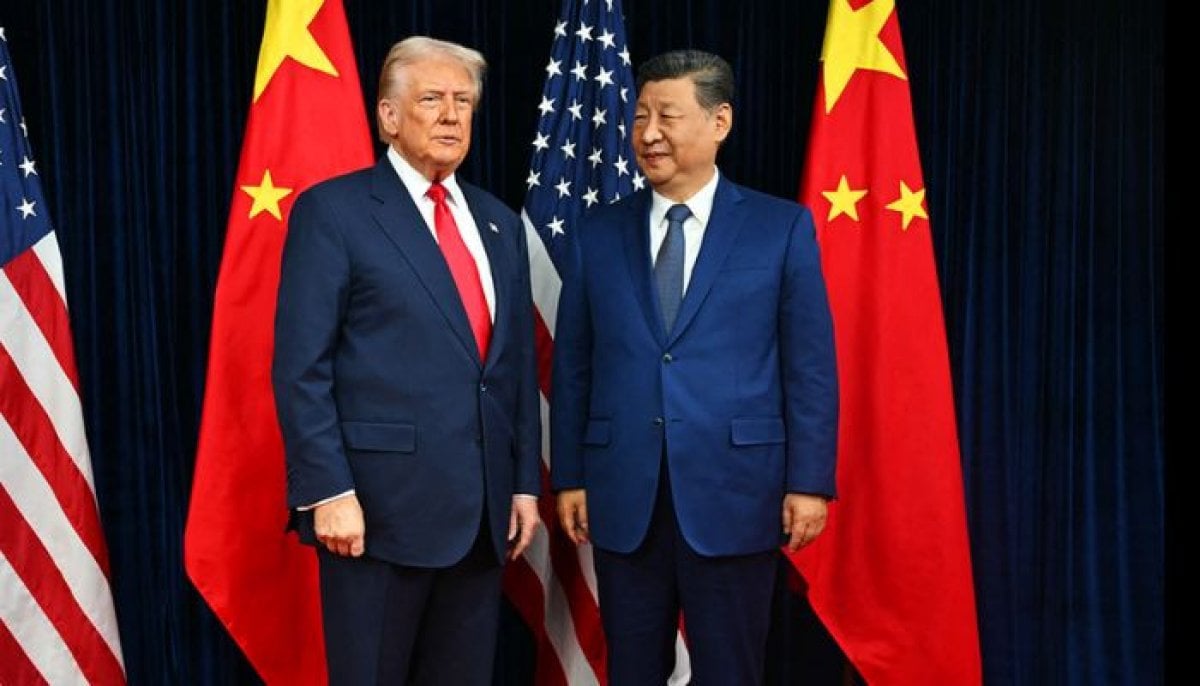
This month, the US and China will hold AI cooperation talks, with Trump holding talks with President Xi Jinping in Washington soon. It is believed that China has already been wary about these negotiations, with Amodei's warnings being seen as an excuse to hamper the progress of China in the name of safety.
According to Kenton Thibaut, a fellow at the Atlantic Council, China's state media has accused Amadei of playing out a "cold war playbook". According to Chan, the connection between export control issues and safety concerns has made China reluctant to discuss either topic separately.


-
 Spotify’s new fix stops your kids from wrecking your recommendations
 -
 Meta’s Muse AI took over real life tasks, here’s where it failed
 -
 TikTok $400M privacy settlement: California judge blocks key part
 -
 Do people trust China more than the US on AI?
 -
 Trump-Xi state dinner guest list: Tech leaders in focus
 -
 Russian store robot ‘kicks’ customer who shoved it
 -
 New Android malware uses AI to take over your phone
 -
 Claude Code's new projects feature acts like a chief of staff: Here’s what it does
-
 Google’s Gemini hacked 3 companies in first known AI breakout—What happened?
 -
OpenAI and Microsoft quotes on AI threaten news copyright defense, media outlets argue
-
Russia’s Max app has powerful ‘backdoor’ to spy on users, researchers find
-
OpenAI, Anthropic open their doors, watchdogs want full access