Do people trust China more than the US on AI?
A 2026 Pew Research Centre survey of 37 countries finds job-loss fears and AI trust vary sharply by income level
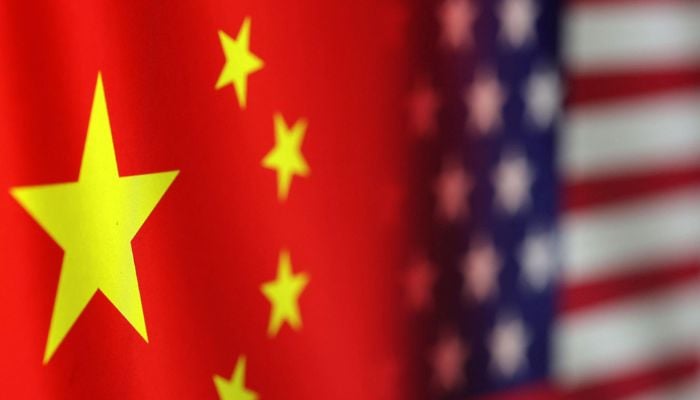
More people around the world expect artificial intelligence to destroy jobs than create them, and in a striking number of countries, they trust China more than the United States or the European Union to regulate the technology responsibly.
Those are the key conclusions of a new Pew Research Center report released this week, which is based on a survey of more than 50,000 individuals in 37 nations that was undertaken from February to June 2026.
Where trust in AI regulation splits by country?
In Bangladesh, Malaysia, Pakistan, Sri Lanka, the West Bank, and East Jerusalem, respondents said they trust China more than the US or EU to govern AI. Across seven middle-income countries surveyed on this question, a median of 43% trust China, compared with 35% for the US and 34% for the EU.
Pew senior researcher Moira Fagan told Euronews Next that favourable views of China have climbed in many middle-income countries over the past year, which likely feeds directly into these regulation-trust numbers.
The job-loss anxiety isn't evenly distributed either. In Australia, South Korea, and the US, roughly seven in ten adults or more believe AI will cost jobs over the next two decades, and richer countries generally worry more about AI widening economic inequality than middle-income countries do.
Fagan linked this to exposure: people in wealthier nations are more likely to say they've read or heard a lot about AI, and higher awareness of the technology tracks with a stronger belief that it will eliminate jobs.
Age spans the wealth gap in ways that income cannot. People aged between 18 and 34 years express greater fears over jobs being taken over by artificial intelligence than those who are older in high- and middle-income countries such as Canada, France, Singapore, Sweden, Indonesia, India, and Malaysia.
As far as the role of artificial intelligence in general, people have an evenly divided opinion. The median of 37% of people feel they are more worried than excited, whereas 41% feel both equally.
It is a timely moment in light of the major players of AI coming out saying that they should be reducing the speed of development. The head of the Anthropic company, CEO Dario Amodei, has spoken up about AI companies needing to reduce development due to risks of superintelligence.
European Commission President Ursula Von Der Leyen spoke in support of deceleration in her State of the Union speech last week when she vowed to cooperate on AI safety with Canada, the UK, and other allies.


-
 Trump-Xi state dinner guest list: Tech leaders in focus
 -
 Russian store robot ‘kicks’ customer who shoved it
 -
 New Android malware uses AI to take over your phone
 -
 Claude Code's new projects feature acts like a chief of staff: Here’s what it does
 -
 Google’s Gemini hacked 3 companies in first known AI breakout—What happened?
 -
 OpenAI and Microsoft quotes on AI threaten news copyright defense, media outlets argue
 -
 Russia’s Max app has powerful ‘backdoor’ to spy on users, researchers find
 -
 OpenAI, Anthropic open their doors, watchdogs want full access