Growing Ebola outbreak leaves nearly 140 dead, surpasses 600 suspected cases: WHO
Deadly Ebola outbreak linked to hundreds of deaths in the eastern Democratic Republic of Congo likely started two months ago and is expected to continue to grow
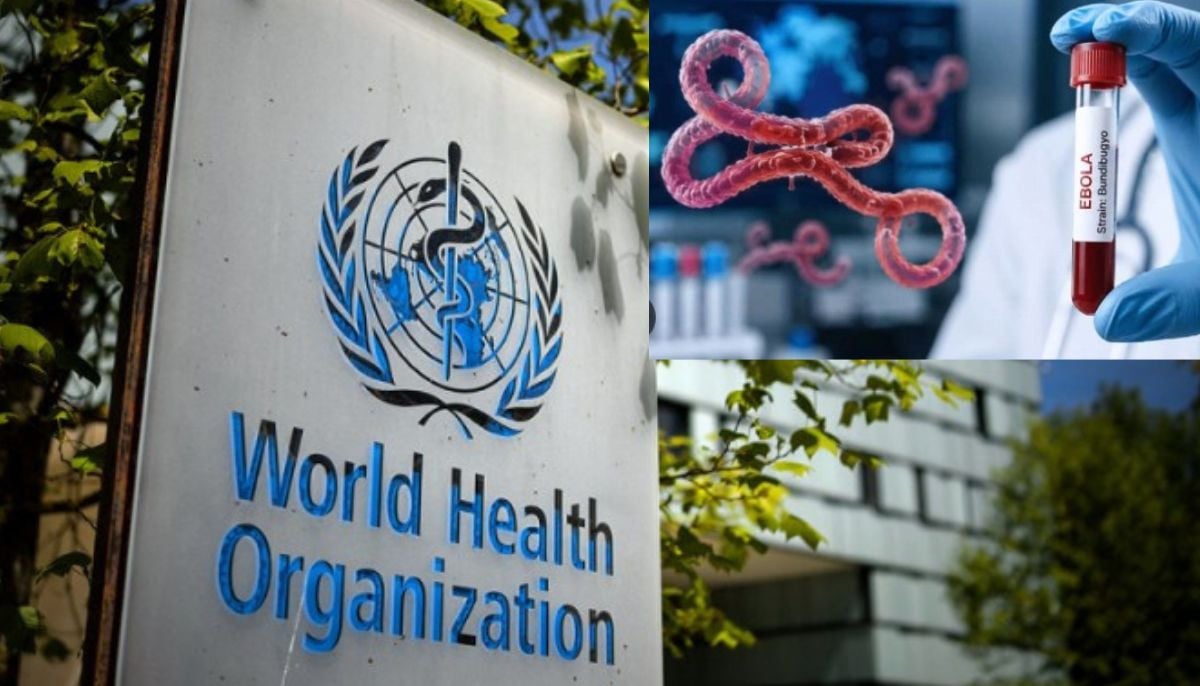
The Ebola virus outbreak is getting alarming day by day, reports the WHO.
The World Health Organization WHO said the number of suspected Ebola cases in the Democratic Republic of the Congo and Uganda has risen to 600, with 139 suspected deaths.
WHO said on Wednesday the deadly outbreak linked to hundreds of deaths in the eastern Democratic Republic of Congo likely started two months ago and is expected to continue to grow.
Director General Tedros Adhanom Ghebreyesus of WHO told reporters that health authorities in the Democratic Republic of the Congo are increasingly concerned about the spread and impact of the deadly virus.
WHO warns numbers are expected to rise, as European officials emphasize that the risk of a European outbreak is low.
Additionally, the spread of the rare Bundibugyo strain is alarming, as there is no vaccine and has alarmed experts because of how long it went undetected while spreading across a densely populated area, making it difficult to trace and isolate the contacts of infected individuals.
WHO had previously pointed to "a critical four-week detection gap" between when the first known case started showing symptoms and laboratory confirmation of the outbreak.
"Investigations are ongoing to ascertain when and where exactly this outbreak started," Anais Legand, WHO technical officer for viral threats, told reporters in Geneva. "Given the scale, we are thinking that it has started probably a couple of months ago."
Congo has tackled 16 previous Ebola outbreaks, but first responders say they lack basic supplies, ranging from painkillers and face masks to the motorcycles needed to trace contacts, undermining their efforts to prevent further spread.
Public Health Emergency:
As per the WHO, the Bundibugyo strain of Ebola that caused the outbreak has an average fatality rate of around 40%; unlike with the more common Zaire strain, there are no approved virus-specific therapeutics or vaccines, and testing capacity is limited.
He had declared the emergency at the weekend, the first time a WHO chief had taken that step without first consulting experts due to the urgency of the situation.
“The WHO assesses the risk of the epidemic as high at the national and regional levels and low at the global level,” Tedros said.
Notably, the WHO Emergency Committee confirmed the outbreak was a public health emergency of international concern but not a pandemic emergency.
Previous figures reported by DRC officials were an estimated 131 deaths from 513 suspected cases. The outbreak has arisen just five months after the DRC declared its previous epidemic over.
WHO emergencies chief Chikwe Ihekweazu said at the same news conference that the organization's “absolute priority now is to identify all the existing chains of transmission."


-
 Trump mail ballot order blocked by second Federal Judge as US Supreme Court prepares to weigh in
 -
 UK Parliament urges comprehensive AI bill to tackle human rights threats and regulatory gaps
 -
 AI stocks crash as top lab CEOs demand emergency technology slowdown amid extinction fears
 -
 Andy Burnham becomes first UK PM to complete Great North run for homelessness charity
-
Trump mail ballot order blocked by second Federal Judge as US Supreme Court prepares to weigh in
-
UK Parliament urges comprehensive AI bill to tackle human rights threats and regulatory gaps
-
 Canada courts EU for ‘unique alliance’ as US trade war intensifies
 -
 Jemima Goldsmith gets married again 22 years after Imran Khan split
 -
 Sweden election too close to call as centre-left leads by just one seat
 -
 Wisconsin Rep. Tom Tiffany swims to safety after plane makes emergency landing in lake
 -
 Trump tells Ukraine to stop targeting Russian diesel amid record US fuel prices
 -
 Lindsay Clancy trial backlash sparks shocking calls to strip women of the right to vote
-
 Donald Trump's childhood home in New York sells for $2 Million after major renovation
 -
US officials ‘secretly flew diplomat out of UK’ amid indecent image claims
-
Trump sparks backlash after calling a unified Ireland 'Fantastic' during visit
-
German firms shift billions to China as US investment plummets, IW study shows