Pakistan, Afghanistan agree to 'reopen border' within 48 hours
Sources say officials agree to reopen border, if no other dispute arises
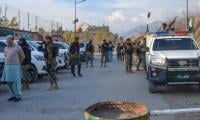
_updates.jpg)
The border between Pakistan and Afghanistan is expected to reopen within 24 to 48 hours following an agreement between officials from both countries, sources told Geo News on Monday.
The development comes a day after the two neighbouring countries agreed to a ceasefire, following week-long border clashes.
The sources privy to the matter said that officials have agreed to reopen the border if no other dispute arises.
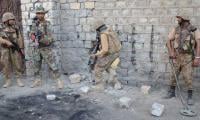
Pakistan closed the Torkham and Chaman borders with Afghanistan on October 12 after the Afghan Taliban, in association with their affiliated militants, attacked multiple Pakistan Armed Forces' posts along the border.
The border clashes between forces from the two countries began on the night between October 11 and 12 after the Afghan Taliban and militants launched unprovoked attacks against Pakistan’s border posts.
The resulting clashes led to the killing of over 200 Taliban and affiliated militants, while 23 Pakistani soldiers were martyred defending the motherland, the Inter-Services Public Relations (ISPR) said.
Pakistan also conducted "precision strikes" deep inside Afghanistan, targeting terrorists in Kandahar province and Kabul. A temporary 48-hour ceasefire was announced on October 15 at Afghanistan's request.
The temporary ceasefire was extended for another 48 hours on October 17 as delegations from the two countries headed to Doha, Qatar, for further negotiations.
Pakistan and Afghanistan agreed to an immediate ceasefire during the Qatar-mediated talks on Sunday.
Defence Minister Khawaja Muhammad Asif announced the deal for a ceasefire, with both sides scheduled to meet again on October 25 in Istanbul, Turkiye, to discuss "detailed matters".
Taliban spokesperson Zabihullah Mujahid also confirmed the development, saying that the parties agreed on a complete and meaningful ceasefire.
'Terrorism main reason behind tensions'
During an interview with Al-Jazeera Arabic, Asif said that the Afghan defence minister acknowledged that terrorism was the key reason behind the tensions between the two countries.
The primary objective of the ceasefire is to eliminate terrorism, he said, adding that both countries concluded that immediate elimination of terrorism was essential.
Asif maintained that terrorism had been affecting the border areas of Pakistan and Afghanistan for years.
The defence minister stated that the two neighbouring countries, after the ceasefire, will make "serious efforts to curb terrorism".
Failure to do so could pose serious threats to regional peace, he added.
Asif expressed hope that peace will return to the region after the ceasefire and relations will normalise between Pakistan and Afghanistan.
The resulting normalisation will also lead to the resumption of trade and transit and Afghanistan will be able to use Pakistani ports, he said.
'People can breathe'
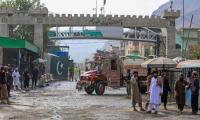
Meanwhile, residents on the frontier are hoping the ceasefire deal will end the clashes and revive crucial cross-border trade.
While the crossings remain closed, life has regained a semblance of normality, with bakers kneading bread, fruit and vegetable sellers wheeling out their carts, and customers frequenting shops.
"People can breathe and feel relieved. (But) before that, gunfire damaged a few houses in our village," said Sadiq Shah, 56, a shopkeeper from Baizai on the Pakistani side.
The ceasefire agreement has brought relief to many along the border.
"It's incredible: both sides are Muslim, (ethnic) Pashtuns, so why fight?" said Shah.
"Previously, trade with Afghanistan went through here, and now we're shooting at each other. What country does that?"
More than 1,500 trucks, trailers and containers carrying cement, medicines, rice and other basic goods are waiting in Torkham, according to a senior Pakistani customs official in nearby Peshawar.
Abdul Rahman Habib, spokesman for the Taliban's economy ministry, said fruit and vegetables were rotting as they awaited export to Pakistan.
"Businessmen are losing money," he said, without giving an estimate of the damages.
Habib warned that if this situation persisted, "it could increase prices and unemployment, and destabilise markets".
"Trade relations should be separate from political issues," he told AFP.




-
 Punjab by-polls: Notices served on minister, SAPM for ‘violating’ election code of conduct
 -
 27th Amendment empowers FCC to hear all constitutional cases: minister
 -
 JF-17 attracts strong attention at Dubai Airshow as friendly country inks procurement MoU
 -
 US lawmakers laud Punjab govt's initiative to modernise brick-kiln
 -
 Security forces gun down 30 terrorists in multiple IBOs in KP: ISPR
 -
 MQM-P calls for new province in Sindh
 -
 US report validates Pakistan military edge over India: PM
 -
 Banned TTP poses serious threat to Pakistan security: UNSC panel