In Kabul, wedding halls bring respite from gloom
Director of wedding hall says he spends $25,000 to $30,000 per month for municipal electricity
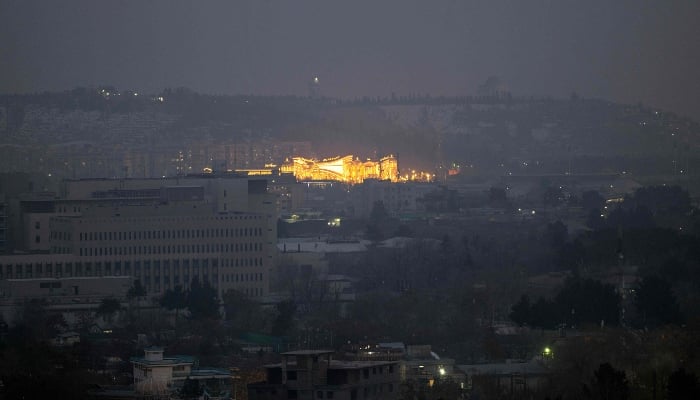
As night falls over Afghanistan’s capital of Kabul, the city is enveloped in darkness, with only a few dim lights and neon signs breaking through the thick winter smog.
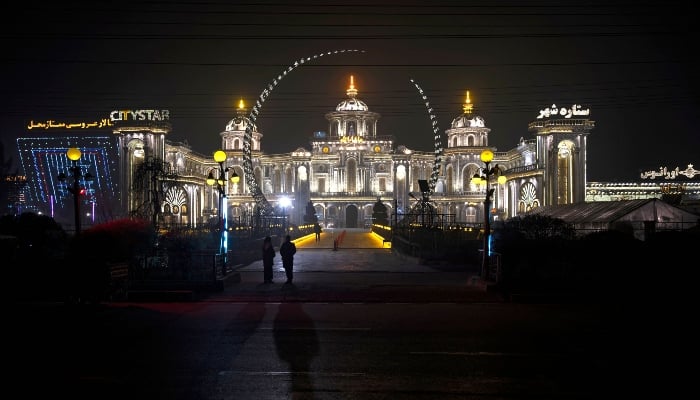
However, on certain street corners, towering wedding halls adorned with glittering lights stand in stark contrast, offering a rare glimpse of opulence in Kabul.
In a city of over six million, frequent power outages cast long shadows, leaving only the affluent able to afford the luxury of generators or solar panels to illuminate their surroundings.
Apart from a few vendors, the streets are deserted, a stark contrast with the chaotic hustle of the daytime.
People huddle at home to shelter from the cold and for lack of nighttime activities.
Since the Taliban took power in 2021 and imposed their strict rules, a veil of sadness has enveloped the capital.
There is no music spilling out from restaurants because it is forbidden, women are banned from parks, and walls decorated with colourful pro-peace graffiti have been splashed with calls to holy war.
The only bright lights emanate from the wedding halls that dot the city centre and escape some of the Taliban's scrutiny, as marriage is prized in Afghan culture.
The high-ceilinged halls are segregated by gender, with music only tolerated on the women's side.
"In Afghanistan, the marriage ceremony is the most important event for girls and boys. It's a once-in-a-lifetime event — we don't have much divorce," said Mohammad Wassil Qaumi, director of the Imperial Continental, a palatial white-and-gold hall that shines with a glitz reminiscent of a Las Vegas casino.
"It's the start of a new life so the light should be everywhere, that's why the city is bright, it should have a little bit of luxury!" he told AFP.
'Weddings are a necessity'
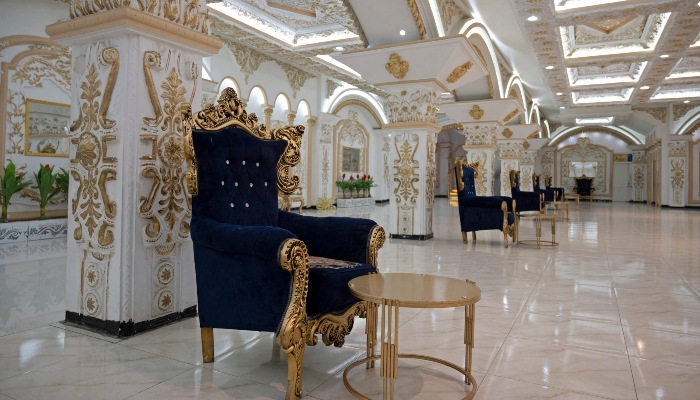
Bunches of plastic flowers, throne-style sofas, gilded trimming and neon lights fill the complex's four halls, some of which can accommodate up to 7,000 guests.
Qaumi, 32, says he spends $25,000 to $30,000 per month for municipal electricity, which provides a few hours of power per day.
To keep the lights on, he also pays just under $15,000 for generators.
To recoup his costs, he charges up to $20,000 for a wedding, in a country where 85% of the population lives on less than a dollar a day, according to the United Nations Development Programme.
"Weddings are a necessity in the Afghan culture, you have to invite more and more people" even if it means going into debt, said Haji Safiullah Esmafi, owner of the Stars Palace hall.
In another district of the capital, the City Star welcomes its guests with a beige and gold facade topped with three sculpted domes and a huge sparkling arch out front.
"Electricity is very expensive," admits the owner, 24-year-old Siyer Paiman.
But, he added, "people in Afghanistan like bright colours".
'Brightness of the city'
He has invested in solar panels and spends the equivalent of $12,000 to $19,900 on generators and electricity, which only covers six to seven hours a day, "and not always at night".
Afghanistan depends on its Central Asian neighbours for imported electricity.
With the hopes of increasing supply, the country is involved in several regional interconnection projects, but progress is slow.
"The current demand in Afghanistan is about 7,000 to 8,000 megawatts but they currently produce locally about 1,000 megawatts and import the rest from Central Asia," a sector expert who asked for anonymity told AFP, adding that renewable energy sources should be developed but that funding was lacking.
Power cuts also affect heating, with temperatures easily dropping below 0 degrees Celsius (32 degrees Fahrenheit).
Kabul's residents use stoves, burning almost anything from coal and wood to plastic or household waste, creating a fog of pollution in the city slung between mountains 1,800 metres (5,900 feet) above sea level.
In the nighttime gloom, wedding halls are "the brightness of the city", said Qaumi. "Here, everyone is very happy."
"People come here to meet friends and family, (they) wear new clothes, jewellery... showing off so much," he said of patrons enjoying one of the only places left in Kabul where this is still possible.


-
 New Covid variant BA.3.2 spreads across US as experts stress vigilance
 -
 Savannah Guthrie receives secret message as search for Nancy continues
 -
 Daylight saving ends in Australia: When clocks go back in April 2026
 -
 China develops AI VF tools to raise birth rates
 -
 Vanessa Trump sparks fans reactions as she rejects rumours of rift with Tiger Woods
 -
 Tragedy at Peru football derby: One dead, 47 injured in rally at Alejandro Villanueva Stadium
 -
 Where Vanessa Trump stands with Tiger Woods amid DUI drama
 -
 NASA Artemis II moon mission captures stunning Earth images during historic lunar journey
-
 Canadian citizenship new eligibility rules explained: who qualifies and what has changed
 -
A10 Warthog hit as US jet downed in Iran, one crew rescued and search underway for second
-
Meningococcal disease, dangerous bacterial infection, hits decade high in Canada
-
Sam Altman's OpenAI buys TBPN to expand communication strategy and shape AI public debate