Pakistan's CPI-based inflation slows to 4.1% YoY in December 2024
Data suggests while inflation is on a downward trajectory, core inflation remains a concern

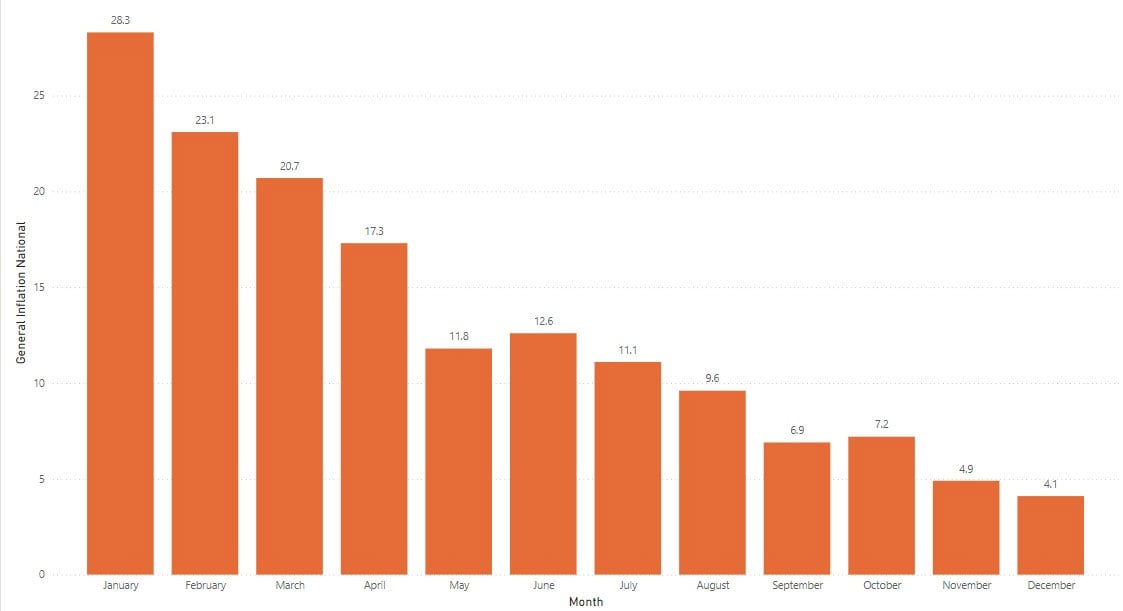
KARACHI: Despite persistent underlying pressures, Pakistan's Consumer Price Index (CPI) inflation for the general category fell to 4.1% year-on-year (YoY), down from 4.9% in November and a staggering 29.7% in December 2023.
However, the monthly inflation crept up slightly by 0.1%. While the drop from last year’s highs is notable, inflation still hovers above what would be considered comfortable for most economies.
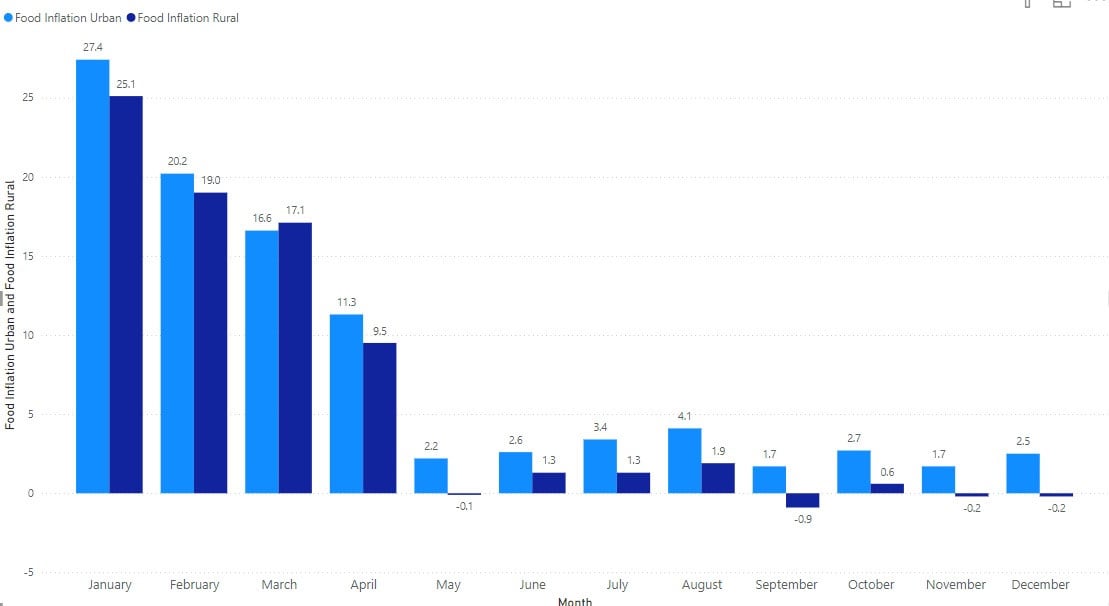
Urban areas saw a similar trend, with CPI inflation decreasing to 4.4% YoY from 5.2% the previous month, compared with 30.9% in December 2023. On a MoM basis, urban inflation decreased by 0.1%, a welcome sign that price rises in cities might be cooling off.
Rural areas, while still facing high inflation compared to urban counterparts, also saw a reduction in YoY inflation to 3.6%, down from 4.3% in November, but with a slight MoM increase of 0.3%.
A broader measure of inflation, the Sensitive Price Index (SPI), also showed improvement, decreasing to 4.2% YoY from 7.3% in November, although it was still a marked drop from 35.3% a year ago. On the MoM basis, SPI inflation increased by 0.8%, though it was still a better outcome than last year, when SPI had surged by 3.8%.
The Wholesale Price Index (WPI) continued its downward trend, dropping to 1.9% YoY from 2.3% in November. This reduction in wholesale inflation is likely to offer some relief for businesses and consumers in the months ahead, although it was still a notable increase from the negative 27.3% recorded in December 2023.
Underlying inflation, measured by core inflation metrics, paints a more nuanced picture. Non-food, non-energy (NFNE) inflation, which provides a clearer view of inflationary pressures excluding volatile food and energy prices, saw a reduction in both urban and rural areas.
Urban core inflation decreased to 8.1% YoY, down from 8.9% in November, but still well above comfort levels. Similarly, rural core inflation eased to 10.7% from 10.9%, though these figures remain high by international standards. Both urban and rural core inflation registered increases on a MoM basis, suggesting that fundamental price pressures are not yet fully contained.
The trimmed mean inflation, which excludes the most volatile price movements, also showed signs of moderation. Urban trimmed inflation decreased to 6.2% YoY from 7.5% in November, while rural trimmed inflation dropped to 6.5% from 7.8%. Yet again, month-on-month changes indicated ongoing pressures, with small increases in both urban and rural areas.
The data suggests that while inflation is on a downward trajectory from last year’s peaks, core inflation remains a concern, particularly in rural areas.


-
 HSBC to phase out fixed-pay allowances by 2028 in major compensation overhaul
 -
 TotalEnergies expands US renewable venture with KKR in $1.2B solar portfolio deal
 -
 Australian telecom shares tumble as SpaceX moves closer to direct-to-cell market
 -
 World Bank in crisis aid talks with dozens of nations amid global shocks
 -
 Deutsche Bank chief explains why German election results alarm foreign investors
 -
 China orders development of national blockchain network in economic blueprint: Here’s why
 -
 Tesla renames 'full self-driving' to 'assisted driving' in Europe: What to know
 -
 US sanctions ICC hours after former judge wins Nobel Prize: What to know