Florida witnesses 'Miami English' emerge as a distinct dialect
Miami English is characterised by unique yet minor pronunciations, grammatical nuances, and word differences
Have you ever wondered what English would sound like if it danced to the rhythm of Latin beats?
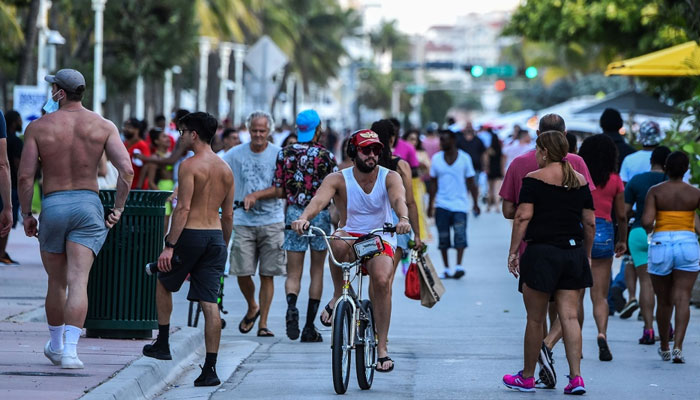
In the vibrant streets of Miami, a linguistic phenomenon known as 'Miami English' has been quietly shaping its unique identity, blending the tapestry of Latin and Anglo-American cultures. The linguistic landscape of South Florida has undergone a transformative journey, giving birth to a dialect that resonates with the city's diverse history.
Since the 1950s, when waves of Cuban immigrants flooded into the region, Miami has evolved into one of the most bilingual cities in the United States. The linguistic evolution observed in Miamians is not dissimilar to the language shifts experienced by immigrant communities across the nation.
Phillip M. Carter, the Director of the Center for Humanities in an Urban Environment at Florida International University, sheds light on this linguistic kaleidoscope. "In Miami, there are many ways of speaking English. The variety we have been studying...is characterised by unique yet minor pronunciations, grammatical nuances, and word differences influenced by the longstanding presence of Spanish in South Florida," explains Carter.
Miami English is not a mere fusion of languages; it's an intricate dance of words, where English phrases, like lively dancers, borrow their moves directly from Spanish – a linguistic phenomenon known as calques. This linguistic dance is not confined to recent immigrants; it transcends generations, with even the children of immigrants adopting it as their co-first language.
Carter emphasises the novelty of these calques, highlighting their broader historical existence. "What is remarkable about them is that we found they were not only used in the speech of immigrants but also among their children, who learned English as their co-first language," notes Carter.
In a linguistic twist, Miami English stands distinct from Spanglish. It is an English enriched with calques, offering a linguistic journey that mirrors the cultural mosaic of Miami itself. As Carter aptly points out, this phenomenon is not entirely unprecedented, drawing parallels to the adoption of 'dandelion' from the French term 'dent de lion,' meaning lion's tooth.
As Miami English continues to flourish, one can't help but marvel at the dynamic interplay of cultures, shaping a dialect that is truly Miami's own.
In the words of Phillip M. Carter, "Miami's linguistic kaleidoscope reflects the city's vibrant cultural heritage, where English takes on a captivating dance with its Latin counterpart."


-
 Cambridge picks 'parasocial' as 2025 word of the year, driven by fan culture and AI
 -
 16th-century caravanserai unearthed in Harappa
 -
 Dubai’s bravest make fastest-ever ascent of Burj Khalifa, set Guinness record
 -
 Woman’s attempt to kill cockroach sparks deadly apartment fire in South Korea
 -
 'Who's it?' Late-night doorbell prank mystery ends with bizarre twist
 -
 When blue met green: Jaybirds create a one-of-a-kind hybrid
 -
 Australian scientists grapple with 'despicable' butterfly heist
 -
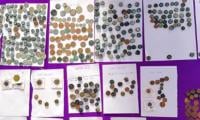 Floods from Koh-e-Suleman bring 2,000-year-old coins to Punjab