Gaza conflict: Israeli currency plunges to almost 8-year low
The ongoing clashes are also badly affecting Israel’s economy and foreign investment
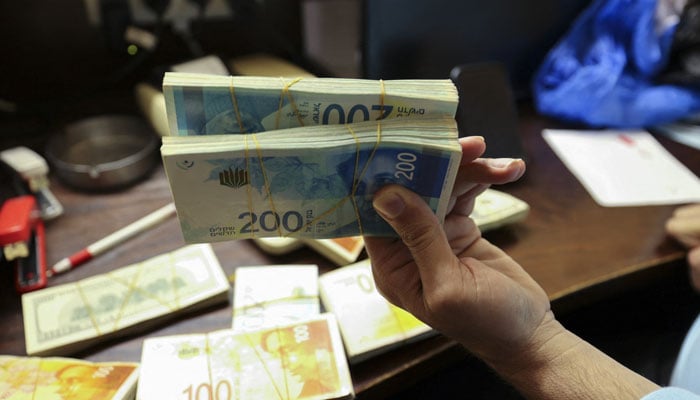
Amid rising tensions in the Middle East in the backdrop of the Gaza conflict Israeli currency — shekel— fell to an almost eight-year low against the US dollar on Monday as over 1,200 people have lost their lives since Saturday.
Over 550 Palestinians have been martyred in aerial bombing by Israeli jets on the housing areas in the besieged Gaza Strip while the death toll from Saturday's surprise large-scale attack by Hamas surged to more than 700 on the Israeli side, according to Arab media reports.
The currency pair is not particularly active during Asian hours. The shekel was last down more than 3% against the dollar at 3.9581.
It is pertinent to mention here that this was the worst such drop in the value of the shekel in years.
In view of the rising escalation in the Middle East, experts believe shekel will continue its nosedive streak against the greenback.
In addition to this, the clashes were also badly affecting Israel’s economy and foreign investment.
“Foreign investment in Israel has dived by 60% in the first quarter of this year,” The Times of Israel reported, citing a report published by the Finance Ministry.
“Israel lured about $2.6 billion in foreign investment in the first three months of the year, reflecting a 60% decline compared to the average quarterly figures recorded in 2020 and 2022,” the Israeli media reported, quoting official data.
—Additional input from Reuters.


-
 Robinhood unveiled tools allowing AI agents to trade stocks and make purchases for users
 -
 US equity funds draw weekly inflows as investors regain confidence
 -
 TSX futures edge higher as US-Iran deal boosts sentiment ahead of GDP data
 -
 Iran conflict risks ‘doubly scarring’ euro zone consumers, ECB research finds
 -
 Temu hit with $232 million fine by EU over illegal product sales
 -
 Wix.com slashes 20% workforce in major AI restructuring
 -
 Nvidia CEO Jensen Huang joins Beijing's university board, FT reports
 -
 Dropbox CEO Drew Houston exits after 19 years leading the cloud storage pioneer
-
 Ferrari unveils $649K ‘Luce’: Inside specs, innovations of Jony Ive-designed electric supercar
 -
EU set to impose major DMA fine on Google in antitrust case
-
South Korea’s Bae Kyung-hoon calls for public share in ‘AI wealth’ amid Samsung labor dispute
-
Meta’s new ‘Forum’ app triggers 6% drop in Reddit stock