How 9/11 terror attack on World Trade Center changed films, music, books over 20 years
9/11 is considered a world-changing tragedy that continues to instill global cultures
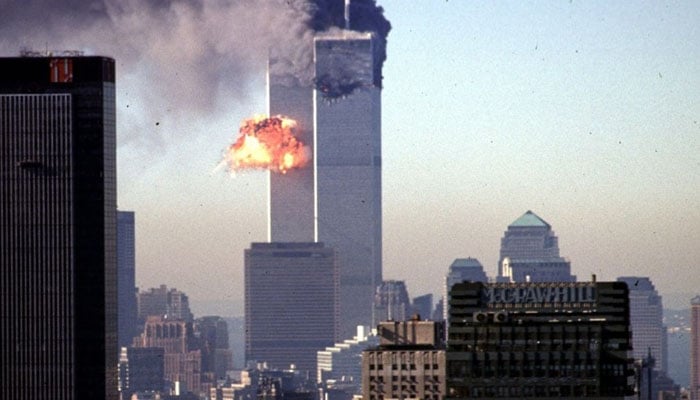
Four passenger airplanes were taken over by terrorists from al-Qaeda on 11 September 2001 striking the World Trade Center Twin Towers in New York City and taking the lives of thousands of civilians.
After a passenger revolt, the final plane crashed into a field, and another struck the Pentagon. In the attacks, 19 terrorists and 2,977 people perished.
The Osama bin Laden-planned strikes launched a two-decade war on terror that saw US invasions of Iraq and Afghanistan. The war on terror is thought to have resulted in the deaths of up to 4.6 million people.
9/11 had a significant cultural impact on the arts as well. After the comparatively tranquil 1990s, 9/11 created a tense climate in the US. While many Muslims in Western nations have faced decades of rising Islamophobia, fear of terrorism has become a widespread concern, Euro News reported.
In the early wake of the attacks, much art was touched. Many events that incorporated visual allusions to the fallen buildings or showed images of terrorist attacks in New York or on airplanes were postponed.
Lilo & Stitch, a Disney animated movie, is one well-known instance. In the original version of the movie, many of the protagonists commandeer a Boeing 747 and fly it around Honolulu's downtown. An extraterrestrial spaceship was added to the picture to take the place of the airliner.
The 53rd Primetime Emmy Awards were moved from September 16 to October 6 before being moved once more to November 4 due to the US starting its bombing campaign in Afghanistan.
Trailers and posters for the upcoming Spider-Man film had images of the Twin Towers removed, while Martin Scorsese's film Gangs of New York was delayed by an entire year to be eventually released in December 2002.
Fearing that American listeners wouldn't appreciate lyrics disparaging of the city's police officers, the enormously anticipated debut album 'Is This It' from indie-rock pioneers The Strokes had its US release delayed and the song 'New York City Cops' replaced with the B-side 'When It Started'.
There are plenty more instances of adjustments like this. However, the effects of 9/11 persisted well into the twenty-first century. From postmodern winner Don DeLillo's 2007 book "Falling Man" to Jonathan Safran Froer's prodigious 2005 debut "Extremely Loud & Incredibly Close," novelists have explored how the attacks impacted the tone of the country.
Nicolas Cage appeared in Oliver Stone's 2006 catastrophe picture World Trade Center, which was as grasping and deceitful as you can imagine it to be. Paul Greengrass' United 93, which concentrated on the passenger rebellion on the fourth plane and was produced with the help of the passengers' families, made a stronger effort to discover humanity in the incident.
Whether intentionally or not, Clint Eastwood's 2014 film American Sniper does a good job of capturing the fear and violent patriotism that followed the assaults in the US. The life of Chris Kyle, the deadliest sniper in US military history, is depicted in Eastwood's biography. There are many examples of the new stereotype of nameless Muslims being killed on television. It's a stereotype that's been parodied a little.
The movie that most effectively depicts the mood after 9/11 may not be American. British comedian Chris Morris' 2010 film Four Lions had a bunch of inexperienced would-be terrorists plotting an assault on the London Marathon. The movie, in which Riz Ahmed had one of his earliest leading roles, portrays both the irrationality of extremism and the tense climate of Islamophobia in Britain.


-
 Trump demands Rep. Ilhan Omar resign after DOJ court filing references over 'fake' name
 -
 Carney rejects Trump administration’s accusation of Canada interfering in US midterm elections
 -
 Ukraine, Russia and US set to hold key talks in Abu Dhabi in early November
 -
 Australia lawmaker Hannah Beazley’s staff threatened days after Helen Haines attack
 -
 New York AG Letitia James challenges attempt to disqualify her from Cornell investigation
 -
 Trump administration targets Alaska Senate race over fears of ballot confusion
 -
 Gunman near Paris kills one, injures several as mayor suspects ‘racist, Islamophobic’ intent
 -
 Trump faces Republican backlash over Ramaswamy ad ahead of Florida rally
-
 DOJ opens criminal investigation into Trump Ally Corey Lewandowski over DHS tenure
 -
UK, France hold first-ever joint nuclear exercise amid Russia tensions
-
Trump says Starlink restrictions lifted, Ukraine disputes claim
-
First Russian diesel shipment en route to New York after Trump-Putin energy deal: Report