Wildfire rages across Eastern Canada
Local officials have received no reports of injuries or missing persons
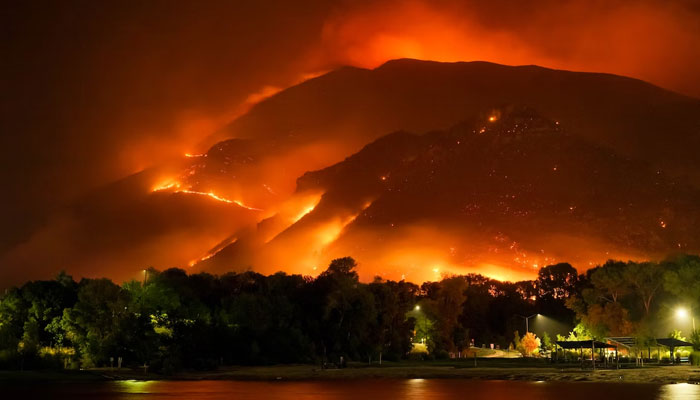
Wildfires spread across eastern Canada's capital, Nova Scotia, prompting the evacuation of thousands of locals and the closure of schools.
The violent wildfires that occurred near Halifax have forced officials to declare a state of emergency
According to the Halifax Regional Municipality, temporary accommodation has been set up for people fleeing the fire, and they reminded residents early on Monday that the evacuation orders are mandatory, Al Jazeera reported Monday.
According to authorities, the wildfire raging due to strong winds and tinder-dry woods, has damaged dozens of homes and impeded rescue services.
David Meldrum, Halifax Fire's deputy chief, informed reporters Monday that while there had been no reports of missing persons or injuries, there had been damage to structures.
"Our firefighters and other partners worked hard to evacuate a large area of our city yesterday, and last night, we remained on scene," Meldrum said.
"We had 100 firefighters here on scene overnight, fighting spot fires, extinguishing structures that were on fire, and preventing more structures from being lost wherever we could," he said.
Meanwhile, the 480,000-person port city of Halifax announced a state of emergency to assist in fighting the inferno, which continued raging in the surrounding Tantallon and Hammonds Plains areas.
Furthermore, according to another statement Monday, "more than 60 hectares (148 acres) had burned while about 16,400 people had been evacuated from their homes."
"There is not yet a complete count of damage, but it is anticipated that several structures have been lost," the municipality said.
Nova Scotia Premier Tim Houston said "water bombers" had arrived from the eastern provinces of New Brunswick and Newfoundland and Labrador and aided the local crews.
"We are in contact with our municipal and federal partners to ensure every resource is exhausted," Houston tweeted.
Canadian Prime Minister Justin Trudeau said his government was "ready to provide any federal support and assistance needed."
"The wildfire situation in Nova Scotia is incredibly serious," Trudeau tweeted.
"We’re keeping everyone affected in our thoughts, and we’re thanking those who are working hard to keep people safe," he said.
The western Canadian provinces of Alberta and British Columbia have also experienced exceptionally warm weather, which has triggered a number of out-of-control wildfires and reduced oil and gas production.
However, the majority of the fires, have since been put out.
Several experts have cited climate change as a cause of the global worsening of extreme weather events like wildfires, heatwaves, and tropical storms.
Previously, in 2016, 100,000 people were evicted from Fort McMurray as a result of forest fires in the Alberta oil sands region, which also severely hurt the Canadian economy.
In British Columbia in 2021, a terrible heatwave caused hundreds of fatalities.


-
 UK pushes EU to include British firms in 'Made in Europe' industrial scheme
 -
 Bill aimed at protecting Americans from data centre energy costs blocked in Senate
 -
 ICE officer, accused of shooting Venezuelan man and lying to investigators, pleads not guilty
 -
 Trump officials move migrants children to unlicensed Texas facilities, raising deportation fears
 -
 New UFO files reveal chilling details of 1952 ‘flying saucer’ incident
 -
 How a ‘millisecond’ software glitch caused six hours of chaos across UK airports
 -
 Russia takes over Nestlé and Auchan operations amid growing nationalisation campaign
 -
 Zelenskyy launches ‘Carpathian Eight’ initiative as Russia-Ukraine conflict escalates