India overtakes China as world's most populous country
Latest estimates place India's population at 1,425,775,850, while China's population stands at 1.425 billion inhabitants
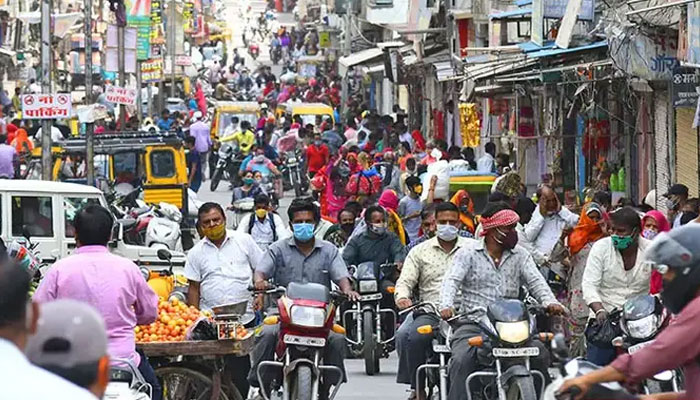
India has surpassed China to become the most populous country in the world, according to new figures from the United Nations' Population Division.
The latest estimates place India's population at 1,425,775,850, while China's population stands at 1.425 billion inhabitants. This marks a significant shift in global demographics.
The population growth in both India and China has been slowing down, but India's growth rate is still higher than China's. However, India's population growth rate has been declining, reaching its lowest level since 1960 at 0.61 percent in 2023. In contrast, China's population growth rate has been on the decline as well, experiencing a decline after reaching a peak of 1.426 billion inhabitants in 2022.
It is noteworthy that India has managed to surpass China in population despite its significantly smaller land area. India covers an area of 3.287 million square kilometers, while China spans a massive 9.597 million square kilometers. In terms of total area, India ranks seventh globally, while China is the largest country in Asia and the third largest country in the world.
The margin between India and China's population is closing rapidly due to India's higher population growth rate. This is attributed to the considerable number of women entering their reproductive years in India. Additionally, India contributes significantly to the global working-age population growth, accounting for 23% of the growth between 2020 and 2025.
India's status as the most populous country in the world has implications for various aspects, including social, economic, and environmental factors. With a large youth population, India faces the challenge of providing adequate education, healthcare, and employment opportunities. Additionally, the country's infrastructure, resources, and environmental sustainability are under pressure due to the growing population.
India's population milestone also highlights the country's appeal as a tourist destination. Before the COVID-19 pandemic, India attracted approximately seven million tourists from around the world. The country boasts famous attractions such as the Taj Mahal and the Amber Palace, which draw visitors from far and wide.
The shift in global population dynamics carries significant implications for India, China, and the world at large. It underscores the need for effective population management strategies, sustainable development practices, and investments in social and economic infrastructure to ensure a prosperous future for the world's most populous nation.


-
 Kemi Badenoch pledges to end £100,000 childcare 'Cliff Edge' ahead of conservative conference
 -
 Heavy rains trigger dangerous flash flooding and road closures across Athens, Texas
 -
 UK PM Andy Burnham scraps Starmer-era plans to curb jury trials amid legal backlash: report
 -
 Lindsay Clancy case sparks debate in Africa: 'It will never happen here'
 -
 US Supreme Court opens new term with high-stakes big oil bid to toss climate suits
 -
 Trump defiant on Midterms during Ohio rally as republicans fight to hold congress: report
 -
 Tens of thousands protest in Madrid as anger grows over Spain’s housing crisis
 -
 Trump names Jay Clayton to lead new White House 'Super Intelligence' task force: report