Print Story
X




Walking the tightrope to rely on state grants for art institutions or leaving them to fend for themselves
Pakistan is always beset by the meager resources that are allocated to institutions engaged in the promotion and preservation of mediums, forms and artifacts of culture. The more advanced countries of the world are cited as examples of more generous funding for the arts. It goes into the making of a nation’s cultural profile.
But now, even in the mother of democracies, as the Conservative Party won the elections in the United Kingdom, it was perceived as bad news by the arts institutions in the country. During their previous five years in power, there were cuts in the allocations made to the arts and the art institutions across the country. The art institutions were hoping for Labour to win to get some respite from the shrinking budgets allocations for arts.
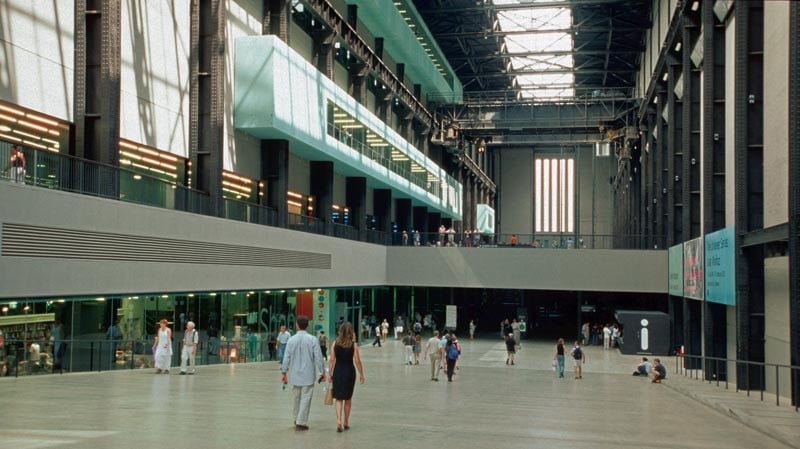
According to media reports, there has been persistent pressure on art institutions to become less dependent on handouts by the state and raise their own resources by being friendlier with the current approaches and attitudes of the public at large. The Tate Gallery started on a programme to have live dance shows in the gallery as well as more interactive initiatives. This was done to attract younger population which is weary of the traditional image of such places as being too highbrow and aloof. And hence distant and boring and not exciting enough.
About a decade ago, the Italians opened their archeological sites to be either sponsored by big businesses and even some to be put on lease for a period of time. It was their answer to the shrinking allocations and less generous grants by the state for the preservation and maintenance of thousands of big and small archeological venues. It was cynically called putting one’s patrimony for sale to the highest bidder.
Similarly, in the United States which has never been known for its state spending on the arts and arts institutions, the role of museums has been under the spotlight. Over the years, the American museum directors have become responsible not only for questions of aesthetics but increasingly for the business side of their institutions as well. They are supposed to be both artistic directors and chief executive officers. Given the relatively meager public funding for arts in the Americas, the CEO’s element is no small part of their job and helps explain why in many cases the identity of the museum is so closely tied to its leader.
In the good old days, the Soviet Union spent a sizeable amount on the promotion of art and culture but the attended criticism was that these were being used by the state for controlling freedom of expression. In retrospect, this criticism was not all that unjustified as the State took upon itself the responsibility of directing what was good and bad for the people.
In India, which followed a quasi socialistic model at least in the beginning, a separation was made between the popular and the highbrow. While the popular and the kitsch could fend for itself or was considered a money spinner like the popular cinema, the highbrow needed to be protected, salvaged and promoted. Many institutions were set up primarily for this purpose and the classical and the highbrow was actually flashed as the true culture of the country.
One wonders what the current state of affairs is as the divide between the two has been fuzzier and more fluid. Besides, private sector has made greater inroads into the sacred temples of high art.
One does not know about the Chinese system policy regarding the support to artistic forms, expression and institutions made for that purpose. Being a tightly controlled system, as far as free speech and expression is concerned, it is likely that the there is a fair degree of censorship and the funding is conditional with strings attached. It would be worthwhile to study and understand their system because it appears that only the Chinese have the money to splash around while the rest of the world is chanting the mantra of slowing economy and drying up of extra cash.
In the museums in the US, many assumptions are being challenged like emphasis on splendid buildings, the primacy of curatorial authority and the balance between rich donors, for whom museums are often personal vanity projects and the public who see museums as shared common goods. It is said that if museums are to make any headway in engaging with audiences, they must also work on the broadening of their appeal.
Some have been good at increasing the attendance through the internet. The three Ws of the western museums -- white, western and womanless -- are also being questioned. The biggest challenge facing the directors is keeping true to the idea of what a museum should be -- a plaything for rich collectors whose philanthropy comes with an increasing number of conditions or a precious centre for public education.
Splitting the top job into artistic director and business head, a common model in the performing arts has never caught on in the museum world. But it appears that this model is being touted as a successful one. Its implications for countries like Pakistan do not auger well as the private sector is averse to any activity that does not pay itself back readily.
Perhaps the intervention by the state is a lesser evil for saving art institutions from becoming personal vanity projects and staying as shared common goods.