Print Story
X

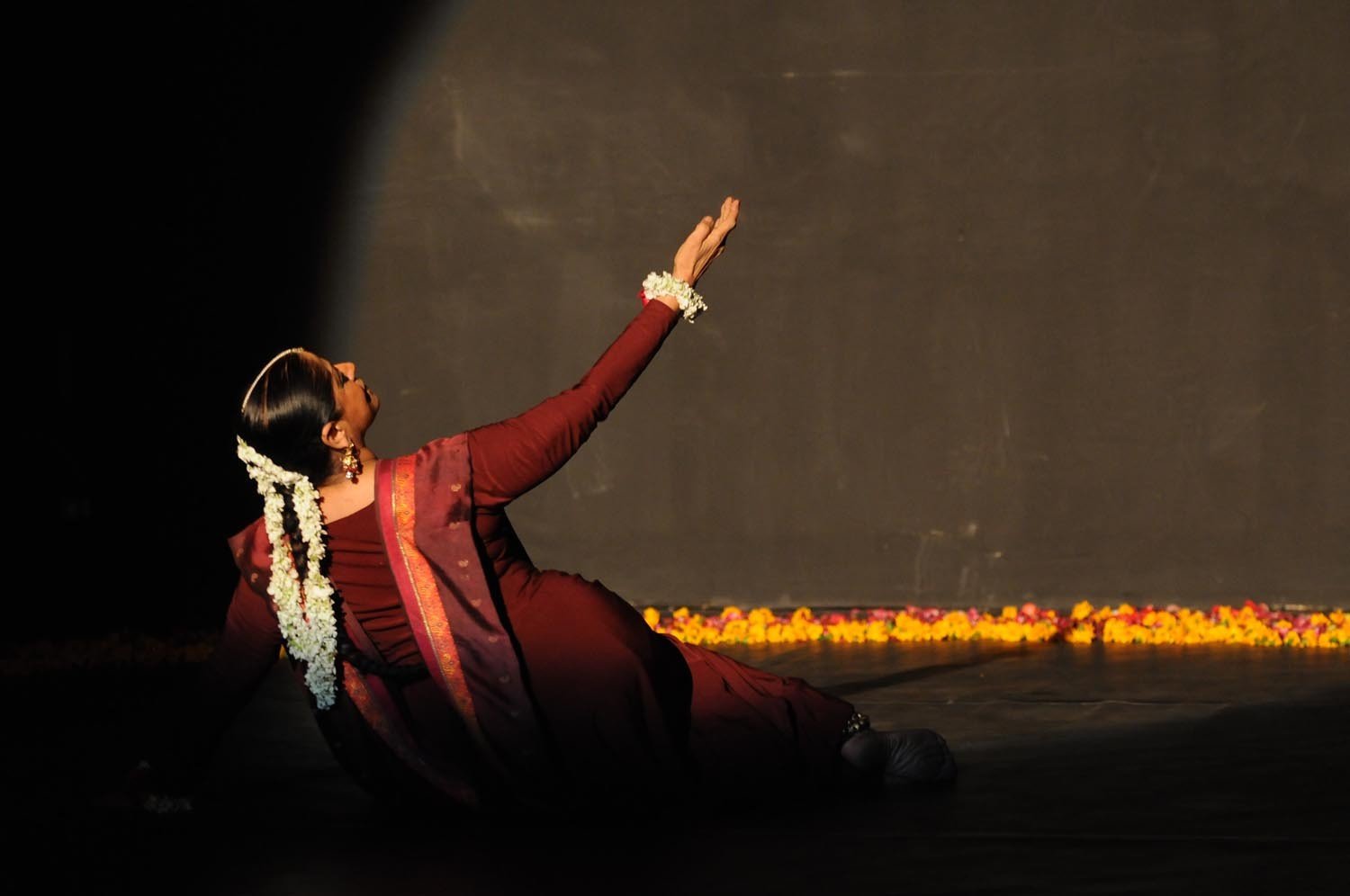
It appears a dance performance has become a permanent feature of any conference held in the country.
In the past few years, one has seen a great proliferation of conferences of various types, particularly in Karachi and Lahore. These have perhaps been the consequence of the great interest people have taken in them, as they arrive in droves, are eager to participate and know more about the writer, dramatist, vocalist or painter in person.
It is indeed a very encouraging sign, given the conditions that otherwise prevail in society.
Despite a black picture of absolute doom and gloom, no matter how bad the conditions or how scary the circumstances, people have to live and continue with their essentials of life on a daily basis.
That classical dance has become a permanent feature of international and national conferences may be a bit of a surprise. For it was not that long ago that classical dance was considered to be an immoral and inappropriate activity even from among the performing arts.
Since morality has become the major determinant of everything, it was not even considered a part or aspect of our culture that should be proudly owned. It was not acceptable at all, even if music was accepted grudgingly with plenty of caveats thrown in.
Dance was in abundance in the films but films were meant for the lowly, depraved and fallen and not enough attention was paid to it by the moral custodians of society. Dance, in the classical tradition, was a ‘no no’ activity to be discouraged from being performed.
So, why has the change now taken place for its qualified acceptance?
Perhaps, the opportunity to see dance on screen through internet and satellite channels is much more now than ever before. Also, there is such diversity of expression and experimentation that the classical styles, whether ours or of the West, appear to be timid affairs. Perhaps, seeing the comparison, the moral brigades finds the classical forms, which were banned earlier or frowned upon, more acceptable to the bolder stuff that is seen and relished by the common viewers. The dance in film, particularly the Indian film, draws more influence from contemporary expression than classical forms.
Rather than holding a dance performance of the contemporary forms it may be considered safer to stage the classical forms. It can also be brandished as a symbol of being refined and very civilised and yet safe from the barbs of those wanting to build a society based on some puritanical order.
The basic shortcoming of allying poetry and dance is often the illustrative role that a dancer is subjected to. It stays in the minds of the audiences that the function of dance becomes only an interpretative one and the possibilities are then so limited and curtailed that it inhibits the actual physical expression of the body. Similarly, when lyrics are rendered in the song format, the entire focus again shifts to song and lyrics -- limiting the possibilities inherent in the movement of the body.
In the past, to avoid this limitation, the gurus wrote ‘thumris’ and composed them in a particular manner to retain the major role of dance. These thumris were specifically called ‘nach ang thumris’.
Since there has been a break with tradition, primarily due to the Partition, the whole vocabulary of dance has not been transferred to the generation of audiences -- so they seek an outside reference to give a more concrete form to the abstraction of movement and sound. They have only been trained in receiving the word, and that too in its more literal sense. The dancer, in this society has to rely on poetry for the purposes of communicating with the audiences.
Nahid Siddiqui, besides being influenced by the tradition of the Sufis, where movements in dance are concerned, in particular the whirling dervishes from Konya and the ‘dhammal’ practiced in full vigour on our shrines, has been involved with creating dance numbers around Urdu poetry -- as in this case the ‘ghazal’ of Ghalib, "Aah ko chahiye ik umar asar hone tak", and the poem of Faiz Ahmed Faiz, "Zindan ki ek shaam". The pitfall of venturing into such territory -- that dance should stand out as an autonomous form and not become a compendium to lyrics or words -- was skilfully negotiated by her. Being wary of reducing it to a tableaux interpretation, she was particularly keen to avoid this illustrative rendering of poetry where the word takes precedence over the movement of the dancer.
In the traditional repertoire of kathak, the dance numbers have been choreographed against the rich lore of the various anecdotes, incidents and happenings that have been part of our cultural make-up. The mudras have a stylised dimension; the audiences do not generally have a problem associating with being exposed to traditional cultural references. Since this is no longer the current practice in our country, words are required to fill in the void.
She also went through the kathak repertoire, the invocation, the thumri, the tarana and moved on to the last part of pure dance with subtle rhymthic variation on intricate ‘taals’. It was breathtaking and transported you into another realm. Her very fine division of the taal left everyone spellbound and added to the traditional view that the most important aspect in kathak is footwork. Her footwork was exceptional and yet it retained effortless grace.
The shagirds of Nahid Siddiqui also participated in the programme. The singing duo of Chand Khan and Suraj Khan, the sons of Hussain Baksh Gullo, were impressive with their vocal input as indeed were the musicians who have been with Nahid Siddiqui through thick and thin.