Print Story
X




Every carving and shrine in Markhal speaks of endurance
| M |
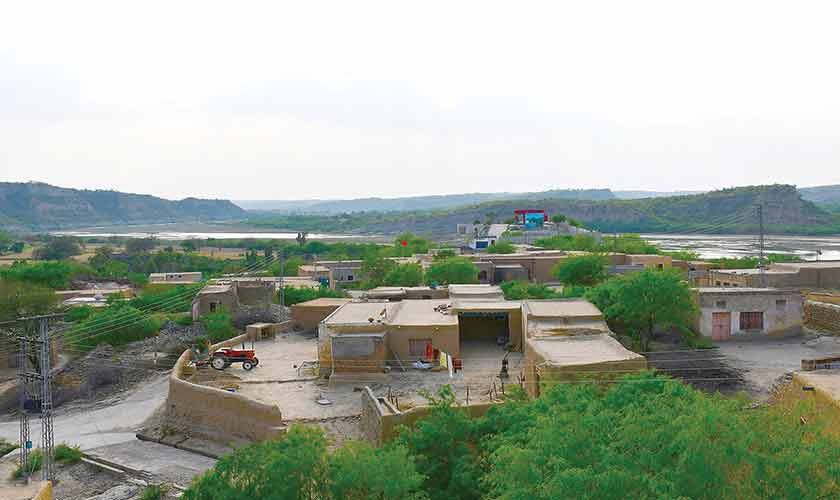
arkhal is a remote village in Chakwal’s Talagang tehsil, located on the left bank of the Soan River, approximately 42 kilometres northwest of Talagang town. From the surrounding hills, one has a beautiful view of the village and the Soan River. Its picturesque setting between the Soan River and the Qavala Nullah makes Markhal one of the most magnificent villages in the Talagang region. Mud-plastered houses juxtaposed against the hills and the Soan River turn this village into a marvel of Talagang. Despite its beauty, the village is marred by a lack of basic healthcare facilities and a higher secondary school for girls.
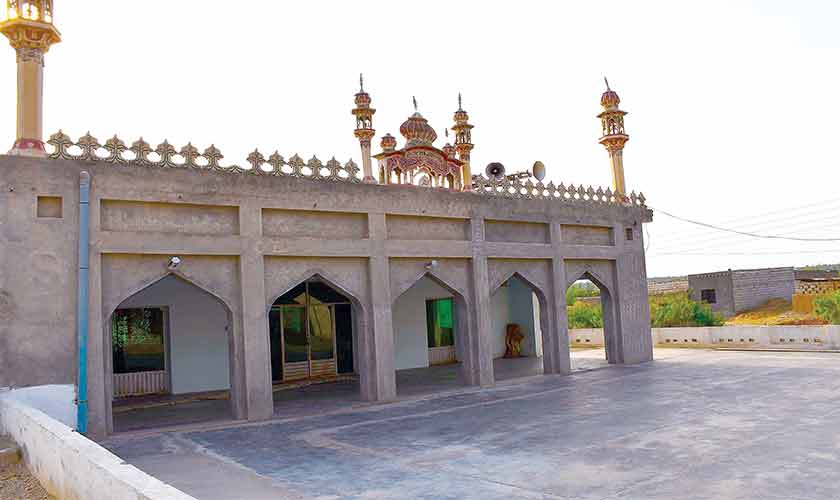
The village is noted for its shrines, historic mosque and tombstones. I visited Markhal village with my friend, Tariq Mehmood Malik, a historian and author familiar with the history and heritage of ever village in the area, many of which face significant economic challenges. In Markhal, we interviewed many residents about the Jamia Masjid, shrines and tombstones. During the interviews with community members, I learnt that the Jamia Masjid Noorani is the oldest mosque in the village. It was probably built when the village was founded. It was a small mosque originally but later underwent renovations and expansion. According to Qari Umer Bilal Awan Mairvi, the current pesh-imam of the mosque, the mosque was rebuilt around 1930. Stone brought from the nearby Markhal hill was dressed and used in the mosque. The place from where the stone was extracted was called Kali Watey Wali Jagah. The villagers themselves brought the stone over. Two eminent masons of Markhal, Mian Muhammad and Baba Gul Muhammad, constructed the mosque. Stone was the main building material in pre-Partition buildings in most of the villages in Talagang tehsil. The mosques, mansions and temples in the area were all built of stone, which was readily available from tributaries of the Soan River.
Although the mosque has been rebuilt relatively recently, some of its original features remain. The western boundary wall is part of the original construction. It has been built using both small and large dressed and undressed stone slabs used by Mistri Mian Muhammad and Mistri Baba Gul Muhammad. In addition to the western boundary wall, the structure retains one of its original wooden doors, decorated with geometric and floral patterns.
Both the lower and upper sections of the door feature geometric patterns. The upper part has bell-shaped designs. These patterns are also found in carved wooden doors of several old havelis and mosques in the Pothohar region. In addition to wooden doors, similar patterns can be observed in the stone-built mosques of Chakwal. Two mosques featuring bell-shaped patterns are located in Vahali and Haral village in Choa Saidan Shah tehsil. Both those mosques were constructed by Mistri Sher Muhammad, the most celebrated mason in Chakwal district who hailed from Takiya Shah Murad village near Khanpur and inspired many masons in both Jhelum and Chakwal.
Jamia Masjid Noorani, Markhal, once had a wooden ceiling that was removed during the mosque’s reconstruction. The mosques in Talagang, constructed in the 19th and 20th Centuries, featured certain distinctive elements, including wooden doors and ceilings. Some of the most impressive wooden ceilings can still be found in the Shahi Jamia Masjid of Khichi village, Jamia Masjid Farooq-i-Azam of Singwala village and the Jamia Masjid of Jasial village,
Mud-plastered houses juxtaposed against the hills and the Soan River turn this village into a marvel of Talagang.
Khichi/ Khichian is a historic settlement in Talgang tehsil, located about 27 kilometres from Talagang city on the Talagang-Khushsab Road. The village is famous for its Mughal-era mosque. This mosque was built in the second quarter of the 18th Century. This mosque has remarkable inscriptions, wooden doors, pillars and ceilings. The main prayer hall of the mosque is covered with a wooden roof that rests on decorative pillars. It carries a variety of floral designs. There are four decorative pillars attached to the eastern wall. It appears that there were an equal number of decorative pillars on the western wall of the mosque. This is apparent from the volutes now placed on the wall. The pillars are probably now concealed in the thickness of the wall. Each of the pillars has a single volute carrying floral designs. A similar wooden ceiling and pillared hall can be seen in the Jamia Masjid, Chawli, in Chakwal and the Jamia Masjid in Maria Sharif in Pindi Gheb.
Jasial is another village in Talagang tehsil notable for its magnificent Jamia Masjid. It has a remarkable painted wooden ceiling that reflects the mastery of Talagang’s craftsmen. I have seen another impressive wooden ceiling in Jamia Masjid Farooq-i-Azam in Singwala village. This mosque is noted for its remarkable paintings and woodwork. Mistri Sirajuddin, the famous mason of Pachnand village in Lawa tehsil, built this mosque. Such wooden ceilings were used in most of the stone-built mosques constructed in several villages located along the Soan and its various tributaries. I have documented the woodwork found in most of the mosques. However, a majority of the mosques have either been renovated or rebuilt. Most of the wooden ceilings were removed during renovations or reconstruction.
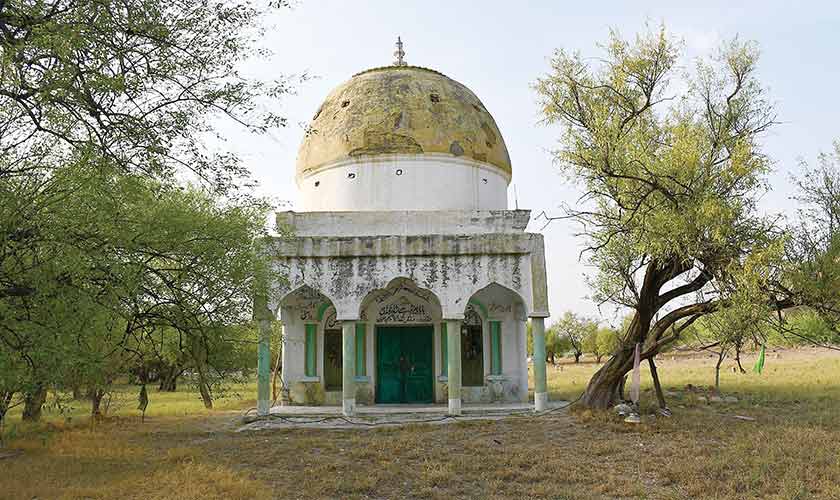
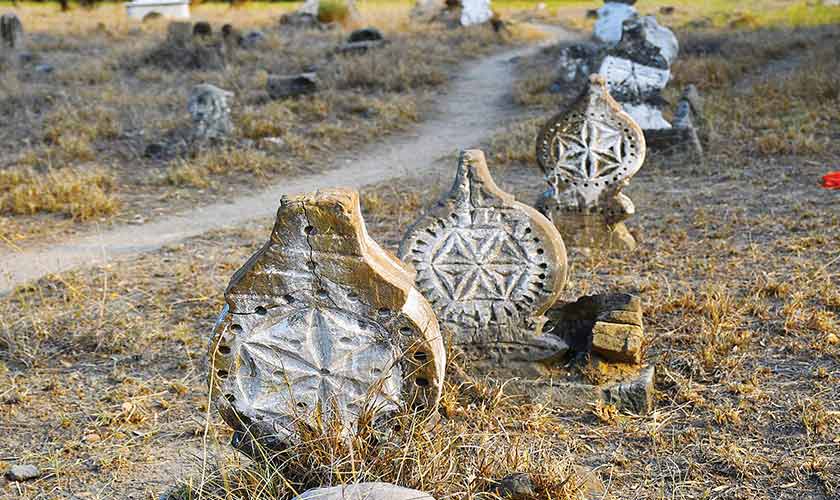
The masons of Markhal were also skilled stone carvers. Apart from the mosque, the tombstones in Markhal cemetery are a testament to their workmanship. The old village cemetery is located near the Government Girls’ Elementary School. There are several tombstones in the necropolis. The cenotaphs are marked with two tombstones on the northern and southern sides. Both tombstones/ gravestones carry various floral and geometric designs. However, the most attractive are the representations of the musalla (prayer rug) and the lota (ewer). A few women’s graves have carved combs. Similar decorative gravestones are found in many villages in the Talagang tehsil. According to Sher Zaman Awan of Markhal village, most of these tombstones were engraved by Mistri Mian Muhammad, Mistri Baba Gul Muhammadand Mistri Nur Akhmat. There are two shrines in this cemetery. The village has a total of four shrines. Two are located in the cemetery near the school. The most popular shrine belongs to Baba Pir Budhey Shah Hamdani. According to Qari Umer Bilal Awan Miarvi. Baba Pir Budhey Shah Hamdani came from Chakrala village in Mianwali around 1925. He says he got the information from his father, Fazl Ilahi, who was 97 years old when he passed away in 2018. Fazl Ilahi had a thorough knowledge of the village’s history and was well-acquainted with the shrines, their masons and other historical details, including Hindu and Sikh shrines.
Baba Pir Budhey Shah Hamadani lived in the village for only four years before his death. His descendants came from Chakrala to retrieve his body for burial there, but the residents of Markhal wanted him to be buried there. Upon the request of the residents of Markhal, his descendants agreed to allow him to be buried in Markhal. A beautiful tomb was built over the grave of Baba Pir Budhey Shah Hamdani. His urs is held in March every year. During this event, qawali performances take place at the shrine. In addition, various traditional sports and games are organised. These include a bull race and kabaddi.
From interviews with community members, I learnt that the village has produced two notable kabaddi players: Baba Sanwal Khan and Malik Jehangir Khan. Baba Sanwal Khan was a renowned kabaddi player and a devoted follower of Maira Sharif darbar in Pindi Gheb. Maira Sharif is famous for the shrine of Khwaja Ahmad, a deputy of Pir Pathan (d. 1850). Many residents of Markhal village followed Khwaja Ahmad Mairvi. Another notable disciple of Hazrat Sani (d. 1931), the first sajjada nashin of the Maira Sharif darbar, was Haji Suba Khan. To this day, many followers of the Maira Sharif Darbar identify with the suffix “Mairvi” as an indication of their Sufi affiliation. Maulvi Ahmed Mairvi was a disciple of Khawaja Faqir Muhammad Abdullah Mairvi (d. 1975). Moreover, Qari Umer Bilal Awan Mairvi is a follower of Sahibzada Farooq Ahmed, the current sajjada nashin of the darbar of Khawaja Ahmad Mairvi.
Another shrine in the cemetery is dedicated to Shah Chan Gilani. The Awan tribe is in the majority in the village. There are a few households of Gilani Sadat in Markhal. The grave of Baba Pir Charag Shah Gilani is located in an enclosure that also contains the graves of his ancestors and descendants.
The writer is an anthropologist at the Pakistan Institute of Development Economics, Islamabad. He has authored 17 books on Pakistan’s cultural heritage and anthropology. He tweets @kalhorozulfiqar. He may be contacted at zulfi04@hotmail.com