Print Story
X




Syed Haider Shah’s resting place continues to shape local identity and devotion
| R |
awalpindi is home to several Sufi shrines, which represent the city’s living heritage. I have been visiting and doing ethnographic research on the shrines in various localities of Rawalpindi. A few of the shrines belong to the Naushahiyya branch of the Qadiriyya order, which was founded by Syed Muhammad Naushah Ganj Bakhsh Qadiri (d 1654). In Rawalpindi, there are four notable Naushahiyya shrines. These are:
1. Sain Muhammad Ali Naushahi in Naushahi Mohalla (formerly known as Arjun Nagar)
2. Sain Fateh Ali Khan alias Fateh Khan Qalandar in Dhoke Ratta
3. Sain Hakim Nizamuddin in Dhoke Hafiz (now called Hafiz Town)
4. Syed Haider Shah in Teli Mohalla
All these Sufi adepts, except Syed Haider Shah, were initiated into the Naushahiyya order by mentors from Sanghoi Sharif in the Jhelum district. Sain Muhammad Ali Naushahi (d. 1916), Sain Fateh Ali Khan Naushahi (d. 1952) and Sain Hakim Nizamuddin Naushahi (d. 1946) were all Punjabi poets. They made significant contributions to the promotion and development of the Punjabi language through their literary work. I have written an article discussing Qadiri Naushai Saints of Rawalpindi, on these Qadiri Naushahi mystics that was published on June 1, 2022, in The Friday Times-Naya Daur.
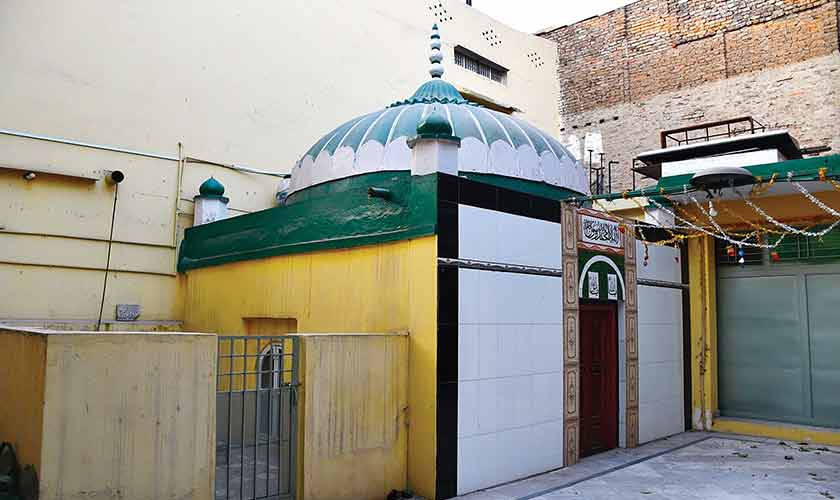
The earliest Qadiri Naushahi mystic of Rawalpindi city was Syed Haider Shah. The shrine of Syed Haider Shah is located in Rawalpindi’s Teli Mohalla. This shrine, often referred to as Bohar Wala Darbar, is named after the prominent banyan tree standing nearby. I had known that the shrine was in Teli Mohalla, but I didn’t know its exact location. When I went there, I asked several people about the shrine of Syed Haider Shah. Each person I spoke to mentioned only the Bohar Wala Darbar in Teli Mohalla.
When I finally arrived at the shrine, I noticed the name Baba Syed Haider Shah displayed at the main entrance. This might explain why some people have difficulty locating the shrine. Those wishing to visit should ask for Bohar Wala Darbar instead of referring to it as Syed Haider Shah ka Darbar. The shrine is situated on Street 4 in Teli Mohalla, and can be accessed from Murree Road via Bhabra Bazaar.
According to Muhammad Hanif Hanfi, the author of Ruh Da Rishta (1999), Mir Syed Kalan Badshah and his deputies spread the Qadiriyya-Naushahiyya order in Pothohar. Syed Mir Kalan Badshah Qadiri Naushahi was a deputy of Hafiz Qaimuddin Barqandaz Qadiri Naushahi (d.1765), who was a deputy of Pir Muhammad Sachiar Qadiri Naushahi (d.1707). Pir Muhammad Sachiar Qadiri Naushahi was a deputy of Haji Muhammad Naushah Ganj Bakhsh (d.1654), the founder of Naushahiyya Silsila.
Hanfi (1999:294) states in Ruh Da Rishta that Syed Mir Kalan Badshah Qadiri Naushahi had five prominent deputies (khulfa), Mian Muhammad Saeed (Sahe), Mai Nawab Sahib Qadiri Naushahi, Mian Khair Muhammad Qadiri Naushahi (d 1783-84), Shaikh Muhammad Ji Qadiri Naushahi (d 1759) and Mian Muhammad Azeem Qadiri Naushahi. Except for the shrine of Mai Nawab Sahib Qadiri Naushahi, the shrines of these deputies are located in various villages of the Gujar Khan tehsil. The shrine of Mai Nawab Sahaib (Bibi Jhandi) is located in Kallar Syedan’s Pir Garata village.
Syed Sharif Ahmad Sharafat Naushahi (1971:151) writes in Sharif ul Tawarikh” Vol 3, No 4, that Syed Haider Shah was a disciple of Mian Muhammad Saeed (he has written his name as Mian Muhammad Saeed instead of Mian Muhammad Sahe) Qadiri Naushahi, who played a significant role in disseminating the teachings of his spiritual mentor, Mir Kalan Badshah. The shrine of Mian Muhammad Sahe is located in Gujar Khan’s Jairo Ratial village. Mian Zafaryab Ali Qadiri Naushahi, the sajida nashin (custodian) of Mian Muhammad Sahe Qadiri Naushahi Darbar, disputes the claim that Syed Haider Shah was a deputy of Mian Muhammad Sahe and rejects it outright. Mian Zafaryab Ali Qadiri Naushahi, whom I interviewed, argues that Mian Muhammad Sahe did not initiate anyone into the Qadiriyya Naushahiyya Silsila, meaning that he did not grant bayat (the formal pledge of allegiance) to anyone. The interactions between disciples and their spiritual mentors provide valuable insights into how these relationships and teachings shape community values and individual identities. The varying perspectives on the spiritual mentorship of Syed Haider Shah, as contested by Mian Zafaryab Ali Qadiri Naushahi and validated by other written sources, illustrate the evolving nature of tradition and authority within the Sufi lineage.
The shrine of Syed Haider Shah is an important symbol for the community. It represents their religious devotion and local identity.
One learns from Syed Sharif Ahmad Sharafat Naushahi (1971) that Syed Haider Shah had two prominent deputies: Mian Ghulam Hussain and Syed Buzrug Shah. I have visited the shrines of both these Qadiri Naushahi mystics. The shrine of Sain Ghulam Hussain is located in Maira Jaffar in Islamabad’s G-12. Sain Ghulam Hussain was a resident of Maira Abadia, where he preached Qadiriyya- Naushahiyya teachings. He had two prominent deputies: Sain Fateh Muhammad, a resident of Maira Abadia, and Mian Ghulam Muhammad, from a village in Hasan Abdal tehsil. In Maira Abadia, his deputy, Sain Fateh Muhammad, continued his teachings. Later, the sons of Sain Fateh Muhammad, Sain Mehmood and Sain Chan, continued to preach Qadiriyya-Naushahiyya wisdom in Maira Abadia and other villages of Pothohar. Sain Mehmood Qadiri Naushahi also built a mosque in Maira Jaffar, which is located adjacent to the shrine of Sain Ghulam Hussain Qadiri Naushahi.
Syed Buzrug Shah’s shrine is located in Chak Beli Khan’s Bahiya village. As per the spiritual genealogical chart on the wall of Syed Buzrug Shah Hamdani’s shrine, Syed Haider Shah was the deputy of Mian Muhammad Sahe Qadiri Naushahi. Syed Buzrug Shah Hamdani spent his time preaching the Qadiriyya-Naushahiyya order in the Chak Beli Khan area. The graves of his disciples and descendants, who played a significant role in preaching, are located within the shrine complex, including those of Baba Zaman Ali Shah, Baba Alam Shah and Baba Chan Pir Shah.
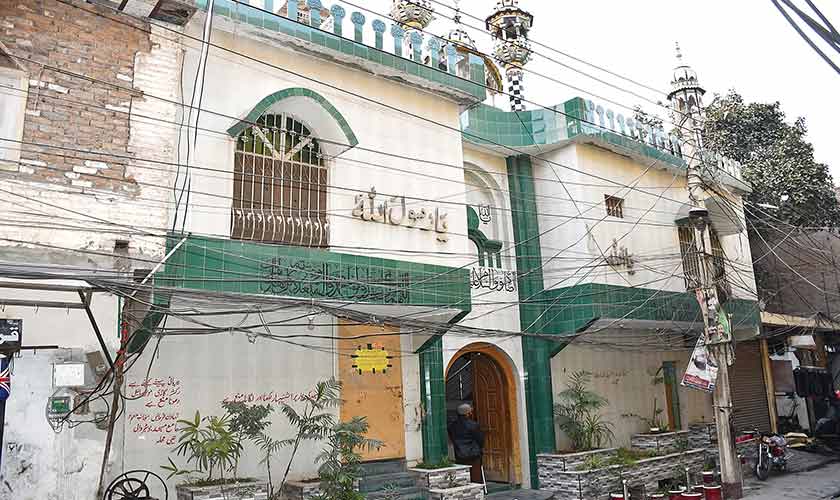
Syed Haider Shah spent much of his life in Teli Mohalla, where he ultimately passed away and was buried. It is not known when he died. According to Pir Abdul Hameed Abbasi Qadiri Naushahi, the current sajjada nashin of the shrine, Sain Mardan Abbasi Qadiri Naushahi was a disciple of Syed Haider Shah and took care of the shrine. He built a tomb over the grave of Syed Haider Shah. In the shrine enclosure, there are several graves, including those of Sain Mardan Abbasi and his family. After the death of Sain Mardan Abbasi Qadiri Naushahi, his wife took care of the darbar. Later, two other female mystics from the Abbasi family took over. In the Naushahiyya order, there has been a strong tradition of women becoming sajjada nashins after the death of their fathers.
I would like to share a few examples from my ethnographic fieldwork in the Pothohar region. After the death of Hafiz Hayat Bakhsh Naushahi in 1881, his daughter, Syed Noor (d 1936), became the sajjada nashin of his darbar and continued her father’s legacy. The shrine of Hafiz Hayat Bakhsh is located in Islamabad’s Kirpa village. He was a deputy to Syed Ghulam Shah Naushahi (d. 1871). Similarly, the daughters of Qazi Illahi Bakhsh Qureshi Hashmi also continued their father’s legacy. The shrine of Qazi Illahi Bakhsh Qureshi Hashmi, a deputy to Hafiz Hayat Bakhsh, is located in Bhagwal village of Chakwal. He died in 1896 and was succeeded by his daughter, Mai Bhag Bhari. After her passing in 1922, her sister, Mai Noor Bhari, became the sajjada nashin of the shrine.
Later Haji Abdul Aziz Abbasi Qadiri Naushahi (d 1983), son of Jehandad Khan Abbasi, became the sajjada nashin of the darbar of Syed Haider Shah. Adjacent to the shrine is the Masjid Bohar Wali. As per the inscription on the facade of the main entrance, it was built in 1922. This mosque has been rebuilt now.
The Bohar Wala Darbar of Syed Haider Shah, like many other shrines in Rawalpindi, draws a large number of visitors during the annual urs, which takes place on August 22 each year. This shrine, along with the other shrines discussed in this article, presents considerable potential as a destination for religious tourism in the Rawalpindi district. We can understand these shrines within the framework of how people and communities attribute meaning to symbols, rituals and social practices in their cultural context. The shrine of Syed Haider Shah is an important symbol for the community. It represents their religious devotion and local identity.
The writer is an anthropologist at the Pakistan Institute of Development Economics, Islamabad. He has authored 17 books on Pakistan’s cultural heritage and anthropology. He tweets @kalhorozulfiqar. He may be reached at zulfi04@hotmail.com