

Print Story
X




A journey through Malam Jabba’s meadows and alpine skies
| “S |
wat is where the stars lose their way, not because they’re lost, but because they’ve found beauty worth staying for.”
An elder once quietly shared these words with me, recounting the awe of a visitor from a distant land who had wandered through this fairy-tale valley and fallen deeply in love with it.
Nestled between majestic mountains where nature speaks through cascading waterfalls, alpine forests, lush meadows, tranquil lakes and star-filled skies, Swat is often hailed as the adventure capital of Pakistan. From the lower valley towns where life flows with the river, to the wild, untouched meadows that kiss the clouds, every turn of its winding roads seems to whisper a new story. In Swat, they say, time does not pass, it sits quietly with you.
This account is a journey, starting from the foothills and winding upwards through green valleys, sparkling lakes, roaring waterfalls and peaceful pastures. It is a gentle ascent into a world that still breathes fresh, holds silence and welcomes travellers like old friends.
Before Swat lifts you into the heights of its mountains and meadows, it gently welcomes you through its enchanting lower valley, where history murmurs through ancient walls, rivers hum beside winding roads and the warmth of smiles makes you feel instantly at home.
Marghazar is the opening chapter of this journey: a peaceful valley where time seems to breathe a little slower. At its heart lies the White Palace, a gleaming symbol of royal heritage built in 1940. Crafted from white marble that glows under the sun, the palace was once the summer retreat of the Wali of Swat. Surrounded by fruit orchards and cooled by mountain breezes, it feels like a quiet dream you can walk through.
Not far ahead lies Fizagat, often seen as the gateway to upper Swat. It’s where many travellers pause, stretching their legs and soaking in their first real taste of the valley’s charm. Fizagat Park sits beside the river, where families gather, children play and cool breeze carries whispers from the mountains.
Tucked away from the bustle is Bagh Dheri, a small town cradled in lush greenery and gentle quiet. It’s the kind of place where mornings begin with birdsong and days unfold to the slow rhythm of nature.
Further upriver, you’ll reach the iconic twin towns of Madyan and Bahrain. Madyan is known for its traditional wooden homes, fresh trout and a market that feels untouched by time. A little further, Bahrain sits at the meeting point of the Swat and Daral Rivers. Its bazaars burst with colour, embroidered shawls, handmade jewellery and friendly shopkeepers eager to share stories with passers-by.
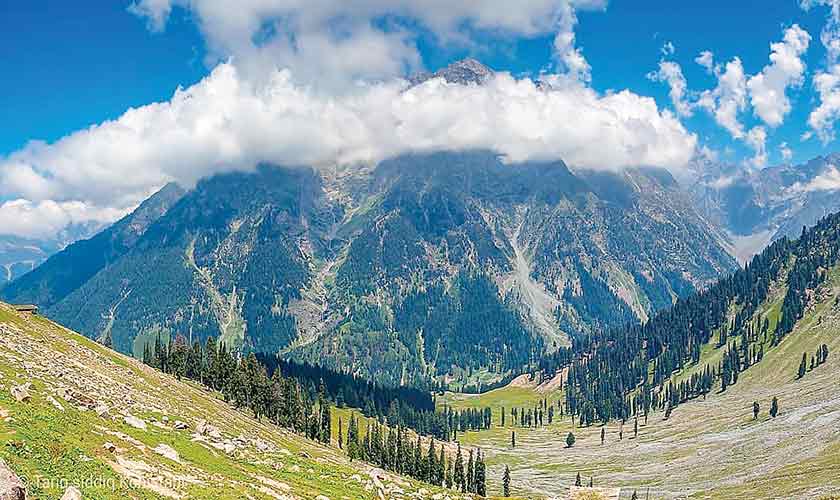
As you journey further upward through Swat, the landscape begins to shift. Towns grow quieter, roads twist more tightly and nature becomes wilder, denser and greener. The middle region of Swat is where forest paths lead to adventure, valleys unfold like soft carpets and waterfalls sing from hidden corners. It’s ideal for family getaways, nature lovers and those seeking peace above the everyday noise.
Maindam Valley, perched at around 1,300 metres above sea level, offers a gentle pause on the climb. The valley is spacious, tranquil and scenic. It is surrounded by wooded hills and dotted with modest homes and small orchards.
A little higher and deeper into the wild lies Gabin Jabba, nestled at approximately 2,500 metres. A haven of thick pine forests, alpine meadows and crisp mountain air, Gabin Jabba lives up to its name, meaning “honey marshes” in Pashto. In the height of summer, its meadows come alive with wildflowers, bees and the hum of adventure. This serene spot is especially loved for its trekking routes and untouched natural beauty.
Then comes Malam Jabba, Swat’s most famous adventure destination. Located at an elevation of 2,800 metres, it turns into a snowy wonderland in winter and a green retreat in summer. The Malam Jabba Ski Resort is one of Pakistan’s best-known spots for skiing, snowboarding and chairlift rides. During the summer, hiking trails, zip-lining, and fresh breeze make it just as exciting.
Tucked into a lush fold of the mountains lies Jarogo waterfall, the tallest in Swat. Plunging nearly 400 feet (120 metres) through dense forest, it pours like a silver ribbon against a backdrop of green. Reaching it requires effort: a three-hour drive from Matta followed by a short hike. But it is, without doubt, worth every step. Here, surrounded only by trees, rock and the thunder of falling water, nature feels untouched and deeply alive.
If Swat is a stairway to nature’s wonders, then Kalam is the grand doorway at the top. Situated at an altitude of around 2,000 metres (6,600 feet), Kalam is the pulsing heart of upper Swat, alive with travellers, yet wrapped in pristine beauty. The moment you arrive here, everything changes: the air is cooler, the scent of pine stronger and the mountains seem to stand taller, as if keeping quiet watch over all who pass through.
The Swat River splits into two icy-blue branches here, fed by glacial melt from distant peaks. The town is lined with cosy hotels and cafés, where the sound of the river is a constant companion. It’s the perfect base for those ready to explore the alpine world beyond.
A short drive from Kalam takes you to Matiltan Valley, where snow-covered peaks rise like frozen giants. The mighty Falak Sar, Swat’s tallest peak, soars beyond 5,900 metres (19,400 feet), often cloaked in clouds like a shy sentinel. The valley is known for its vast glaciers, biting breeze and breathtaking stillness.
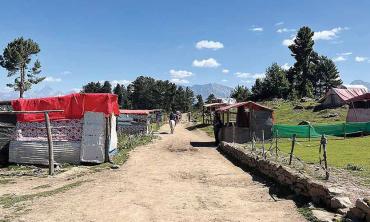
The meadows serve as summer grazing grounds for Gujjar nomads
Just before Matiltan, travellers pass through the Usho forest, a dense jungle of towering pine trees shrouded in mist. Often wrapped in fog, the forest has an eerie beauty. Sunlight filters through the tall trunks and the air is thick with the scent of pine and damp earth. It remains a favourite for families, hikers and nature photographers alike.
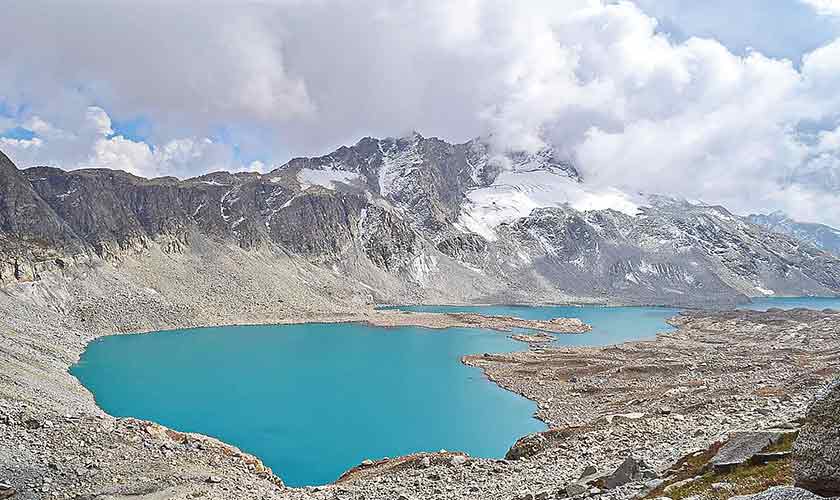
Further along the trail lies the shimmering Blue Water, a surreal, crystal-clear stream with a turquoise glow. This natural marvel feels almost unreal, especially set against a stark backdrop of grey rocks and white glaciers.
Hidden deep in the upper reaches is Shahi Bagh, a lush green basin that bursts into bloom with wildflowers during summer. Surrounded by towering peaks, the meadow resembles a royal garden suspended in time. Hikers often describe it as one of Swat’s most beautiful and best-kept secrets.
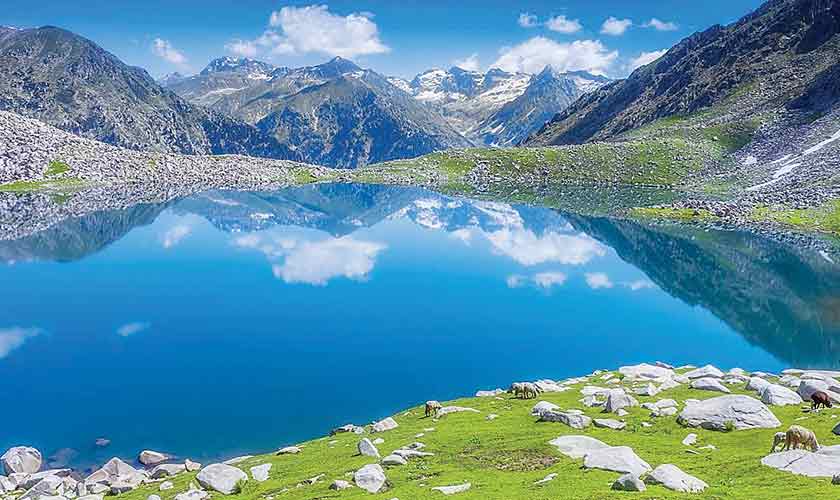
As you climb into the highlands of Swat, something magical begins to unfold. The dense forests fall away, giving rise to sweeping alpine basins. Within their silence lie shimmering lakes that seem to mirror the sky.
At the heart of this lake country lies the ever-popular Mahodand Lake, nestled at around 9,400 feet above sea level in the Ushu Valley. Surrounded by tall pines and snow-capped peaks, Mahodand’s cool blue waters are ideal for boating, fishing or simply inhaling the crisp mountain air. Trout glide through its depths, and the lakeside meadows offer the perfect spot to unfurl a mat and unpack a picnic.
A little further along lies Kundol Lake, sitting proudly at 9,950 feet. This alpine gem is reached via a scenic trek from Ladu village. Encircled by mountains that stand like silent guardians, Kundol’s crystal waters mirror every hue of blue and green. It’s a favourite among campers, who pitch their tents to spend the night beneath a sky ablaze with stars.
For those seeking solitude, Daral and Saidgai Lakes offer twin adventures. Perched high above the valleys, they require full-day treks, but the reward is profound: still, glassy waters, wildflowers in bloom and panoramic views that defy imagination. Their untouched beauty evokes the feeling of having stumbled upon something sacred.
Then comes Bishigram Lake, often missed, but never forgotten. Tucked away in the Bishigram Valley, it is a hidden jewel where only birds, drifting clouds and a few fortunate travellers find peace.
Spin Khwar, Izmis and Gudar Lakes are among the lesser-known gems scattered across the folds of Swat’s highest mountains. These places aren’t defined by crowds, but by purity. Each lake offers a distinct setting for hiking, camping and the quiet joy of reconnecting with both nature and oneself.
High above the tree-line, where roads fade and only narrow pedestrian trails lead onward, Swat’s alpine world unfolds like a secret chapter, wind-kissed and breathtaking. This is where the valley wears its most majestic crown: a cluster of high-altitude pastures known to locals as The Alpine Crown.
Names like Palanchai Meadows, Chukail Meadows, Desan, Beshai, Bakser, Jhansahi, Sirai and Badai are more than mere points on a map; they are lived experiences carved into the very heart of the mountains. Stretching between 9,000 and 12,000 feet above sea level, these meadows are the summer grazing grounds for Gujjar nomads.
Further afield, Lushkar Gah, Maidan, Jabba and Taip Meadows lie cradled between ridgelines, offering sweeping views of snow-draped ranges, plunging valleys and night skies lit with stars.
In summer, wildflowers bloom like painted carpets, herds roam freely and ice-melt streams snake across pastures that seem to touch the sky. Reaching these meadows is no easy task. Most require long hikes; some demand full-day treks. But every step comes with its reward: solitude, raw beauty and the quiet thrill of stepping into a world seemingly untouched by time.
Adventurers crossing Gudas Pass, perched at over 13,000 feet, follow ancient trails once used by herders and traders.
And then there is Shaitan Gwat, or Devil’s Corner - a narrow, exposed ledge along a cliff face where even seasoned hikers pause and steady their breath. It is not for the faint-hearted. It marks the threshold to some of the most surreal alpine landscapes in all of Pakistan.
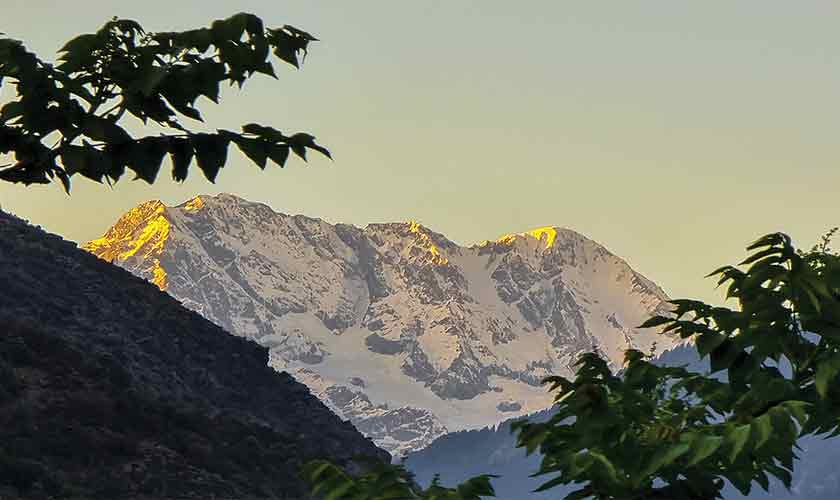
Above the meadows and lakes, where clouds brush the earth and silence reigns, rise the crown jewels of Swat’s alpine world. Falak Ser, standing at 5,918 metres (19,416 feet), is not just the highest peak in Swat; it is a dream carved in ice. Its name, meaning King of the Skies, perfectly reflects its commanding presence. Only seasoned mountaineers attempt its ascent. Even from a distance, it inspires awe.
Nearby stands Koh-i-Sajan, a lesser-known peak, often cloaked in clouds and folklore. Locals whisper of spirits and ancient tales within its fold.
If you’re seeking a place where nature still speaks in hushes; where the mountains hold centuries-old stories; and where breeze carries a piece of forgotten history, Swat is waiting.
The writer may be reached at ubaidsa9@gmail.com