
‘Rebar prices in Pakistan lower compared to China, Turkey’
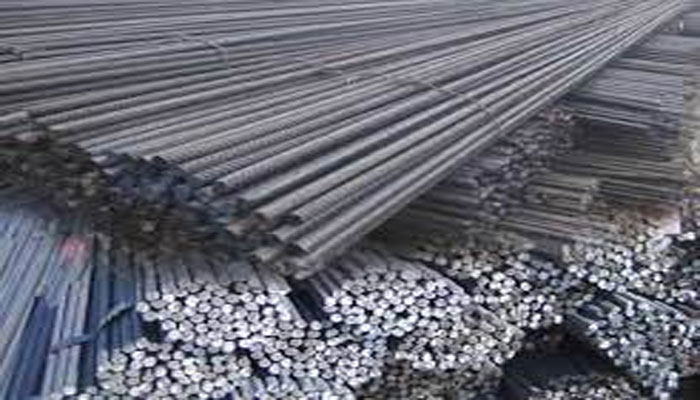
KARACHI: Rebar prices in Pakistan are lower compared to China and Turkey as local steel producers refrain from passing on international price impact, industry officials said on Thursday.
In a response to higher steel prices in Pakistan, Pakistan Association of Large Steel Producers (PALSP) said a surge in prices was not confined to steel bars only as there had been a phenomenal increase in the cost of construction materials like cement, bricks, sand, and crush.
The steel manufacturers of Pakistan are selling rebars at a lower price as compared to international market prices by absorbing the constantly increasing cost of inputs.
In the recent past, the prices of scrap have skyrocketed. The average monthly price of steel scrap as per London Metal Exchange (LME) in June was $260 and now the latest price in the month of July 2021 has crossed $540 per ton.
Similarly, prices of steel rebar in international markets as per LME last year July was $420 in 2020 and in July 2021 the average rebar prices – assuming zero duty – are $831 in Turkey and $845 in China whereas, in Pakistan the rebar prices without duty and landing charges on scrap is $794.
“If we compare the prevailing international prices with our local markets, the prices in Pakistan are still at approximately 6 to 4 percent cheaper than China and Turkey respectively, which are among the largest steel producing countries,” PALSP said in a statement.
“All of this current market situation is beyond the control of manufacturers for the reason that the domestic steel industry is largely dependent on imported raw material and prices of steel are directly related to international prices of scrap/raw material.
Pakistan’s steel industry is selling bars at less price by constantly reducing their margins which is evident from the fact that their gross margins which were 19% plus in the period from 2015 to 2018 to 12 percent currently.”
The association said the government dropped a bomb shell on the long steel sector by giving FED exemption to erstwhile FATA/PATA hence giving competitive advantage to the steel industry of that area of Rs 25,000 per ton which is likely to throw the documented
sector out of competition and ultimately this could lead to closure of the domestic steel industry in the rest of the country.
No relief was extended to the long steel sector and despite repeated requests the government refused to reduce tariffs/duties on the primary raw material of the long steel sector which was very much needed to support ambitious initiative of the Naya Pakistan housing project.
“Instead the government totally ignored the long steel sector that has to play critical role for the success of the ongoing Housing as well as mega infrastructure projects,” it said.


