
Invisible soldiers of knowledge
In February 2019, Pakistan and India came dangerously close to full-scale war after Indian aircraft intruded into Pakistani airspace and Pakistan Air Force (PAF) retaliated by shooting down multiple Indian fighter jets.
Six years later, during the four-day war of 2025, Pakistan once again demonstrated its aerial superiority by downing six Indian planes, including three highly sophisticated French Rafale jets, in a series of engagements that shook the region. While global attention focused on the bravery and skill of Pakistani pilots in both episodes, few realised that these successes were not merely the product of aerial manoeuvring.
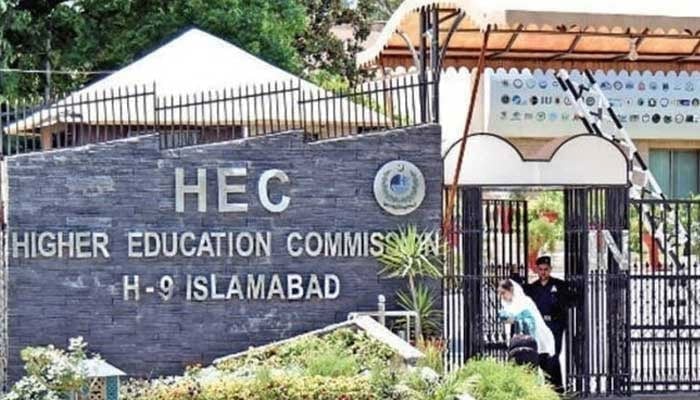
Behind the scenes lay years of quiet investment in higher education, science, and technology during 2000-2010. In particular, the Higher Education Commission (HEC) and science reforms initiated under my leadership from 2000 onward had transformed Pakistan’s scientific landscape, producing thousands of highly trained PhDs in engineering, information technology, and defence-related disciplines.
Many of these individuals were absorbed into Pakistan’s strategic organisations such as the Pakistan Aeronautical Complex (PAC) at Kamra, the National Engineering and Scientific Commission (NESCOM), the Air Weapons Complex (AWC) and Suparco. Their intellectual labour, though largely invisible to the public, was indispensable in ensuring the technological readiness of Pakistan’s defence systems during these critical confrontations.
Before 2002, Pakistan’s higher education sector was in a state of stagnation. Research output was negligible, universities lacked modern laboratories and the country produced only a trickle of PhDs each year. Recognising that no nation could achieve progress or security without building a strong knowledge base, the newly formed HEC embarked on an ambitious programme. Thousands of scholarships were offered for doctoral studies in cutting-edge disciplines abroad, ranging from electrical and mechanical engineering to computer science, materials science, aerospace engineering and cyber security.
Simultaneously, domestic universities were strengthened, laboratories modernised and returning PhDs offered attractive opportunities in both academia and industry. These reforms produced a cadre of young, highly qualified Pakistanis who no longer had to seek careers abroad. Instead, they were absorbed into universities, research centres and crucially, into defence-related institutions.
Perhaps the most visible manifestation of this transformation was at the Pakistan Aeronautical Complex (PAC) Kamra, which became the hub of the JF-17 Thunder programme. This joint Pakistan-China project sought to provide the PAF with a modern, cost-effective, multirole fighter jet. Yet while the airframe was co-designed with China, much of the avionics integration, software development, weapons compatibility and systems testing required advanced local expertise.
Here, the HEC-trained PhDs played a decisive role. Returning engineers with doctorates in avionics and control systems contributed to the design of mission computers and the development of flight control algorithms, ensuring the seamless integration of beyond-visual-range (BVR) missiles with the JF-17. Others worked on reducing radar cross-section, electronic countermeasures and secure data link systems. In short, they allowed Pakistan to exercise a level of technological independence and customisation that would have been impossible had the country relied solely on foreign contractors.
Another arena where highly trained manpower made a difference was in electronic warfare and radar technology. Modern air combat is as much about ‘seeing without being seen’ as it is about manoeuvring. The ability to detect enemy aircraft, jam their communications and evade radar lock-ons can determine the outcome of an encounter before missiles are even fired.
PhDs in electrical engineering and computer science, many of whom had specialised in digital signal processing and information security, were absorbed into the National Electronics Complex and Air Weapons Complex. They worked on indigenous radar designs, signal-processing algorithms and jamming technologies. These advances enabled Pakistan to track incoming threats with greater accuracy and deploy countermeasures effectively.
At Kamra and other defence establishments, returning scholars developed flight simulators that modelled the performance of PAF aircraft under various combat conditions. They also built networked war-gaming platforms that allowed squadrons to rehearse coordinated responses to intrusions. When real crises arrived in 2019 and 2025, Pakistani pilots had already ‘flown’ similar missions dozens of times in simulated environments, greatly increasing their confidence and precision. PhDs in information technology and cyber security also fortified the military’s communication systems.
Pakistan’s missile development programmes, overseen by NESCOM and the Air Weapons Complex, also benefited from HEC-trained manpower. The design of guidance systems, propulsion units and target-seeking algorithms requires high-level expertise in applied mathematics, physics and computer science. Returning PhDs specialised in control theory and optimisation worked on improving missile accuracy and reliability. This expertise ensured that Pakistan’s air-to-air and surface-to-air missile systems were combat-ready and credible deterrents.
Both the 2019 and 2025 encounters demonstrated the synergy between trained pilots and an indigenous technology base. In 2019, the PAF successfully shot down multiple Indian jets, including a MiG-21, while defending Pakistani airspace. In the four-day war of 2025, Pakistani fighters once again proved their effectiveness, downing around five Indian planes in rapid succession. In both cases, the outcomes were shaped not just by courage but also by the invisible architecture of knowledge: radar systems that worked flawlessly, JF-17s integrated with local avionics, BVR missiles that hit their targets and secure communication networks that ensured coordination.
The contribution of these scientists and engineers is rarely celebrated. They are not seen on television, nor do they receive the public adulation that pilots enjoy. Yet they are our invisible soldiers of knowledge, whose labour in laboratories, workshops and control rooms enabled the visible victories in the sky.
The episodes of 2019 and 2025 illustrate a larger truth that our defence, planning and finance ministries need to understand and act upon: investment in higher education and research is not a luxury for developing nations but a necessity for survival. A country that relies entirely on imported technology remains perpetually vulnerable. The reforms of the 2000s thus had a dual payoff – raising Pakistan’s scientific profile internationally and directly strengthening its national security.
Our ministries of defence, planning and finance must give the highest national priority to strengthening the HEC. The neglect of the higher education sector by successive governments over the last decade has resulted in university budgets being slashed by about a third in real terms, leading to the slow decline of many good universities due to government apathy. This must change with a sense of urgency before we face an enemy again.
The writer is a former federal minister, Unesco science laureate and founding chairperson of the Higher Education Commission (HEC). He can be reached at: ibne_sina@hotmail.com


