
Pakistan faces higher risks than neighbours amid Iran-Israel tensions
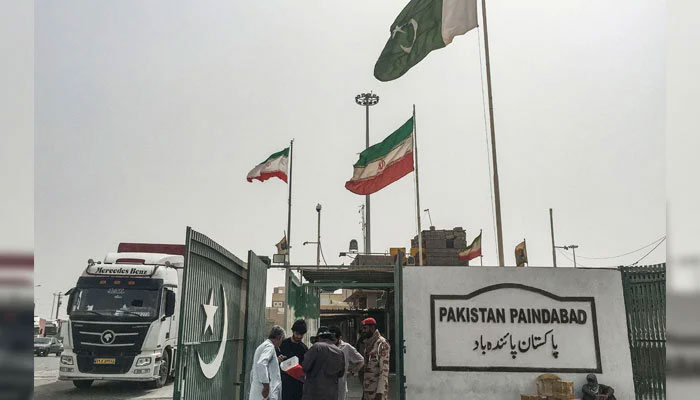
LAHORE: Pakistan faces graver and more complex risks from a potential Iran-Israel war than India or Bangladesh, owing to its geostrategic location, economic fragility, sectarian makeup and reliance on Gulf economies.
Unlike India and Bangladesh, Pakistan shares a 900-km border with Iran. Any escalation -- be it airstrikes, refugee inflows, smuggling, or acts of sabotage -- could directly impact border security in Balochistan and strain the country’s already stretched law enforcement agencies.
Pakistan’s significant Sunni and Shia populations further heighten its exposure. Any conflict involving Iran -- whether with Israel, the Gulf, or the US -- risks triggering sectarian violence, protests, or proxy activity on Pakistani soil. Iran-backed or inspired elements may become active, particularly in urban centres and Balochistan.
The country’s dependence on remittances, jobs and financial assistance from Gulf states such as the UAE, Saudi Arabia and Qatar adds another layer of vulnerability. A broader regional conflict could disrupt these inflows -- critical to Pakistan’s current account -- and threaten energy imports. While India and Bangladesh also rely on the Gulf, Pakistan’s historical, ideological and military linkages leave it more exposed to political or diplomatic fallout.
Compounding these risks is Pakistan’s precarious economic position. The country is grappling with IMF-mandated reforms and resurgent inflation after a period of temporary stability. Fuel prices are rising, and food inflation is under acute pressure. A prolonged conflict that drives up global oil prices or disrupts trade routes would hit Pakistan harder than India’s more diversified economy or Bangladesh’s relatively stable currency and reserves.
Pakistan has also historically served as a theatre for proxy conflicts. Renewed hostilities in the region could once again see its territory exploited for intelligence and counterintelligence operations. In contrast, India and Bangladesh maintain tighter internal security control.
While all three countries would suffer economic spillovers, particularly through oil markets, Pakistan’s risks extend beyond the financial -- into internal unrest and cross-border volatility. Its exposure is therefore deeper and more multidimensional.
Managing such a complex risk landscape will be a formidable challenge. Pakistan must reinforce national security and strengthen border management -- particularly along the Iran-Pakistan frontier. Additional Frontier Corps and intelligence personnel should be deployed in Balochistan to deter proxy infiltration, smuggling, and arms or drug trafficking. Drone surveillance and fencing should be expanded where feasible.
The government must also prepare for economic shock absorption. Targeted subsidies or fuel hedging mechanisms should be considered to cushion global oil price shocks, especially in transport and agriculture. Policymakers should accelerate the shift towards compressed natural gas (CNG) and renewables to reduce reliance on imported fuel.
Strategic reserves of food and fuel should be built up in anticipation of supply disruptions. Pakistan should engage the IMF and friendly governments to negotiate contingency financial support, including a temporary relaxation of fiscal targets if inflation or import bills worsen.
Domestically, intelligence efforts must be ramped up to monitor sectarian outfits, foreign-funded networks, and sleeper cells. Diplomatic coordination with Iran and Gulf states is essential to counter cross-border threats.
The state must also enhance financial surveillance (including FATF compliance) to detect suspicious transfers and track seminaries or organisations receiving external funding from Iranian or Gulf-linked sources.
Pakistan must navigate the crisis with neutrality, cohesion and fiscal prudence. It cannot afford to be drawn into regional rivalries or ideological alliances. The goal should be to contain spillovers while quietly positioning itself as a stabilising actor in a turbulent region -- at a time when global powers increasingly seek mediators rather than military allies.







-
 Memorial Day 2026: Full List Of Stores, Banks And Services Open Or Closed
 -
 Dame Jools Topp, Beloved New Zealand Singer, Dies At 68
 -
 Lizzo Responds After Fan Accuses Her Of Shading Taylor Swift
 -
 Rubio Warns US Will Seek 'another Way' If Iran Deal Fails
 -
 Beartooth Frontman Caleb Shomo's Wife Ends 14-year Marriage With The Singer
 -
 Pearl Harbor Sailor Identified After 82 Years Through DNA Analysis
 -
 Real Reason Why Christopher Nolan Won’t Work With Nicolas Cage
 -
 Jimmy Kimmel Fires Back At Robert F. Kennedy Jr Amid Stephen Colbert Show Fallout
 -
 Deal Or No Deal? What Is Happening With The Iran-US Talks: An Explainer
 -
 Could AI Replace Pilots? Aviation Industry Tests Next Generation Flight Technology
 -
 Oil Prices Fall As Hopes Rise For US-Iran Peace Deal
 -
 'Michael' Creeps Closer To Highest-grossing Film?
 -
 Cuba Receives Chinese Rice Donation During Worsening Fuel And Food Crisis
 -
 Trump Is Pushing Muslim Nations To Normalise Ties With Israel After Iran War
 -
 Messi Leaves Inter Miami Match Injured, Raising Concerns For Argentina Ahead Of FIFA World Cup
 -
 Meghan Markle Quietly ‘feeding’ Her Life Into Business Plans