
To solar or not?
Change applies to new net-metered consumers, with existing ones transitioning upon expiry of their seven-year contracts
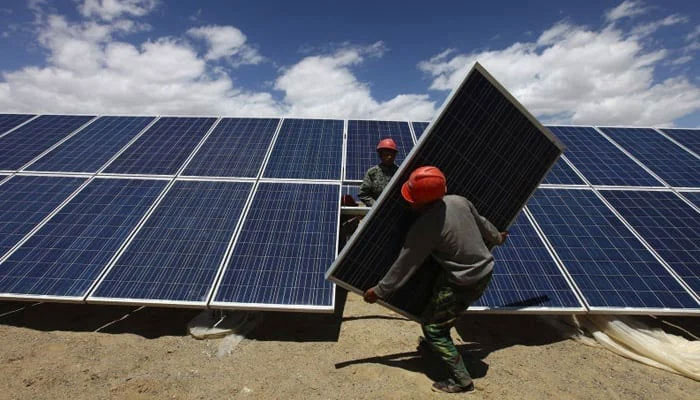
Pakistan has willingly entangled itself in a comedic ‘will they/won’t they’ situation when it comes to embracing renewable energy. Policymakers have increasingly seemed indecisive about the direction they wish to take — a perception reinforced by the government’s latest solar policy. The revised net-metering framework has significantly altered the financial incentives for solar energy consumers, raising serious concerns about the government’s commitment to a sustainable energy transition. Under the new policy, distribution companies will purchase surplus solar electricity at a reduced rate of Rs10 per unit, a drastic drop from the previous Rs27, while continuing to sell grid power at exorbitant rates: Rs42 per unit during off-peak hours and Rs48 during peak hours. This change applies to new net-metered consumers, with existing ones transitioning upon the expiry of their seven-year contracts. The new policy also imposes stricter capacity restrictions, limiting solar installations to the sanctioned load with only a 10 per cent margin, down from the previous 50 per cent allowance. As expected, this has sparked considerable outrage, with consumers accusing the government of backtracking on its own commitments.
Some experts argue that the higher buyback rate places an undue burden on consumers who cannot afford to shift to solar. While there may be some merit in that, the claim that solar generation is destabilising the power sector is largely exaggerated. Pakistan’s skyrocketing electricity prices stem not from the growth of solar capacity but from its heavy reliance on expensive imported fuels, including RLNG. Solar adoption in Pakistan gained momentum precisely because households faced unbearably high electricity tariffs — hikes imposed primarily to meet the IMF's demands for fiscal discipline. The government’s attempt to justify its decision is unsurprising, given that it has actively promoted solarisation as a means of alleviating pressure on the national grid. Yet, what it has failed to do is persuade international financial institutions to view access to affordable electricity as a fundamental human right rather than merely a revenue-generating opportunity. This shortfall exposes a fundamental contradiction: while urging citizens to transition to renewable energy, the government simultaneously takes away the incentives necessary to make such a shift viable.
From the consumers' perspective, the buyback scheme was a crucial means to recover the substantial investment required for solar panel installation, a cost that continues to rise. Without sufficient incentives, people will lose motivation to switch to solar, thereby undermining the government’s stated goal of reducing grid dependency. The situation is particularly frustrating given that, at a global level, organisations like Human Rights Watch have explicitly stated that electricity should be considered a human right. Meanwhile, Pakistan’s authorities have repeatedly explained to lenders that citizens cannot afford exorbitantly priced power, yet international institutions remain unyielding, linking the release of critical financial aid to deeply unpopular policy decisions. Developing nations like Pakistan require international assistance, largely due to the systemic exploitation they have endured at the hands of developed economies. Instead of punishing Pakistan for seeking energy independence, global financial bodies should support its efforts to make renewable energy accessible and affordable for all. Not doing that just perpetuates a cycle of economic stagnation and environmental degradation.


