
Polar bears in the Sahara
Islamabad is now mirroring environmental degradation of Lahore and Karachi
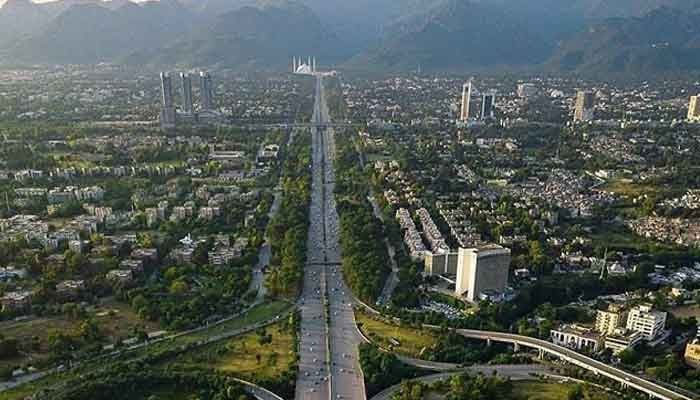
Islamabad, long hailed as Pakistan’s ‘green city’, is on the fast track to environmental collapse.
Beneath the image of tree-lined streets and rolling Margalla Hills, a crisis is unfolding, one fueled by reckless governance, bureaucratic incompetence and a blatant disregard for ecological science. Islamabad is now mirroring the environmental degradation of Lahore and Karachi.
Numbers don’t lie. According to the research paper, ‘Monitoring of Urban Landscape Ecology Dynamics of Islamabad Capital Territory (ICT), Pakistan, Over Four Decades (1976-2016)’, the city’s green cover has been relentlessly shrinking.
In 1976, an estimated 66.2 per cent of Islamabad was covered with forests. By 2016, that number had dropped to 48.4 per cent, marking an 18 per cent decrease. And the destruction hasn’t stopped. Global Forest Watch (2023) reveals that in 2020, Islamabad had 7,700 hectares of natural forest covering 9.1 per cent of its land area. By 2023, an additional two hectares were lost, releasing 1.12 kilotons of carbon dioxide into the atmosphere.
To undo this damage, Islamabad would need 18,500 mature trees working for a year, trees that take 15 to 20 years to grow. Meanwhile, government officials keep staging photo-ops with saplings, pretending that a few newly planted sticks in the ground will replace decades of lost ecological function.
This isn’t just pure incompetence. Every mature tree lost represents decades of carbon sequestration, biodiversity support, and climate regulation. Yet, instead of tackling the real crisis, the government – and by government I mean any government, past or present – is fixated on pointless plantation drives that do nothing but provide PR, good or bad (that I leave to the readers’ good judgement).
By now, you must be wondering: Islamabad’s environmental mismanagement can’t be that bad, right? Let’s break it down.
The latest palm tree obsession seals the deal. Even an Arab diplomat or tourist would look at it with awe – it’s like seeing a polar bear in the Sahara. The city’s administrators have decided that the best way to ‘beautify’ Islamabad is to line Constitution Avenue and Srinagar Highway with palm trees, an exotic import that serves absolutely no ecological purpose.
Let’s be clear: Islamabad is not Dubai. These palm trees contribute nothing to the local ecosystem. They don’t provide shade. They don’t support local wildlife. They consume excessive water while offering zero benefits. They are purely an artificial and soulless attempt to make the city look like something it’s not.
Islamabad’s leadership is obsessed with copying other cities; on even days the efforts are directed to make the city mimic Dubai and on odd days Baku. Maybe they should look at what modern cities are doing to fight climate change instead of blindly following an outdated playbook from the 1960s.
The irony is almost laughable. While Islamabad’s leadership fixates on Dubai’s palm trees, Dubai itself is moving in the opposite direction. The Dubai 2040 Urban Master Plan focuses on sustainability, aiming to double green spaces, allocate 60 per cent of the city’s land to nature reserves, and integrate large-scale green corridors like the Dubai Green Spine, a 64-kilometre project designed to boost urban biodiversity and reduce the heat island effect.
Even Dubai, a city built in the middle of a desert, is actively working to restore its ecosystem. Meanwhile, Islamabad, a city blessed with natural forests, is busy tearing them down and replacing them with useless palm trees. At this rate, we might as well prepare for the day Islamabad becomes a barren wasteland. And unlike Dubai, which had no choice but to develop on sand, Islamabad’s desertification will be entirely self-inflicted. Good luck celebrating that, maybe a session on this during COP will help.
If bad tree choices weren’t enough, Islamabad’s environmental governance has suffered another major blow. Now, the government has dismantled the Islamabad Wildlife Management Board (IWMB), the only authority protecting the city’s ecology. Instead of trained conservationists and environmental experts, the government has handed control to bureaucrats who lack the technical expertise in ecology, biodiversity or climate science.
The IWMB had played a critical role in enforcing environmental laws, including the demolition of illegal structures in Margalla Hills National Park following Supreme Court orders. But instead of strengthening conservation efforts, the government chose to centralise power, replacing independent specialists with administrators.
This is not how environmental governance works. Managing forests, protecting wildlife and mitigating climate risks require expertise, not paperwork. Bureaucrats and governments come and go, but the damage they cause lasts for generations. Their short-sighted decisions will be faced by the people of Islamabad, those who call this city home.
Centralisation of power in a few hands without expert oversight is a proven recipe for disaster.
Pakistan routinely positions itself as a climate-vulnerable nation on the global stage, appealing for financial aid from developed countries – and rightfully so. But let’s be honest: why should the world take Pakistan’s climate commitments seriously when it is itself actively dismantling its environmental protections?
The solutions are staring us in the face, but the will to act is nowhere to be found.
When the forests are gone, when the air is thick with pollution, when the once-cool breeze turns to scorching heat, which it has by the way but when it becomes irreversible, there will be no more slogans left to hide behind, no more politics left to do and certainly no more population left to rule over.
The writer is an advocate for youth empowerment, climate action, and strengthening local governance.


