
Peca 2025
Echoing concerns many have raised about unnecessarily vague scope of law and its potential for abuse
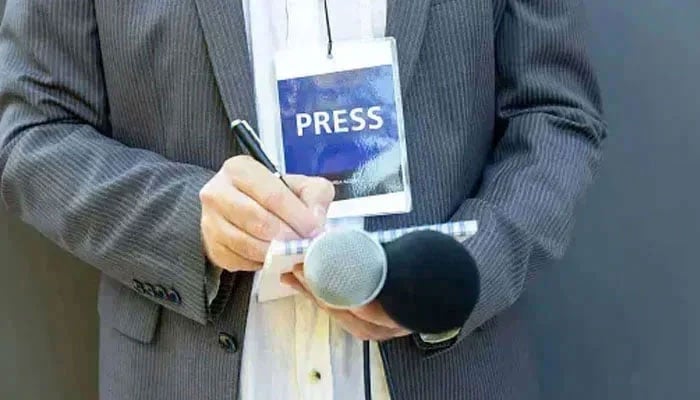
The chorus of opposition elicited by the Prevention of Electronic Crimes (Peca) (Amendment) Act 2025 only seems to be getting louder. Journalists working in both legacy and new media have condemned the chilling effect the hastily-passed law is likely to have on free expression, marking yet another regrettable entry in the Pakistani state’s love affair with censorship and authoritarianism disguised as safety and security. The Peca law has always been the bane of those seeking to bring some truth and accountability to the country’s media ecosystem and has done little to counter fake news and misinformation, the supposed original intent of the bill, since it first arrived back in 2016. Since then, new sets of amendments have only toughened the censorious nature of the bill, with the law becoming more and more hostile to free expression after each round. This year, we have the introduction of Section 26A – penalising individuals for spreading 'fake news' on social media – which has drawn particular ire. The law’s broad and ambiguous language, critics argue, opens the door for arbitrary enforcement, potentially silencing anyone deemed critical of the government. Offenders face severe punishment, including up to three years in prison and a fine of up to Rs2 million. This law is particularly threatening for journalists who have an independent presence online, which they use to air opinions and ideas that might otherwise be too controversial in a more ‘formal’ setting. That such changes were passed without any debate or discussion with journalists and civil society only exacerbates the sense of injustice.
The only thing as reliable as the Pakistani state’s seemingly ever-increasing suspicion and hostility towards online speech has been the opposition of those determined not to let a law with such dangerous implications for civil liberties stand. Legal action against Peca has been around almost as long as the law itself. The Pakistan Federal Union of Journalists (PFUJ) filed a challenge against the latest round of Peca amendments last week in the Islamabad High Court (IHC). Echoing the concerns many have raised about the unnecessarily vague scope of the law and its potential for abuse, the PFUJ has highlighted how there is no clear procedure to deal with fake news or misinformation under the Peca law and that the police can arrest anyone at any time under a cognisable offence. It has also pointed out that it would take one three to four years in court for their defence if they are ever implicated in an offence. As such, the PFUJ petition claims that the law is unconstitutional, violates fundamental rights and liable to be struck down.
It is important to note here that ‘fake news’ and online misinformation are real problems that have done real harm to real people. In many ways, the rise of social media has come at the cost of good, truthful journalism that holds the powerful to account while giving said powerful more room to manipulate the truth and cover their tracks. Few things illustrate this point as well as the man who owns X (formerly Twitter), arguably the most relevant social media site when it comes to news, being the world’s richest man and using his platform on the site to spread dangerous lies aimed at advancing his own power. However, even those journalists who favour more stringent regulation of online speech agree that Peca is not the way to go. Simply giving the state unconstrained power to prosecute people based on what they say online will not result in a healthier and transparent information ecosystem. In fact, it will only exacerbate the problems we are currently witnessing. Tightening the muzzle on traditional media is what led many to go online in the first place and while many found sane and honest voices, many others found conspiracies and misinformation. The state ought to aim for measures that actually target the latter without the former also falling in the crosshairs.


