
Textile sector calls for immediate policy action to prevent collapse
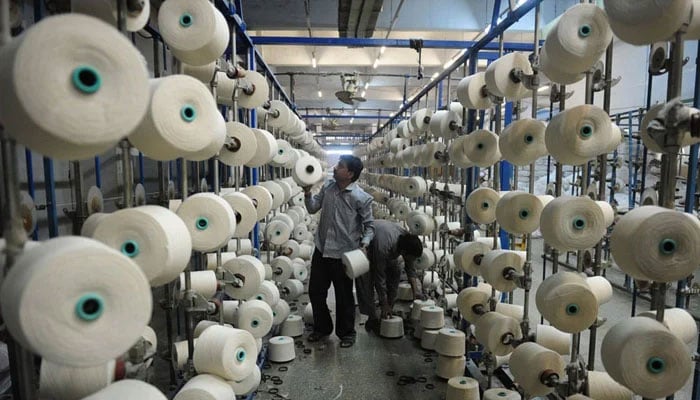
KARACHI: The Pakistan Textile Council (PTC) has appealed to Federal Minister for Finance and Revenue Muhammad Aurangzeb for urgent policy intervention to prevent the collapse of Pakistan’s textile industry.
In a letter to the finance minister, Chairperson of the PTC Fawad Anwar mentioned the severe financial strain faced by the textile sector, which contributes nearly 60 per cent of Pakistan’s export earnings and provides employment to over 15 million people. Despite the positive impacts of structural reforms under the IMF programme, their implementation has led to unsustainable financial challenges for the textile industry, necessitating immediate policy adjustments.
Anwar highlighted that industrial electricity tariffs have surged to 16-18 cents/kWh, nearly double the rates in Vietnam, Bangladesh, India and China. Meanwhile, gas prices for captive power have skyrocketed to over $13-14/MMBtu, compared to $5-8/MMBtu in regional economies, with additional capacity charges and surcharges further inflating costs.
The PTC chairperson also pointed out that working capital rates have jumped from 2.0 per cent to approximately 14 per cent, and recent IMF-driven tax policies, including minimum turnover taxes and super taxes, have raised effective tax rates to over 50 per cent. This has significantly impacted profitability in this low-margin, high-volume industry.
Anwar noted that crucial industrial reinvestments have become nearly impossible due to soaring short-term interest rates. The PTC warned that the stringent financial conditions could lead to deep recessions, social unrest and the permanent loss of industrial capacity. Rising costs have already prompted some Pakistani textile manufacturers to relocate operations abroad, threatening the country’s competitive edge in textile manufacturing.
The council further warned that continued financial strain could result in the closure of textile mills, triggering mass unemployment, civil unrest and long-term economic instability. The PTC urged the government to adopt a balanced and calibrated approach that ensures economic stability without compromising the long-term viability of the country’s key foreign exchange-generating industries.


