
The road to dialogue
Demands have been echoed publicly, both in speeches and on social media
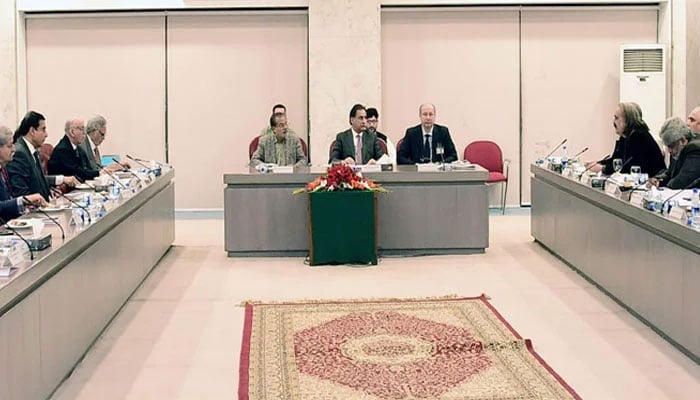
Last year ended with a glimmer of hope for Pakistan’s political stability as the government and the PTI set aside their differences to initiate a long-overdue dialogue. This December breakthrough was followed by a second round of talks last week. However, the positive momentum has faltered, with reports of a deadlock ahead of the third round. The impasse has been attributed to two issues: the PTI’s insistence on meeting their detained party chairman, Imran Khan, and the party’s reluctance to present a written charter of demands. On the surface, the PTI’s demand for access to Imran Khan appears reasonable. The party’s leaders argue that they need to consult him before finalising their demands, a privilege enjoyed by leaders of other parties. The government’s refusal to facilitate this meeting undermines the spirit of dialogue and provides the PTI with a valid excuse for delay. However, the stalemate is not without deeper complexities, and questions arise about the PTI’s hesitance to formalise its demands.
The PTI has, on multiple occasions, verbalised its key demands – the release of political prisoners and the formation of judicial commissions to investigate incidents on May 9 and November 26. These demands have been echoed publicly, both in speeches and on social media. If these are indeed the only demands, reducing them to writing should not be an issue. Yet, the party’s reluctance to commit to a written document has fueled speculation about their true intentions. Observers suggest that the PTI’s real priority is the release of Imran Khan and the quashing of cases against him. The party’s refusal to submit a written charter stems from a desire to avoid public acknowledgement of this demand, which could be perceived as seeking the very ‘NRO’ deals the party has historically condemned. By keeping the primary objective ambiguous, the PTI can maintain its narrative of moral high ground while negotiating behind closed doors. However, this strategy risks eroding the credibility of their public rhetoric.
On the other hand, the government’s position is equally precarious. While facilitating a meeting between the PTI’s negotiation team and Imran could break the deadlock, the government is wary of appearing to capitulate to the PTI’s demands without securing concrete assurances in return. Divisions within the ruling coalition further complicate matters. The PML-N’s ‘doves’ seem committed to the dialogue process, but the party’s ‘hawks’ view these talks with suspicion, fearing they may embolden the PTI without yielding substantial benefits for the government. Both sides need to recognise the high stakes involved. A failure to sustain the dialogue will not only deepen political polarisation but also exacerbate the country’s economic and governance crises. For the PTI, presenting a written charter of demands is essential to demonstrate seriousness and transparency in their approach. For the government, allowing the PTI access to Imran Khan could serve as a confidence-building measure. By removing this point of contention, the government can shift the onus onto the PTI to engage constructively. However, the government must also be prepared for the PTI’s potential insistence on Khan’s release as a non-negotiable demand. In such a scenario, the government can reiterate that legal proceedings, not executive orders, will determine the PTI chief’s fate. Ultimately, political dialogue is an exercise in compromise and trust-building. Both sides must set aside their entrenched positions and work towards a solution that prioritises the nation’s stability over partisan interests. The alternative – a return to political brinkmanship – would be a disservice to the country.


