
Jinnah’s leadership in shaping Pakistan's foreign policy
His leadership, vision, and pragmatism were instrumental in setting direction of Pakistan's foreign relations
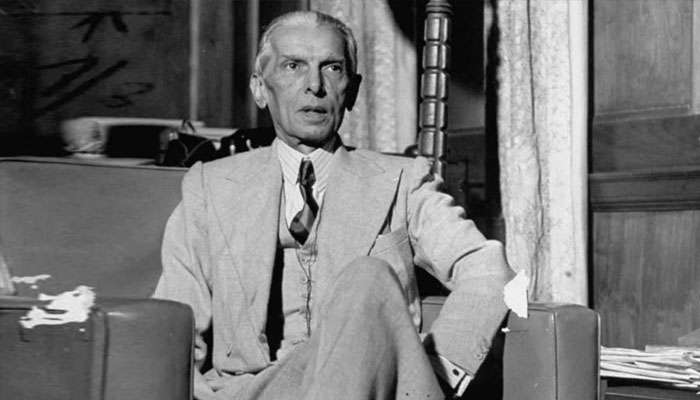
Quaid-i-Azam Muhammad Ali Jinnah played a pivotal role in shaping the early foreign policy of Pakistan, establishing its relationships with the outside world. After the creation of Pakistan in 1947, Jinnah faced the monumental task of navigating the newly-formed nation through a complex international landscape. His leadership, vision, and pragmatism were instrumental in setting the direction of Pakistan's foreign relations during its formative years.
Jinnah's foreign policy vision was based on justice, equality, and respect for international law. He sought to position Pakistan as a sovereign, dignified state that would be respected in the global arena. This commitment to fairness and mutual cooperation was central to his approach, emphasising that Pakistan's relations would be built on equality and the rule of law rather than exploitation.
Jinnah’s foremost initiative was to ensure that Pakistan would not be dependent on any foreign power for its strategic or political interests. This was particularly important in the context of the Cold War era, which saw the world divided into two ideological blocs led by the United States and the Soviet Union. Jinnah was determined that Pakistan would not become part of either bloc or be drawn into global power struggles.
One of Jinnah’s early priorities was securing diplomatic recognition of Pakistan from the international community. He understood the importance of being acknowledged as a sovereign state. Just months after its creation, Pakistan became a member of the United Nations in September 1947, marking a significant milestone in its foreign policy. This membership symbolised Pakistan’s commitment to global peace and cooperation. Additionally, Jinnah began establishing Pakistan’s diplomatic missions abroad, sending ambassadors and high commissioners to key capitals, strengthening bilateral relations, and securing economic and political support.
The Kashmir conflict with India was one of the most pressing foreign policy challenges Jinnah faced. The region of Jammu and Kashmir, with its Muslim-majority population, was claimed by both India and Pakistan. Jinnah believed that Kashmir rightfully belonged to Pakistan and sought to address this issue diplomatically. He brought the matter before the United Nations, advocating for a plebiscite to allow the Kashmiri people to determine their own future. This diplomatic initiative underscored Jinnah’s commitment to securing Pakistan’s territorial integrity and his belief in peaceful conflict resolution.
While Jinnah was determined to maintain Pakistan’s independence, he also recognised the importance of strategic relationships with major global powers. He sought good relations with the United States and the United Kingdom, primarily for economic and military support, but was careful not to align Pakistan too closely with either power. Jinnah maintained that Pakistan’s foreign policy should remain independent, avoiding undue influence from any superpower. This approach allowed Pakistan to establish diplomatic relations with the West without compromising its autonomy.
Jinnah also recognised Pakistan’s unique position in the Muslim world and sought to build strong ties with other Muslim-majority countries. As the newly-formed Islamic state, Pakistan had a responsibility to promote unity and cooperation among Muslim nations. Jinnah worked to establish diplomatic relations with key countries in the Middle East, including Saudi Arabia, Iran, and Egypt, and advocated for Pakistan’s support for causes such as the Palestinian issue. This diplomatic initiative laid the groundwork for Pakistan’s eventual leadership role in organizations like the Organisation of Islamic Cooperation (OIC), which was formed in 1969.
Jinnah understood the importance of economic relations in strengthening Pakistan’s foreign policy. In the aftermath of partition, Pakistan faced severe economic challenges, and Jinnah sought to establish trade relations with key countries to ensure the nation’s economic stability. He worked to secure trade agreements with the United States, the United Kingdom, and neighbouring countries, aiming to boost Pakistan’s economy through foreign trade, aid, and investment, while also focusing on self-sufficiency.
Jinnah’s commitment to peaceful coexistence with India, despite the tensions over Kashmir, was another cornerstone of his foreign policy. While he was firm in his stance on Kashmir, he hoped for cordial relations with India. Jinnah’s diplomatic efforts to resolve the Kashmir issue through dialogue and international mediation were early examples of Pakistan’s assertive role on the global stage.
Jinnah envisioned a peaceful South Asia, where Pakistan could maintain good relations with neighboring countries like Afghanistan, Iran, and China. He advocated for diplomatic engagement rather than military confrontation in resolving regional disputes. His careful approach to Afghanistan, particularly regarding border issues, reflected his broader goal of fostering regional cooperation and security.
Jinnah’s vision of an independent, non-aligned foreign policy continues to resonate in Pakistan’s current diplomatic approach, particularly in the context of shifting global dynamics. While the geopolitical context has evolved, the core principles of sovereignty, neutrality, and strategic independence remain central to Pakistan’s foreign policy. For example, Pakistan's active participation in international organizations such as the United Nations (UN) and its leadership role in the Organisation of Islamic Cooperation (OIC) align with Jinnah's vision of global cooperation.
In recent years, Pakistan has maintained strong ties with China, particularly through the China-Pakistan Economic Corridor (CPEC), a $62 billion infrastructure and development project, which serves as a cornerstone of bilateral relations and Pakistan’s strategic partnership with China. At the same time, Pakistan has sought balanced relations with the United States and the European Union, notably through trade agreements and cooperation on security matters, without fully aligning with either. In 2023, Pakistan signed a $1.5 billion trade deal with the United States, reaffirming its pursuit of economic cooperation without compromising its autonomy.
Additionally, Pakistan’s continued diplomatic engagement in peacekeeping and conflict resolution reflects Jinnah’s legacy. In recent years, Pakistan has played a pivotal role in the peace talks between the United States and the Taliban, facilitating the 2020 Doha Agreement, which aimed to bring stability to Afghanistan. This initiative underscores Pakistan's commitment to diplomacy and regional stability, further exemplifying Jinnah’s ideal of peaceful coexistence.
In this way, Pakistan’s foreign policy remains firmly rooted in Jinnah’s principles of neutrality, sovereignty, and global cooperation, reflecting his enduring vision.


