
Misconceptions rise as polio cases surge across Pakistan
Federal Health Secretary affirms Centre is addressing KP's concerns through scientific measures, including nerve conduction
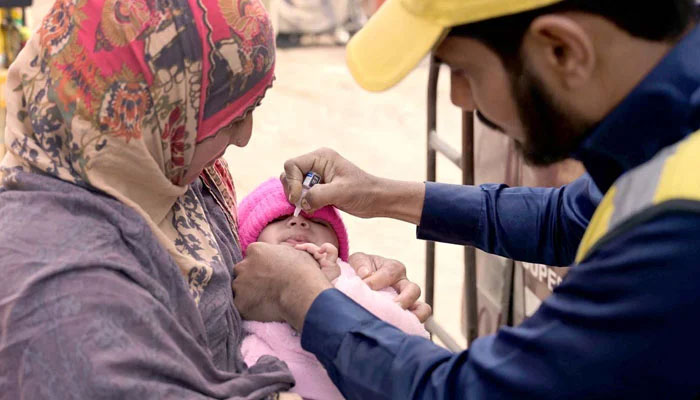
ISLAMABAD: Fed up with Pakistan’s rising polio cases, health authorities across provinces are increasingly attributing the spread of the virus to a range of unique factors, including malnutrition, gaps in Routine Immunization (RI), parental refusals, and, most recently, paralysis linked to injection neuritis a theory recently posited by health officials in Khyber Pakhtunkhwa (KP).
In KP, health officials have highlighted the phenomenon of injection neuritis which occurs when untrained practitioners, or quacks, incorrectly administer injections, damaging nerves and potentially paralyzing the patient.
KP officials also flagged concerns about vaccine efficacy, suggesting that gaps in cold-chain maintenance might impair the Oral Polio Vaccine’s (OPV) potency. However, the NEOC assures that mechanisms are in place to ensure strict cold-chain management throughout the supply chain, helping preserve vaccine effectiveness.
Federal Health Secretary Nadeem Mahbub, who recently visited KP to investigate these claims, has affirmed that the federal government is addressing the province’s concerns through scientific measures, including nerve conduction and serology tests.
In Sindh, which has documented 12 polio cases this year, authorities attribute rising cases to malnutrition among children. They explain that malnourished children need additional doses to generate protective levels of immunity. Though malnutrition can limit the body’s immune response, NEOC officials emphasize that the challenge can be overcome with repeated vaccinations offered regularly through RI programs and door-to-door campaigns. Sindh officials have also noted the role of parental refusals in Karachi and Hyderabad, where distrust in vaccines remains a significant barrier to eradicating polio. The provincial polio program further criticizes the Unicef for inadequate parental outreach efforts, contending that awareness campaigns need to expand to address vaccine-related misconceptions.
Balochistan, reporting 22 polio cases with 17 zero-dose children, faces perhaps the most severe challenges. Officials there link the outbreak to security issues that prevent vaccine access, poor RI coverage, and data manipulation practices such as fake finger-marking. According to Balochistan’s health officials, limited healthcare access in remote areas allows the virus to persist and spread unabated.
These challenges and misunderstandings have drawn the attention of the National Emergency Operations Centre (NEOC) in Islamabad, which warns against attributing the outbreak to peripheral factors. “We have repeatedly told provincial officials that failing to reach the maximum number of children with the OPV remains the primary driver of the polio outbreak,” explained a senior technical officer at the NEOC. He emphasized the need for full-scale immunization coverage through rigorous vaccination drives.
Responding to KP’s injection neuritis claims, NEOC officials clarify that no other provinces have encountered this issue, and rigorous cold-chain maintenance protocols should theoretically ensure OPV efficacy.
Detection of poliovirus among patients initially diagnosed with injection neuritis is a common occurrence across provinces and even globally, NEOC officials say. When the virus is already present in a child’s body, nerve injury from incorrect injection can help the virus travel to the anterior horn of the nervous system, causing paralysis.
While addressing Balochistan’s security and access challenges, NEOC officials also highlighted data integrity concerns, with reports of false finger-marking practices among polio workers and inaccurate reporting that distorts actual vaccination coverage. The NEOC is implementing corrective actions, including stringent checks and penalizing staff found falsifying vaccination records.
NEOC officials urged parents to vaccinate their children, stressing that parental engagement is essential to protect children from potentially deadly and disabling diseases. “With consistent, widespread vaccination, Pakistan can tackle polio just as other countries have done,” they said, underscoring that polio eradication would only be possible if all parties worked together to ensure maximum vaccination coverage and compliance.


