
BOJ faces fresh challenge as politics, yen complicate rate hikes
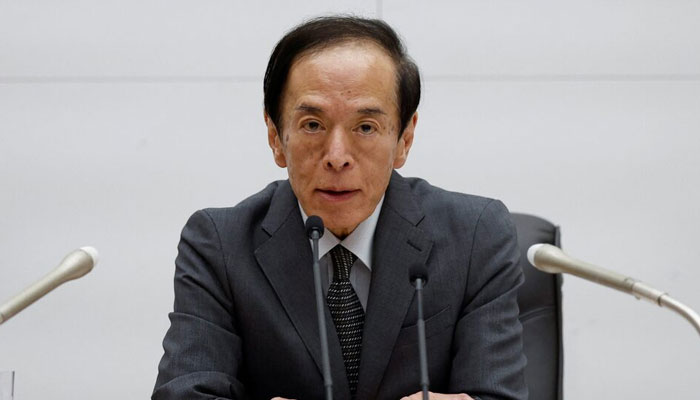
TOKYO: Bank of Japan Governor Kazuo Ueda’s efforts to lift rock-bottom borrowing costs face fresh challenges as a yen rebound and the new political leadership’s preference for loose monetary policy raise the hurdle for rate hikes.
New Japanese premier Shigeru Ishiba stunned markets this week when he said the economy was not ready for further rate hikes, an apparent about-face from his previous support for the BOJ unwinding decades of extreme monetary stimulus.
The surprisingly blunt remarks pushed the yen lower against the dollar and cast fresh doubts over how aggressive the BOJ would be in raising rates.
While politics is unlikely to derail the longer-term case for rate hikes, analysts say policy deliberations could get bumpy heading into a general election due Oct 27.
“I don’t think the remarks were intended to apply huge pressure on the BOJ. Rather, Ishiba probably had the election in mind,” said Katsuhiro Oshima, chief economist at Mitsubishi UFJ Morgan Stanley Securities. “He was seen by markets as a hawk, so may have wanted to fine-tune that image a little bit.”
The looming election this month means many analysts expect the BOJ will hold off raising rates at its Oct 30-31 meeting.
Ueda was appointed last year by former Prime Minister Fumio Kishida, who stepped down in September and had endorsed the BOJ’s exit from its radical monetary stimulus.
The BOJ in March delivered its first rate hike in 17 years, arguing the pace of price and wage increases showed Japan was finally shaking its entrenched deflationary mindset.
The bold shift to a tightening bias, however, hit a snag this week with Ishiba’s new cabinet reaffirming with the BOJ a 2013 statement that commits both sides to focus on reflating a stagnant economy.
To be sure, pressure for the BOJ to immediately hike rates again this year had already eased ahead of Ishiba taking office, thanks in part to a rebound in the yen off a three-decade low hit in July, which moderates inflationary pressure from import costs.
Predicting the political clouds, the BOJ has already laid the groundwork to pause. After keeping rates steady last month, Ueda signaled that the BOJ is in no rush to hike with markets still unstable and U.S. economic uncertainties heightening.
“They won’t directly affect monetary policy,” said a source familiar with the BOJ’s thinking, on Ishiba’s remarks. “But there’s also no need for the BOJ to hike rates when so much is going on,” the source said, a view echoed by another source.
POLITICAL UNCERTAINTY MAY CONTINUE
Having ended negative interest rates in March and raised them again in July, Ueda said the BOJ would keep lifting rates to levels that neither cool nor overheat growth -- seen by analysts as somewhere around 1-1.5 per cent -- if the economy moves in line with forecasts.
With inflation exceeding 2.0 per cent for well over two years and a tight labour market pushing up wages, pausing for too long could cause communication problems.
However, with the potential for political curve balls heading into the election, the BOJ may use overseas risks, such as a slowing US economy, as an argument for not raising rates straight away.
Such a messaging tweak could help avoid market perceptions the BOJ was abandoning its tightening bias altogether.
“It’s essential for the BOJ to make efforts to improve its communication to avoid unnecessary confusion with its policy shift,” BOJ board member Asahi Noguchi said on Thursday, in unusually candid remarks acknowledging problems in the way the central bank communicated with markets.
There is also uncertainty on whether Ishiba would revert to his endorsement of a BOJ exit once the election is out of the way -- as many policymakers and analysts expect.
Ishiba’s approval ratings stood at 50.7 per cent in a poll by Kyodo news agency conducted on Oct 1-2, lower than the debut ratings of the previous three administrations, suggesting a tough battle in the election.
While Ishiba’s Liberal Democratic Party (LDP) is likely to stay in power, a significant loss of seats could weaken his standing within the party, and keep him under pressure to heed calls for loose fiscal and monetary policy, analysts say.
Depending on this month’s lower house election outcome, political uncertainty may continue until the upper house election set to be held in summer next year.
“If Ishiba wins solidly at this month’s election and the political situation stabilises, the BOJ could raise rates in December or January,” said Shigeto Nagai, head of Japan economics at Oxford Economics.
“If the political turmoil drags on, that could unravel the BOJ’s strategy to hike rates up to around 0.75 per cent next year,” he said. “At heart, the BOJ probably wants to move swiftly.”


