
Punjab government proposes 90-day extension in imposition of Section 144
Amendment would empower DC to enforce a ban on public gatherings for up to 30 days
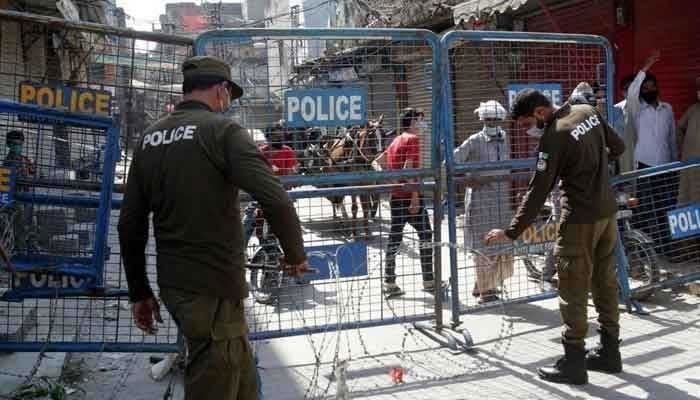
LAHORE: The Punjab government has tabled an amendment bill in the provincial assembly, which would allow the imposition of Section 144 — a colonial-era law used to ban public gatherings — for at least three months.
The Code of Criminal Procedure (Punjab Amendment) Act 2024, which seeks to amend the Code of Criminal Procedure 1898, was presented in the Punjab Assembly on September 5 by Punjab Minister for Finance Mujtaba Shuja-ur-Rehman.
Currently, the law allows the provincial government to impose Section 144 for a maximum of two days, extendable to seven days, unless there is a threat to human life, health, or safety.
However, the proposed amendment would empower the deputy commissioner (DC) to enforce a ban on public gatherings for up to 30 days, while the secretary of the Home Department could impose the ban for as long as 90 days.
The current law grants the power to impose Section 144 to the office of the mayor (or zila nazim), who acts on a written recommendation from the police. The amendments, however, propose transferring this authority to the deputy commissioner or the secretary of the Home Department, while removing the requirement for a police recommendation.
Mujtaba Shuja-ur-Rehman, who tabled the bill, told The News that the amendments were introduced after approval from the provincial cabinet. Rehman said that the period of restriction under Section 144 has been extended because “it is neither desirable nor practicable to seek prior approval of the provincial cabinet each time such a ban needs to be imposed in any district of Punjab.”
“The proposed amendments have been introduced to address grave and emergent situations that are likely to endanger public peace and order. They are intended to prevent imminent breaches of peace and provide a preventive jurisdiction and speedy remedy in the public interest,” the minister argued. For now, the bil, has been referred to a committee of the Punjab Assembly.
It is also important to note that violating Section 144 makes individuals liable for prosecution, with penalties ranging from one to six months’ imprisonment.
A 2022 report by the Human Rights Commission of Pakistan, titled ‘Freedom of Peaceful Assembly in Pakistan’, referred to Section 144 as an “unchecked authority”, enabling the provincial government and administration to “ban assemblies on virtually any pretext for extended periods.”
The report noted that this power had been “pervasively abused” by governments.
Saroop Ijaz, a lawyer and senior counsel Asia division for Human Rights Watch (HRW), has expressed concerns about the proposed changes to an already controversial law.
“The amendments will make an already bad law worse,” Ijaz told The News. “There have been calls [from human rights organizations and civil society] to repeal Section 144 in the CrPC, as it is already overly broad. Now, this amendment would allow the administration to impose restrictions for extended periods — up to 30 or 90 days.”
Article 16 of Pakistan’s constitution grants citizens the right to peaceful assembly. Yet, critics argue that provincial governments have used Section 144 in the past to prevent protests by farmers, students, and even teachers under the guise of maintaining “security” and “law and order.” Recently, the Punjab government has also invoked this section to ban political rallies by opposition parties.
Ijaz added that the proposal by the Punjab government to transfer the power to impose Section 144 from the mayor or elected local government to the deputy commissioner or secretary of the Home Department also appears to be an attempt by the provincial government to further “centralise power.”
Earlier this month, the federal government had hurriedly passed the Peaceful Assembly and Public Order Act 2024 which allows the administration in the capital city to “regulate” and ban public gatherings. It further increased penalties for an “unlawful assembly” from six months to three years imprisonment.


