
Rethinking flood management
Mounting evidence of the impact of climate change across Pakistan can no longer be ignored
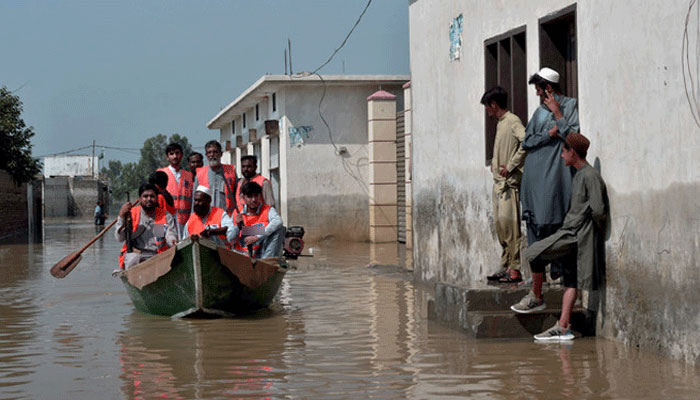
Lahore, the second-largest city in Pakistan, recently received torrential rains, with a staggering 360mm of precipitation pouring down in just three hours. This catastrophic downpour has shattered a 44-year-old record, marking an unprecedented weather event in the city’s history.
The mounting evidence of the impact of climate change across Pakistan can no longer be ignored. The 2010 floods, deemed devastating, affected 20 million people, causing damages worth $10 billion. Yet, they pale in comparison to the flash floods of 2022, which wreaked havoc on an unprecedented scale.
With 33 million lives disrupted, over eight million people displaced, and economic losses soaring to $30 billion, the 2022 floods underscored the escalating severity of climate change. In just over a decade the intensity and frequency of these disasters have surged dramatically. However, these floods are no longer confined to rural areas; they are now targeting urban areas, starkly exposing systemic inadequacies of the local government’s ability to address and mitigate these multifaceted challenges.
Over the past few years, these relentless rains have repeatedly targeted Pakistan’s metropolitan cities. The primary culprit behind this crisis is the growing pace of urbanization – primarily rural-to-urban migration and a burgeoning population – coupled with unplanned infrastructure development, loss of green spaces, inefficient drainage systems, and inadequate waste management.
Home to more than 14 million people, Lahore is experiencing urban giantism. Construction of big-budget infrastructure projects like the Orange Line Train or the formation of large-scale housing societies in the absence of comprehensive urban planning has exacerbated the situation. Such development projects require uprooting trees and clearing vegetation to level the land for construction. This diminishes the natural absorption capacity of soil, leading to more water flowing directly into streets and drains, thereby, overwhelming the drainage infrastructure.
Existing drainage systems in the city are often poorly maintained and clogged with waste and debris. This further reduces the capacity to channel rainwater away from urban areas, resulting in widespread flooding during heavy rainfall. Compounding this issue with poor waste management practices, where the improper disposal of solid waste and plastic materials blocks drainage channels, preventing the efficient flow of rainwater and leading to waterlogging and flooding.
The threat of urban flooding has increased, and Lahore is now all too familiar with the chaos wrought by heavy downpours reflected in the loss of lives, submerged homes, outbreaks of water-borne diseases, and prolonged power outages. While nature’s fury bears much of the blame for this devastation, our urban planning system is equally marred by significant shortcomings.
Flooding returns stronger each year. Despite implicit warnings issued as early as April this year, when the country was struck by unseasonably heavy rains causing a tragic loss of 135 lives, the priorities regarding pre-emptive measures pertinent to floods remained alarmingly low on the agenda.
Local governments tend to adopt top-down approaches, forming policies in silos without sufficient community involvement. This disconnect often results in plans that fail to address the actual needs of residents. Take Lahore, for instance, a city divided into nine zones encompassing 247 union councils (as of 2017). These zones vary widely, with some areas being posh and well-maintained while others are substandard and poorly managed.
Urban flooding, indiscriminate in its impact, nonetheless exposes the underlying power dynamics in flood management. The degree of suffering experienced by individuals is intricately tied to their social class and the neighbourhoods they inhabit. Governments tend to prioritize the needs of the elite over those of the impoverished, and the ex-post-flood response from authorities is notably swifter for residents belonging to affluent areas compared to those in dilapidated neighbourhoods.
If we are to address the anathema of urban flooding sustainably, local governments must demonstrate a genuine commitment and willingness to implement the policies. It is imperative to shift from stand-alone policymaking to an inclusive approach that involves all relevant stakeholders, especially those directly impacted by floods.
These individuals, who bear the brunt of urban flooding and are at the receiving end, can provide valuable inputs that are crucial for devising practical and effective solutions. Their firsthand experiences are essential in crafting strategies that not only address the immediate challenges but also contribute to long-term resilience and equity in urban landscapes.
This recent episode of rising tides in Lahore underscores the need for a fundamental overhaul in urban planning. The city’s rapid growth and poorly managed development is leading to frequent and devastating floods. Therefore, to build resilience, it is crucial to not only implement comprehensive policies but also to involve affected communities in the planning process to better address the challenges of urban flooding.
The writer is a research associate at the Graduate Institute of Development Studies, Lahore School of Economics.


