
Journalists no more safe to work after merger of tribal districts: Freedom Network
Merger did not strengthen media and journalists complained of limited freedom to report from most troubled parts of country
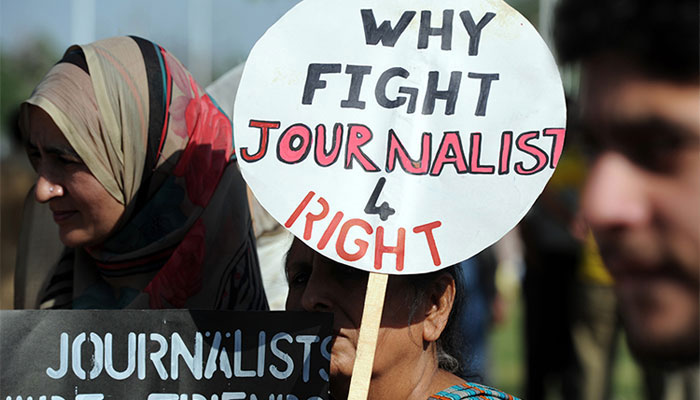
PESHAWAR: The Freedom Network report has stated that the press freedom situation and safety of journalists in tribal districts have not improved in the last five years since the merger of erstwhile federally administered tribal areas with Khyber Pakhtunkhwa.
The merger did not strengthen the media and journalists complained of limited freedom to report from the most troubled parts of the country. The new system has only helped to strengthen tribes, maliks or elders and warlords against the rule of law, the media and its practitioners.
The report “Newstribes of Northwest – Saving Journalism in Pakistan’s Tribal Districts” was released at a meeting of the Pakistan Journalists Safety Coalition (PJSC-Khyber Pakhtunkhwa chapter) in Peshawar on Wednesday, authored by Aurangzaib Khan.
The report says the space for media and journalism has shrunk drastically in the merged districts after the resurgence of TTP. The same mindset still prevails which was under the FCR. However, the PTI’s Khyber Pakhtunkhwa government announced that a bill on protection of journalists would be tabled in the provincial assembly to combat impunity for crimes against the media and its practitioners. The 92-page report launched in Peshawar says in 2006, the government wanted journalists to take measures for their safety. In 2014, journalists were losing sleep for want of peace but in 2023, they were back to square one. One or the other party to the conflict is unhappy with the media in tribal areas.
Muhammad Ai Saif, Adviser to the KP chief minister on information, addressing on the occasion said the provincial government will table the bill on the safety of journalists in the Khyber Pakhtunkhwa Assembly soon.
Barrister Saif agreed to work with an action committee, set up at the conference, to discuss proposals to include in the bill. The committee includes presidents of the Khyber Union of Journalists, Peshawar Press Club, Tribal Union of Journalists and Pakistan Journalists Safety Coalition.
KP Minister for Religious Affairs Sahibzada Muhammad Adnan Qadri told the media that the safety challenges of journalists “are the same that the residents of tribal districts face which means everyone should work together to resolve the security challenges”.
Iqbal Khattak, Executive Director of Freedom Network, told the meeting that the purpose of this report was to understand how political mainstreaming of former tribal areas impacted the tribal media and its practitioners. It addressed two questions: the state of freedom of expression and the safety of journalists. The report said: “Not much has changed on both counts.”
The return of militancy sparked “calls for peace and state suppressed freedom of expression not allowing media to report these calls,” the report said about an undeclared official ban on the media to report a citizens movement for fundamental rights.
“Space for media and journalism has shrunk drastically in the merged districts after the resurgence of TTP,” the report underlined suggesting that political integration helped the media little to free from the state and non-state actors’ threatening behaviours.
Increasingly, the report highlighted, that journalists “do not wait for institutions – the administration, the ISPR – to release information to them. We do not take risks to probe or push for information. By now we are all clear about what our limits are,” interviews with around 50 tribal journalists and the report author’s visits to all tribal districts concluded.
“Self-censorship is rampant. Local stories get censored,” these journalists spoke of limited freedom to report from the most troubled parts of the country.
Visibly traumatized, these journalists cope with tribal traditions, coupled with official backing and interference as well as the tribal Lashkar that might expel a journalist and impose a fine if any report was seen against the tradition. “Same mindset still prevails which was under the FCR”, the report warned. Ban on the media to report freely from merged districts has brought social networking applications that have helped citizens from these districts to be heard. However, the frequent shutdown of the Internet forced journalists to travel back to nearby cities to file their stories. Women journalists are reporting from merged districts but they mainly live in bordering districts for safety reasons. Khyber Union of Journalists President Nasir Hussain, Peshawar Press Club President Arshad Aziz Malik, Tribal Union of Journalists President Qazi Fazlullah and PJSC-Khyber chapter President Saiful Islam Saifi also addressed the conference.


