
Govt urged to make mental health facility operational
A press release said the PPS office-bearers made the appeal to the government after an urgent meeting with the employees
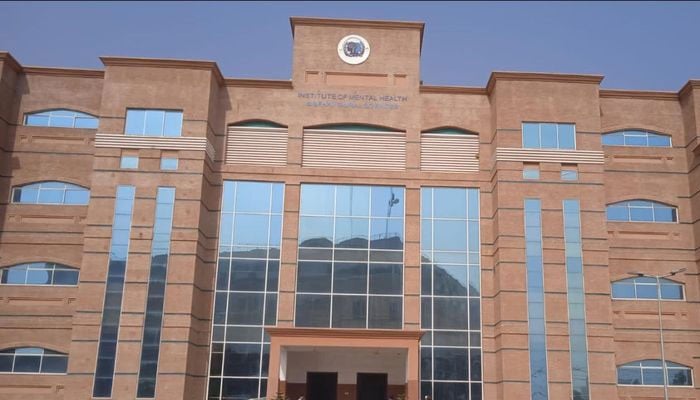
PESHAWAR: The Khyber Pakhtunkhwa chapter of the Pakistan Psychiatric Society (PPS) has urged the provincial government to operationalize the Institute of Mental Health and Behavioral Sciences in Hayatabad as early as possible.
A press release said the PPS office-bearers made the appeal to the government after an urgent meeting with the employees of the Institute of Mental Health and Behavioral Sciences to discuss the concerns over the facility's functioning status.
Those present on the occasion included Prof Khalid Mufti, chairman of the PPS committee for the Institute of Mental Health and Behavioral Sciences, Prof Dr Wajid Ali Akhunzada, PPS-resident-elect, Prof Syed Muhammad Sultan, Prof Mohammad Idrees, Prof Dr Bashir Ahmad, Associate Prof Dr Imran Khan and other consultant psychiatrists.
The meeting participants thanked the KP government for supporting the mental health initiatives in the province.
They said the government's commitment was evident by the KP Health Minister Syed Qasim Ali Shah's visit to the institute soon after taking the oath of office during which he had promised to operationalize the facility.
The participants said the promise was reinforced during a follow-up meeting with the Pakistan Psychiatric Society on April 4 where the health minister reiterated his earlier commitments.
However, they pointed out that despite these assurances, the hospital had remained non-functional, awaiting its operational budget.
They expressed concern over some reports which suggested that the government officials were considering handing over the hospital to other departments.
They said mental health facilities were needed in KP as around 34 percent of our population suffered from mental health disorders, depression affected 10 to 15 percent of people, and anxiety disorders impacted around 10 percent of our population.
The PPS office-bearers said the post-traumatic stress disorder was higher due to the conflict the region has been facing for a long, and hitting from 5 to 7 percent of the population, bipolar disorder affected 1 to 2 percent while schizophrenia was prevalent in one percent of the population, adding only 500 beds were available for mental health patients, far less than Punjab where these were 4,500 and Sindh which had 3,600 beds.


