
Thrifty Sweden’s dilemma: how to spend more
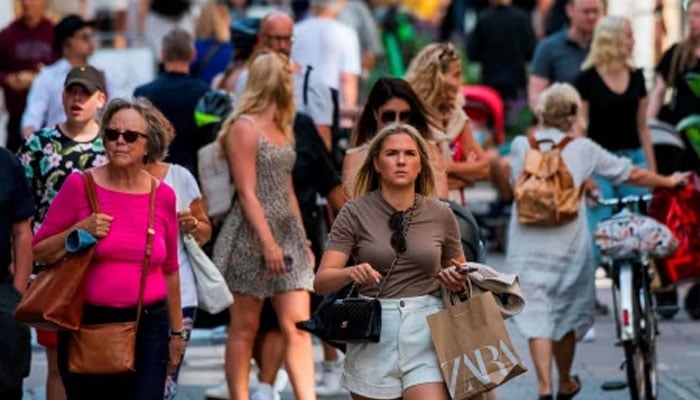
STOCKHOLM: While much of Europe faces tough choices about how to cut budgets to bring down soaring debt, thrifty Sweden has a more enviable dilemma: how to use its strong public finances to face up to the mounting challenges ahead.
Decades of prudence have left Sweden with public finances the envy of the continent, prompting a debate about whether strict budget rules -- credited with rescuing Sweden after a domestic financial crisis in the early 1990s -- can be loosened.
Back then, the government slashed spending by around 8.0 per cent of GDP and increased taxes after a real estate bubble burst. The cost was heavy: 200,000 public sector job cuts as the welfare state was downsized and the economy shrank three years in a row.
Memories of that pain have kept finance ministers’ budgets in check ever since -- to the point that the question now is whether the Nordic country needs to start loosening its belt.
With debt now around 30 per cent of GDP -- the average in Europe is around 90 per cent -- calls are increasing for a rethink to support a ‘green’ industrial revolution that could be held back by a lack of clean electricity, housing and poor roads and railways.
“If we don’t do it now, we won’t just miss out on being at the cutting edge of green industrial development,” Fredrik Lundh Sammeli, an opposition Social Democrat member of parliament, said.
“It will be a threat to ... Sweden as an industrial nation.”
A government commission due to report this autumn is looking at whether to ease the current budget surplus target of 0.33 per cent of GDP to free up extra cash.
Even the International Monetary Fund, a devotee of fiscal probity, said in its March report on Sweden a “small deviation” from the surplus target would help public investment and social spending needs.
Few doubt that more investment would be welcome.
Some of the 200 billion Swedish crowns ($19 billion) of new private investment planned in the far north of Sweden -- enough to boost GDP by 2-3 per cent -- is at risk if the government doesn’t stump up 60-80 billion crowns for infra-structure, a report in May by consultants McKinsey said.
Steel firm SSAB’s planned fossil-free plant in Lulea, Norbotten will reduce the nation’s total CO2 emissions by 7.0 per cent.
For iron ore miner LKAB, the choice is between planning for fossil-free production or “planning for a shutdown”, Niklas Johansson, head of communications, said.
MUCH TO DO
Other priorities are stacking up.
The IMF said more money was needed in education, training, integration and to solve Sweden’s housing woes. The defence budget will have to increase after joining NATO. Tougher anti-gang measures mean Sweden needs thousands of new prison places.
Deputy Prime Minister Ebba Busch has proposed a deficit of around 0.5 per cent until debt reaches around 45 per cent of GDP, boosting the budget by 50 billion crowns a year.
Debt could rise to as much as 50 per cent of GDP, a recent government-commissioned report said.
“That would still give us a large safety margin if we were to find ourselves in a deep crisis,” Lars Calmfors, Professor of Economics at Stockholm University and one of the authors, said.
IF IT AIN’T BROKE
Others -- including within Sweden’s governing coalition -- are sceptical, both about running deficits and whether extra spending would bring the desired results.
Finance Minister Elisabeth Svantesson, from the pro-business Moderate Party, said income tax cuts and benefit re-form would be a better way to boost tax revenues and long-term growth than watering down fiscal rules.
“Some are saying that we should have a deficit long into the future. That would just leave our debts to the next gen-eration,” she said.
There is also a risk spending would become permanent, reducing buffers to cope with a future crisis, the Debt Office has warned.
The pandemic and the recent global bout of inflation -- which topped 10 per cent in Sweden -- also show why being able to call on big fiscal buffers is good.
“It saved companies, it saved jobs and it meant we could bounce back quickly,” Nordea chief economist Annika Winsth said.
Several European nations are facing painful budget cuts having allowed deficits and debt levels to surge in recent years -- a fate Sweden is anxious not to experience again.
“I believe that we will probably end up with a balanced-budget target,” said Mattias Persson, chief economist at Swedbank, an outcome that would increase spending from current levels.
“But we can’t just pour out money on things that won’t generate value for future generations,” he said.


