
Over the moon
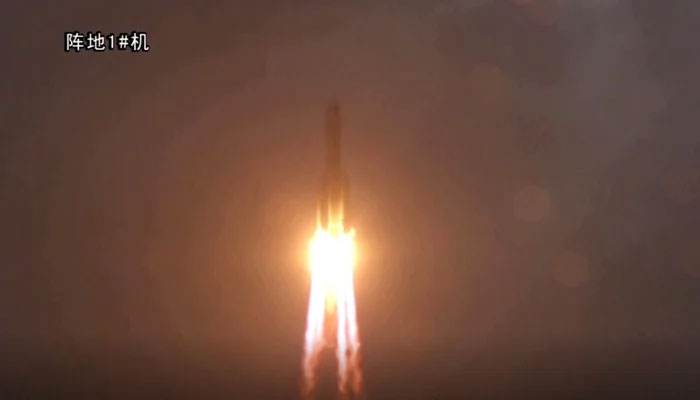
Some things are just written in the stars. Less than a year after India’s Chandrayaan-3 touched down on the Moon’s south pole region, Pakistan launched its first shot at the same destination. The country’s first satellite mission to the moon, iCube Qamar (ICUBE-Q), has been launched on board China’s Chang’E6 from Hainan, China on Friday (May 3) and is expected to reach lunar orbit in around five days. From there the satellite will circle around or orbit the moon for about three to six months. While this is nowhere near a moon landing, it is a significant step forward for Pakistan’s space programme and its technological ambitions in general. The satellite was designed by the Institute of Space Technology, Islamabad in collaboration with the national space agency Suparco and Shanghai University. That a country whose engineers are tripping over each other to get abroad can still pull out a lunar satellite is a testament to the depth of Pakistan’s STEM talent. ICUBE-Q will carry two optical cameras that will image the Moon’s surface.
How does a country struggling to keep the lights on and pay its debts afford this? Well it turns out that ICUBE-Q is a miniature CubeSat satellite, characterized by a standardized design and a compact size. This makes it much cheaper than larger, traditional satellites, opening up opportunities for those seeking to expand their science and technology profiles without the luxury of a massive budget. It is encouraging to see technological equipment and capabilities becoming more cost-effective over time and capitalizing on this trend will be crucial for the country going forward.
Those trying to minimize this achievement, principally consisting of folks across the eastern border ever eager to put their smaller neighbour down, will point to the Chinese help the mission has received. Pakistan should not let them spoil this moment. Who got there first, which is indeed preferable, is ultimately not as important as getting there eventually. Launching Pakistani satellites on Chinese rockets arguably means that the country is just one step closer to doing it all on its own. It can also be said that collaboration on such missions is not exactly a bad thing. No space programme, or any scientific endeavour for that matter, operates in total isolation. Research, material, equipment and talent are frequently exchanged and transferred across borders. And this is how it should be. When we allow nationalist chest-beating to intrude on the scientific realm it is humanity that suffers.


