
Housing inequities
According to the federal government, last year 653,100 people experienced homelessness on a single night in America
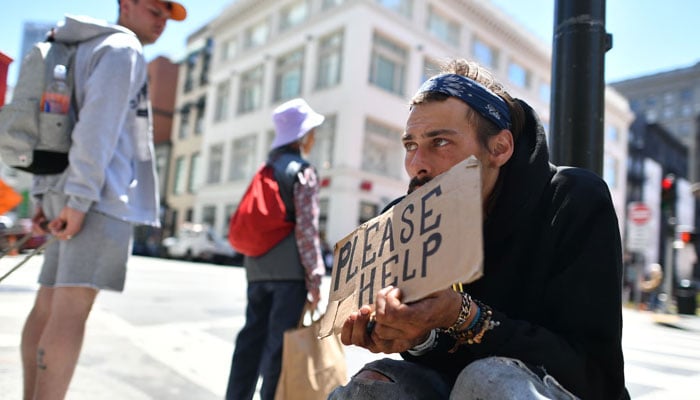
As the cost of housing has exploded, so has the number of people experiencing homelessness. And unfortunately, instead of trying to house people, more states and cities are criminalizing people simply for lacking a safe place to sleep.
According to the National Homelessness Law Center, almost every state restricts the conduct of people experiencing homelessness. In Missouri, sleeping on state land is a crime. A new law in Florida bans people from sleeping on public property – and requires local governments without bed space for unhoused people to set up camps far away from public services.
Laura Gutowski, from Grants Pass, Oregon, lives in a tent near the home where she resided for 25 years. Soon after her husband unexpectedly passed away, she became unhoused. “It kind of all piled on at the same time,” she told Oregon Public Broadcasting. “Flipped my world upside down.”
Grants Pass, like most cities today, lacks enough shelter beds to accommodate its unhoused population. It’s now the subject of a Supreme Court case: Grants Passv. Johnson, which started when Grants Pass began ticketing people for sleeping in public even when there weren’t enough shelter beds.
People can be fined hundreds of dollars and face criminal charges “simply for existing without access to shelter,” said Ed Johnson, an attorney for the unhoused residents of Grants Pass. The Supreme Court’s decision will have far-reaching ramifications as communities grapple with rising homelessness and housing costs.
If the court rules in favor of Grants Pass, local governments will get more authority to clear homeless encampments and penalize those who sleep on streets, only exacerbating the problem.
Alternatively, the court could prohibit these “camping” bans and remove criminalization as an option. Back in 2018, the Ninth Circuit Court of Appeals took that route in Martin v City of Boise, which held that it is “cruel and unusual punishment” to criminalize homelessness when people have no other place to go.
According to the federal government, last year 653,100 people experienced homelessness on a single night in America – a 12 per cent increase from 2022. Nearly half of these people sleep outside.
Researchers have found that homelessness is primarily linked to unaffordable housing, compounded by the lack of adequate healthcare and social safety net support. With half of all renter households now spending more than 30 per cent of their income on housing, more people today are one emergency away from being vulnerable to homelessness.
Fining, arresting, and jailing people for a lack of housing is never the solution – and compounds existing housing inequities. Neither is displacing people without providing permanent alternative housing. Unpayable fines perpetuate the cycle of poverty, and a criminal record makes it even more difficult to secure employment and decent housing.
Moreover, the costs of criminalizing people for living unhoused are higher than housing them, both morally and financially. Instead of kicking them while they’re down, housing support combined with other voluntary services help to lift them back up.
Using a ‘Housing First’ approach, Houston, Texas, reduced homelessness by nearly two-thirds over a decade. Chattanooga, Tennessee, reduced homelessness by half in 2022-2023 by connecting more people to housing, increasing homelessness prevention efforts, and creating more affordable housing units.
Other helpful measures include expanding housing subsidies, rent control, a renter’s tax credit, and ensuring access to healthcare services.
The underlying issue is how we treat those who struggle to meet basic needs in the wealthiest nation in the world. Criminalizing people for involuntarily living unhoused and in poverty is inherently cruel.
For the US to truly address this crisis, we must transform our approach and recognize that housing is a fundamental human right, not a commodity. All people deserve to live in a home in peace, security, and dignity.
This article was originally published as: ‘Criminalizing the Unhoused Is Inherently Cruel’. Courtesy: Commondreams.org


