
Democracy stuck in a rut in 2023: PILDAT
With political campaigns being forced to move between pro- and anti-establishment sides, it is people who lose in the end
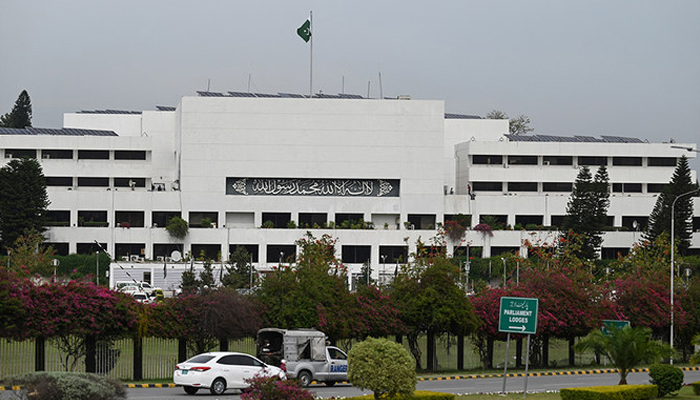
ISLAMABAD: The Pakistan Institute of Legislative Development and Transparency (PILDAT) has said that 2023 only made the transition towards improved democracy harder for Pakistan, which it says “is now called an electoral autocracy by some international democracy rating think tanks”.
These and other findings have been published by PILDAT in a report titled, ‘Quality of Democracy Report in Pakistan 2023’. PILDAT has pointed out that while democracy was “stuck in a familiar and deepening rut at the end of 2023”, there are “remedies and lessons” that are obvious “but the people who have the power and capacity to pull the country out of the rut have not taken the right steps for the last ‘seventy years’, borrowing the phrase former Chief of Army Staff, General (r) Qamar Javed Bajwa used while referring to his institution’s interference in the country’s political affairs.” The report says that the only option available is to urgently design and execute a transition from “the hybrid system to a normal functional democracy”.
According to PILDAT, political parties and popular leaders in Pakistan continually suffer from a crisis of confidence as their political fate depends “not on their popularity or the cogence of their governance policies but how adept they are at keeping the GHQ positively engaged and [playing] second fiddle”.
With political campaigns being forced to move between pro- and anti-establishment sides, it is the people who lose in the end, says PILDAT, adding that: “neither[is] the army learning to steer clear of politics and focus solely on the security domain defined in the constitution, nor [have] the politicians agreed on an unbreakable set of rules to never seek or receive the army’s support”.
As far as the fairness and credibility of the coming elections go, the report does not paint a happy picture: “As Pakistan prepares to hold yet another general election, the prospect of its fairness appears just as bleak as the 2018 General Election...” It also chides political parties for being apparently “addicted to the establishment’s patronage” to win a “managed public popularity and form fractured governments.”
PILDAT believes that the conclusion of the 15th National Assembly in 2023 left democracy just as vulnerable and manipulated as it was when the assembly members took oath on August 12, 2018, with the National Assembly and its members having “allowed themselves to be manipulated by one elected government to the other, with active control of the establishment, in carrying out basic functions such as legislation.”
And of the Senate, the report is no less stringent in its assessment, calling the Senate little more than “a debating club where, instead of initiating and leading a meaningful engagement on policy issues, its sessions remained just as mired in partisan political blame-game, infighting and political mocking of opponents.” Likewise, the provincial assemblies too were used by each provincial government “to rubber-stamp required legislation including the most important provincial budgets.” PILDAT says that in their five-year tenure, provincial assemblies “willfully began to regress and withdraw public information from the citizens”, their websites offering “scant, outdated and incomplete information”.
On Chief Justice Qazi Faez Isa, the report says the current chief justice “has initiated many firsts since holding office”. Per PILDAT, the CJ’s latest “and somewhat controversial achievement to-date in the context of Pakistan’s democracy, has been nudging the reluctant decision-makers to finally appoint a firm date and issue a schedule for the 12th General Election to be held on February 08, 2024.”
There was no improvement in the freedom of the media in Pakistan, according to the PILDAT report. It adds that the year again “proved yet again the silencing of independent voices, the management of media and the propagation of the sickening culture of buying media voices in support of or against a political party or group to sow polarisation and dissent in the society.”
From taking channels or TV anchors off air to not allowing images, messages or statements from political leaders “newly fallen out of favour” to not allowing certain topics like “Balochistan and [the] Pashtun Tahaffuz Movement”, the report paints a picture of a news media facing tight controls.
The PILDAT report does not see President Arif Alvi’s performance as anything to write home about, saying that the president “failed to evolve in the role of a non-partisan president failing to fulfil not just the requirement of the constitution but in defying all political, official and moral norms in holding the highest elected office in Pakistan.”
Adding that President Alvi ignored all criticism for playing a “blatantly partisan role” in favour of the PTI, the PILDAT report says that his role became especially controversial in appointing a date for the general election to the dissolved Punjab Assembly “when he unilaterally, and without constitutional authority, appointed the date of election.” The president also, says PILDAT, defied his constitutional role repeatedly when it came to giving his assent to various laws passed by parliament once the PDM coalition government came into power, and continued to do so in 2023.


