
Reduce donor dependence, focus on reducing inequities in healthcare access, quality: NHPAC
ISLAMABAD: Instead of relying on foreign funding, grants and loans, the National Health and Population Advisory Committee (NHPAC) has advised authorities to increase budgetary allocation for health on yearly basis to achieve at least 5 percent of GDP for health in 10 years.
The 15-member NHPAC notified in August 2023, chaired by Prof. Dr. Zulfiqar A Bhutta, completed a 14-week extensive review of existing national policies, programs and gaps.
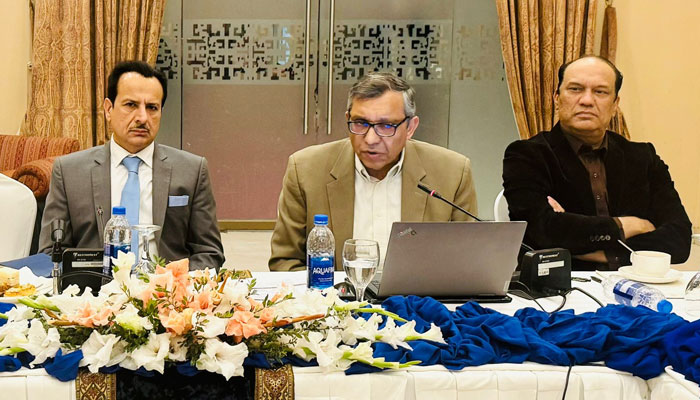
The NHPAC met for detailed discussions on family planning, maternal and child health, EPI, polio, Non-Communicable Diseases (NCDs) and vertical disease programs, Universal Health Coverage, Global Health Security, governance, financing and Public Private Partnerships (PPPs) and presented its final recommendations including sectoral and cross cutting recommendations.
Five sub-committees headed by experts including Prof. Shahzad Ali Khan, Vice Chancellor Health Services Academy (HSA) Islamabad, Dr Yasmin Qazi, Dr. Malik Safi, Dr. Masood Sadiq, Prof. Abdul Basit, as well as others presented their separate recommendations, which were discussed in detail and incorporated in the final recommendations presented to the Ministry of Health for implementation.
Caretaker Federal Health Minister Dr. Nadeem Jan and Federal Secretary Health Iftikhar Shallwani assured that recommendations would be considered during policy making and formulated into guidance for future health planning and discussion with the provinces.
Members of the NHPAC also discussed the current financing of health programs, especially those being supported mainly by international donor agencies and agreed that the government should significantly enhance the budgetary allocation for health including for immunization, mother and child health, control and prevention of infectious disease and family planning services.
HSA Vice Chancellor Prof. Shahzad Ali Khan was of the opinion that less than 1 percent of the total spending on health comes from the donor agencies while experts from the Ministry of Health believed that around 5 to 7 percent of the total spending on health comes from international donor agencies and development partners.
He also proposed seeking alternate sources of financing including public partnerships and philanthropy.
The committee members also recommended realignment of financing and progressive increase and diversification of UHC financing, prioritizing the community and primary healthcare levels through recurrent annual budgets, improved funding flows, efficiencies in allocations and expenditures and financial protection for poor.
The NHPAC also recommended bottom-up equitable expansion and rationalization of human resources for health, all-year round uninterrupted availability of essential commodities, equitable and resilient access to health services through innovative strategies to reach the hard-to-reach populations, timely referral of obstetric, neonatal and other emergencies and healthcare quality improvement through reinforced quality standards, accountability and oversight.
The committee also presented its recommendations for promoting MNCH and nutrition, calling for strengthening Lady Health Workers Program, improving maternal and newborn care at district referral hospitals and linking all the program at federal, provincial and district levels.
Prof. Zulfiqar Bhutta recommended improving system efficiency by integration of many disparate vertical programs, targeting most deprived rural populations, community awareness and mobilization strategies as well as social protection and conditional cash transfers.
Bhutta and members also specifically called for district health system and governance reform through enhanced financing, technical assistance, skills development and accountability based on timely use of quality data for decision making.
“This includes improving management capacity to regulate and harness private sector potential in scope and scale to offer promotive and preventive services and expand geographically to under-served populations,” Dr Bhutta added.
For prevention and control of non-communicable diseases, the sub-committee headed by Prof. Abdul Basit recommended some policy decisions including establishment of an NCD Cell in the ministry with full-time experts and establishment of registries for all NCDs.
The sub-committee recommended complete implementation of ban on smoking/use of betel nut/paan, incentivize law enforcement personnel, and labelling, launching mass awareness campaigns, implementation of a comprehensive family surveillance system, incorporating cardiovascular health, diabetes, obesity, diet and physical activity and mental health in school health services, involving parents, teachers and supporting it with specialized health professionals.
The NCDs sub-committee further called for mandatory screening for CVD risk factors such as hypertension, diabetes, and breast and oral cancer screening at the school entry and exit as well as primary/secondary care level, with a robust referral system.
It further recommended establishment of environmental health protection units at federal and provincial levels, establishing NCDs and mental health centers at district hospitals, cancer clinics at all district and tertiary level hospitals for screening, palliative and supportive care.
For global health security, the committee called for approval of a costed National Action Plan for Health Security (NAPHS 2023-28) from Inter-Ministerial Health & Population Council, provision of adequate domestic funding at national and provincial levels for implementation of plan, strengthening a well-resourced National Institute of Health (NIH) and Provincial Disease Surveillance Response Units as IHR Focal Points, strengthening linkages with One Health to address the threat of zoonotic diseases and defining governance mechanism and structures for IHR 2005.
Regarding immunization, Dr Khalid Shafi said Pakistan should target a minimum of 90 percent routine immunization coverage while it will require adequate resources (human and funding) to improve access. It was informed that around 1,700 additional EPI centers are required in union councils while 3,014 vaccinators are needed to fulfil human resource gap.
Regarding polio, Dr Waqar Ajmal from the NHPAC recommended that Polio Program leadership at the federal level should be supported but also thoroughly evaluated for its performance by end of 2023, called for EPI and Polio Program integration (starting from UC level and ascending, special joint EPI and polio teams in endemic districts to cover newborns and missed children, adding IPV third dose in special at-risk areas/populations either in routine or under SIAS while Afghanistan and Pakistan should be considered one epidemiological zone.


