
Murderers, kidnappers sell art from Karachi prison
Karachi’s colonial-era prison is adorned with murals of rural Pakistani life, painted by convicted murderers and kidnappers locked away from the world but learning their craft inside its walls.
A rehabilitation art and music programme has seen some inmates sell their work for several thousand dollars at exhibitions supported by the local arts council, according to prison chiefs. "Before I was jailed, it was another life with no responsibility and immaturity," Mohammad Ijaz told AFP from the prison studio.
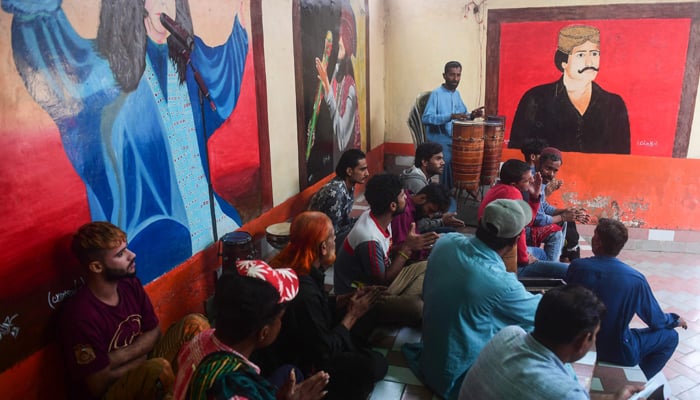
"But I have found the true meaning of life since being jailed. They have taught us that life is full of colours and the colours themselves speak."
Ijaz, who declines to give details about his conviction under a penal code covering kidnapping and abduction, says he is about halfway through a 25-year sentence.
Despite being locked up, he has earned huge sums from his art depicting horses — funding his mother’s pilgrimage to Mecca and his sister’s wedding. "In the beginning, my family didn’t believe me that I had become an artist," said the 42-year-old, who now teaches other prisoners. "When they saw us in the exhibition, they were happy."
The art programme was launched at Karachi Central Jail in 2007, and aims to reform inmates serving long sentences or those on death row.
Prisoners can also learn languages such as Arabic, English or Chinese, as well as hand embroidery and beadwork. "Engaging them in constructive pursuits kind of polishes them," senior prison official Ammad Chandio told AFP. "It helps them reflect upon their past, what crime, what sin or what violation of law they had committed."
"Any art that is being produced inside the correctional facility, it is actually the property of the inmates, and any proceeds that come from the sale of these products, the property of those inmates."
Prisons across Pakistan are often dangerously overcrowded with limited access to water, sanitation and food, but central jails in major cities generally receive better funding.
"Efforts to rehabilitate prisoners should be at the fore, the purpose of penal punishments is to help them become better citizens," said Sarah Belal, executive director of Justice Project Pakistan.
Mehtab Zakir is serving a murder sentence handed down five years ago but his family still depends on him for financial support.
"I know I haven´t wasted time here, at least we have learnt something," said the 34-year-old. "I feel happy when I finish a painting and it gives me confidence that at least I can do something."


